
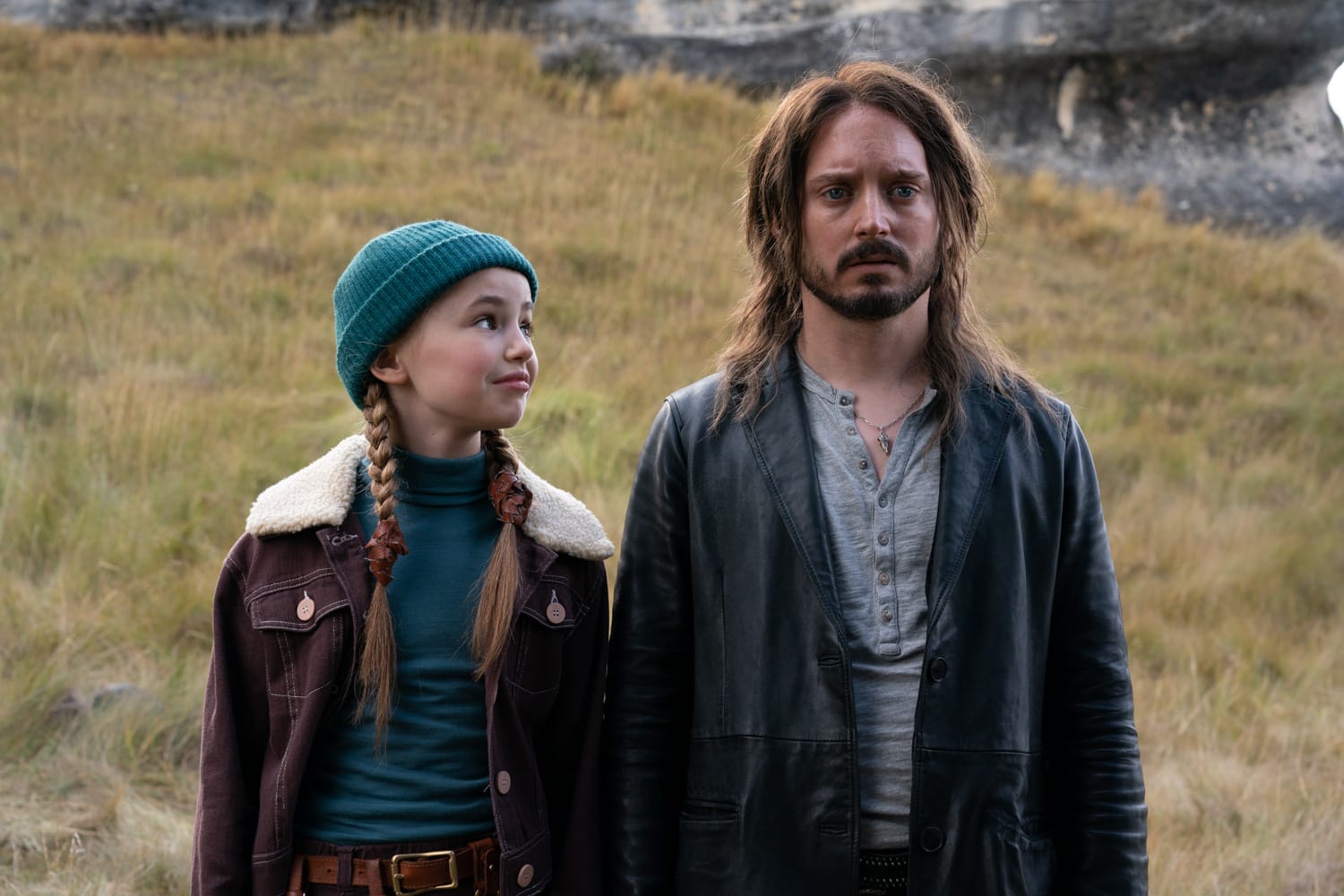
The creators of the darkly comedic family adventure Bookworm have a great idea for a movie, but maybe they weren’t the right people to execute their own material. Bookworm is a film with obvious potential that keeps the viewer at arm’s length nearly the entire time. The adventure is there. The laughs are occasionally there. The gorgeously photographed New Zealand scenery is absolutely there. But what’s missing in Bookworm is a unifying tone and balance that can bring all of its rough edges together in a satisfying whole. It wants to be contemporary and boundary pushing at the same time, but director Ant Timpson and screenwriter Toby Harvard – who established themselves on much edgier pictures than this – never find a way to make their irreverent ideas and family entertainment coalesce into something that works.
Young and loquacious bibliophile Mildred (Nell Fisher) is positively fuming. Her mum (Morgana O’Reilly) has lapsed into a coma on the weekend of a camping trip Mildred has been looking forward to for some time. Mildred was hoping to capture proof that a fabled local legend – the Canterbury Panther – exists, especially when video evidence could net her mum a $50,000 reward that they could really use to get out of debt. This unfortunate turn events leads to Mildred meeting her absentee American father for the first time. Strawn Wise (Elijah Wood) is a master of magic, although he prefers the term “illusionist,” so as not to cheapen his profession. The stoic, sarcastic, and realistic thinking Mildred wants nothing to do with dad’s trickery and aloof demeanour, but if she wants to go on the mission to find her region’s equivalent of Bigfoot, he’s her only option. Eager to connect with the daughter he’s never gotten a chance to know, Strawn agrees, despite having no wilderness or camping experience.
Bookworm is a distinct change of pace for director Ant Timpson and writer screenwriter Toby Harvard, who’ve previously collaborated on the very adult and twisted likes of The Greasy Strangler and Come to Daddy. And their concept of an intelligent kid and a goofy adult trying to survive in nature is a good one in theory, and it’s played very well through the chemistry between Wood and Fisher. But there’s something off about Bookworm that becomes apparent before our heroes even put their packs on and set out into the wilderness.
At first glance, Timpson and Harvard make it seem like Bookworm is going to follow in the footsteps of fellow Kiwi Taika Waititi’s Boy and The Hunt for the Wilderpeople, but filtered through the sensibilities of a darker and more low-key whimsical Roald Dahl vision of childhood. An early sequence where young Mildred has mum’s condition explained to her by a doctor with little bedside manner is uproarious, but once Strawn enters his daughter’s life things get bitter and often unpleasantly so.
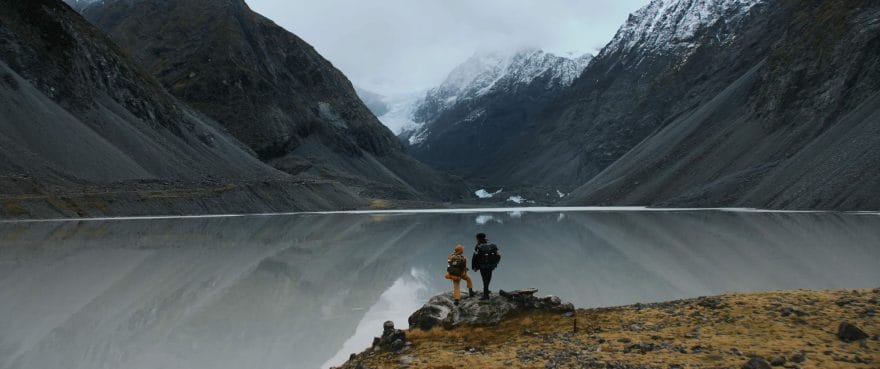
Bookworm is a film where a young performer gives a brilliant turn as a character that’s relatable on a surface level, but baffling in terms of their specifics. The character of Mildred is terribly written, but what Fisher is doing with the role is quite good. (Also, no critic should ever pick on a child actor. There’s no justifiable reason for it. Any faults with a character played by a young performer lie squarely with the writer/director and no one else.) While Mildred’s apprehension towards Strawn’s try hard attempts at reconciliation and bonding is completely understandable, the younger character is so terminally sarcastic and highfalutin in attitude that she comes across as straight up cruel rather than skeptical and upset. At one point on their journey, a fed up Strawn straight up calls Mildred an asshole, and instead of seeing things from her point of view, the deadbeat dad seems spot on in his assessment. Worse still, Timpson and Harvard make only the most minimal of attempts to try and parse why Mildred is such a stick in the mud, but never get beyond “mom’s a goof and dad was never there.” If a character is going to be this ruthlessly abrasive and is supposed to also be sympathetic, Timpson and Harvard need to do a lot more than they have here.
Again, that doesn’t mean Fisher isn’t great in the role. She’s given a wealth of complicated, highly literary dialogue that would be a challenge for any actor at any age, and she’s absolutely nailing it. Similarly, Wood strikes a nice balance of silliness and sadness as a washed up magician with a list of gripes and regrets that haunt his every waking moment, especially nailing a key, heartfelt speech that’s as hilarious as it is depressing. They do make for a good team, even if Timpson and Harvard are pushing their worst instincts way too far. It’s almost enough to make Bookworm a case where the actors are able to elevate the material into something more than the sum of its parts.
But when Bookworm can’t stop switching up its tones between saccharine sweetness, brusque sarcasm, fantastical whimsy, adventure movie peril, and darkly comedic thriller elements (which arrive in the form of Michael Smiley and Vanessa Stacey, playing fellow hikers with dubious motives), almost doesn’t quite cut it. The pace of Bookworm is leadenly slow throughout, with only the tonal shifts to jog the pace a little bit at a time. But after each twist and inconvenience faced by the hero, Timpson’s film slows to a crawl yet again, waiting for another big emotional beat or reveal to come along and keep things going even longer. Each twist feels like a forced necessity rather than a natural progression of the story.
For a film that’s ostensibly about a precocious child and a doofus adult off on a grand adventure, there’s little magical spark to Bookworm beyond the cursory, and not much humour to be found outside of cutting barbs thrown back and forth between daughter and father. Despite the best efforts of Wood and Fisher and the breathtaking nature of the New Zealand landscapes, there’s little fun to be had watching Bookworm. There are a handful of big laughs delivered in effortlessly off the cuff fashion and a memorably intense sequence of peril, but nothing else here is working as well as the performances. It’s hard not to wonder what Bookworm could’ve been if placed before an extra set of eyes prior to production. It’s probably the film that Timpson wanted to make, as Bookworm doesn’t feel overly compromised, but it’s also dramatically and comedically imbalanced. The spirit is willing, but the execution just isn’t there.
Bookworm opens in select Canadian theatres on Friday, October 19, 2024.
