
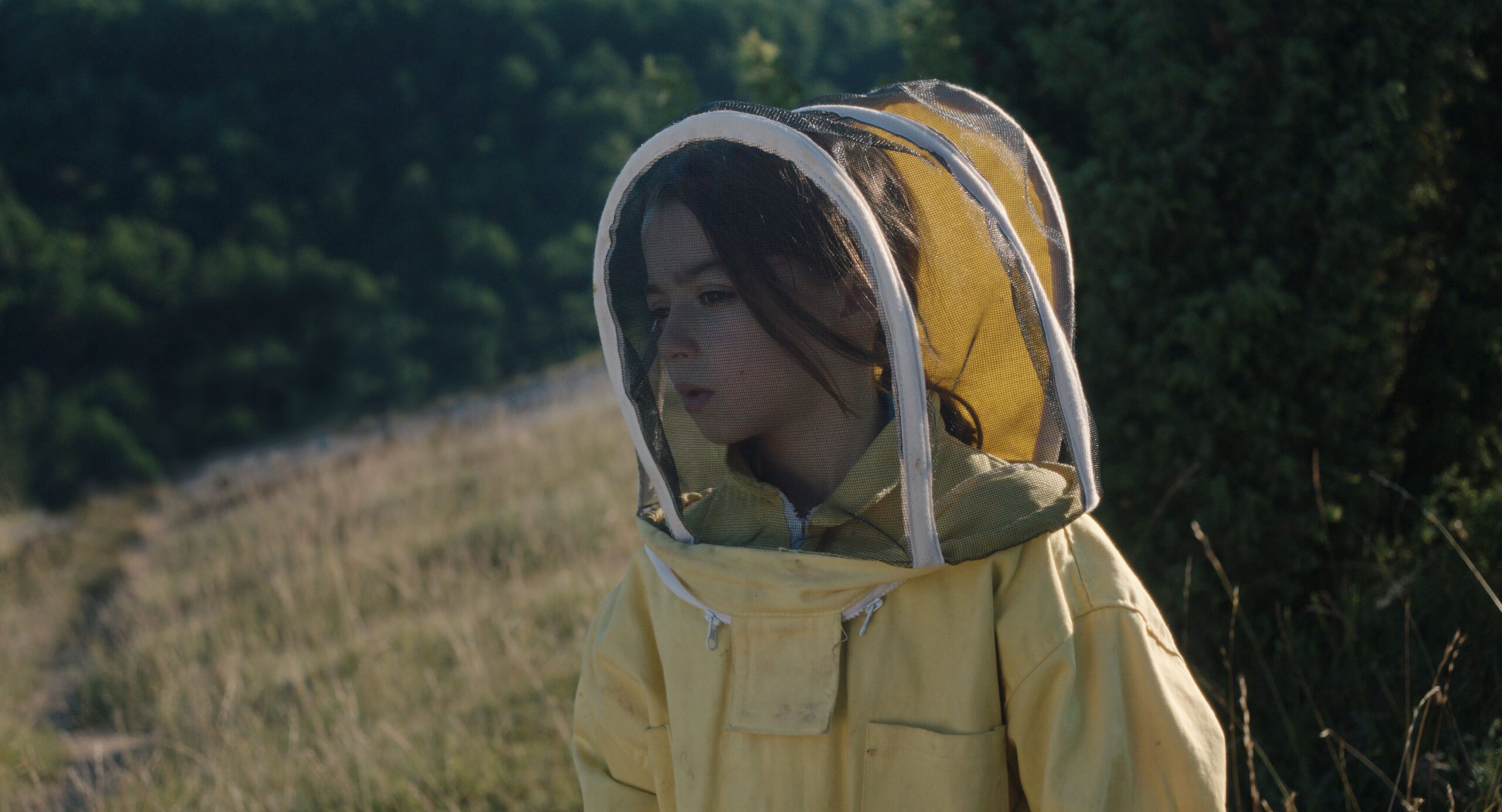
A textured and subtle examination of gender identity and familial relations, the Spanish/French drama 20,000 Species of Bees has a lot on its mind, but thankfully gives the viewer enough space to reason with feelings and topics the film’s characters often overlook. Writer-director Estibaliz Urresola Solaguren tackles difficult subjects that can divide families – both on and off screen – whenever they’re discussed or confronted, but handles them delicately, without ever being melodramatic or condescending towards potential discomfort. Not only is 20,000 Species of Bees a unique look at a young transperson slowly coming into their own, but a larger look at a family that has bigger unchecked problems than the gender identity of their youngest child.
Eight year old Coco (exceptional youngster Sofía Otero) identifies as a girl, but her family is having trouble understanding the child’s choices. This only intensifies when she travels with her sculptor mother, Ane (Patricia López Arnaiz), and siblings (Unax Hayden, Andere Garabieta) to a small community in the Basque region for a week long getaway. The purpose of the trip is so they can attend a baptism and so Ane can get some work done in her grandfather’s old workshop, but they arrive unannounced and much to the surprise of Coco’s grandmother, Lita (Itziar Lazkano). Tensions immediately arise among the extended family members over Coco’s burgeoning gender identity, but also between Ane and Lita over the former’s tenuous relationship to her husband (Martxelo Rubio) and the unspoken actions of the latter’s dead partner. Amid all the chaos, Coco is able to find solace, comfort, and encouragement from her great-aunt, Lourdes (Ane Gabarain), a kind hearted beekeeper who sees everyone in the family for who they truly are rather than how they present themselves to the outside world.
20,000 Species of Bees places Coco’s search for comfort in their identity front and centre, but Solaguren pays just as close attention to all the issues orbiting around this child. There are themes of religious guilt, absolution, reconciliation, acceptance, resentment, misconception, marital discomfort, the strain of financial considerations, and explorations of the subtle differences between faith and conviction that are informed by Coco’s struggles, but not exclusively driven by them. What emerges is a complete and fully reasoned depiction of a family with a lot on its plate; one where some members are willing to change to solve their problems, while others double down on their resistance. While plenty of people in 20,000 Species of Bees readily misgender Coco and see this exploration of gender identity as a phase or something to be crushed through discipline, all of these opinions – both in good faith and ill intentioned – are masking deeper insecurities within the people making them.
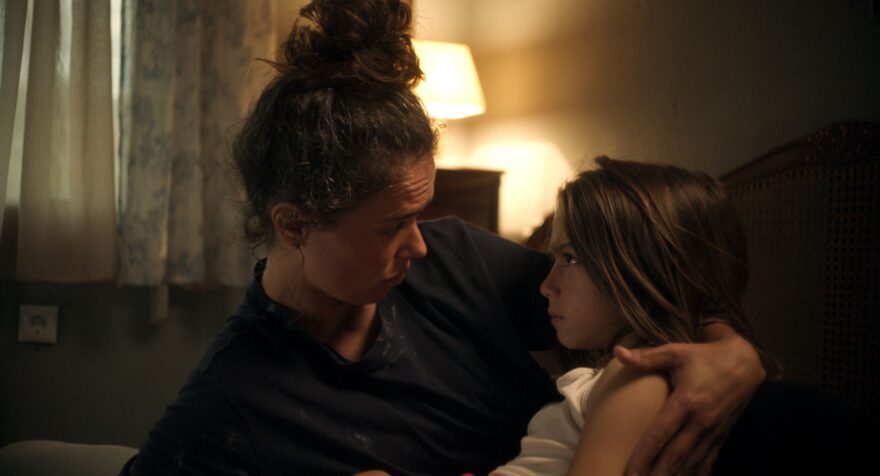
The tension in Solaguren’s style and material comes largely from watching argumentative discussions that have laid dormant for years finally exploding into life. Coco wants to talk about what’s going on in their body and mind, but because of their age, no one takes the kid seriously, and that frustration is turning to sadness. Coco doesn’t always correct people when they misgender or use their deadname, but there’s a pronounced grimace that can be seen that speaks louder than words ever could. Similarly, Coco’s mother is the type of person so practiced at hiding their emotions that they can carry on a conversation over the phone where they insist they’re doing great while they’re actually chain smoking and pacing around a room. One of the best scenes of intense drama doesn’t even involve Coco directly, as Ane and Lita have a full on argument while hanging laundry that covers decades of unspoken truths and gripes. This scene, like much of the thematic material in Solaguren’s film, is given plenty of time to live, breathe, and take hold, allowing the characters a chance to say what’s on their mind in vivid detail without giving everything they’re still hiding beneath the surface. 20,000 Species of Bees has a lot to talk about, but it’s always saving something extra for later, effortlessly holding the viewer’s attention despite the low key, unassuming setting.
In addition to a mastery of tone and body language, Solaguren has a firm handle on some of the film’s more subtextual and metaphorical elements. Naturally, the person who takes care of the beehives has the greatest insight into the messy inner workings of a family. Ane has a sculpture mishap that offers a great visual for the dangers of trying to force something to conform to a singular vision through sheer willpower and design. The natural beauty of the Basque landscape offers helps to depict childhood and developing identity as a gorgeous looking minefield full of wonder and danger. Solaguren displays a clear affinity for nature and art, paying particular attention to how living entities evolve over time and constantly engage in cycles of renewal and change.
On a passing glance, 20,000 Species of Bees might seem incomplete. Not every thread is going to lead to resolution, and some are only on hand to provide additional context. But those threads and details are rich and worthy of viewer contemplation and reflection. Solaguren conveys the truth of this family by giving big picture issues and deeply personal nuances equal weight and footing, making for a narrative that contains multitudes, but doesn’t waste any breaths. That willingness to look at delicate matters in totality, combined with a spectacular cast of performers all given highly detailed characters to work with, makes 20,000 Species of Bees an exceptional family drama.
20,000 Species of Bees opens at TIFF Lightbox in Toronto on Friday, July 12, 2024.
