
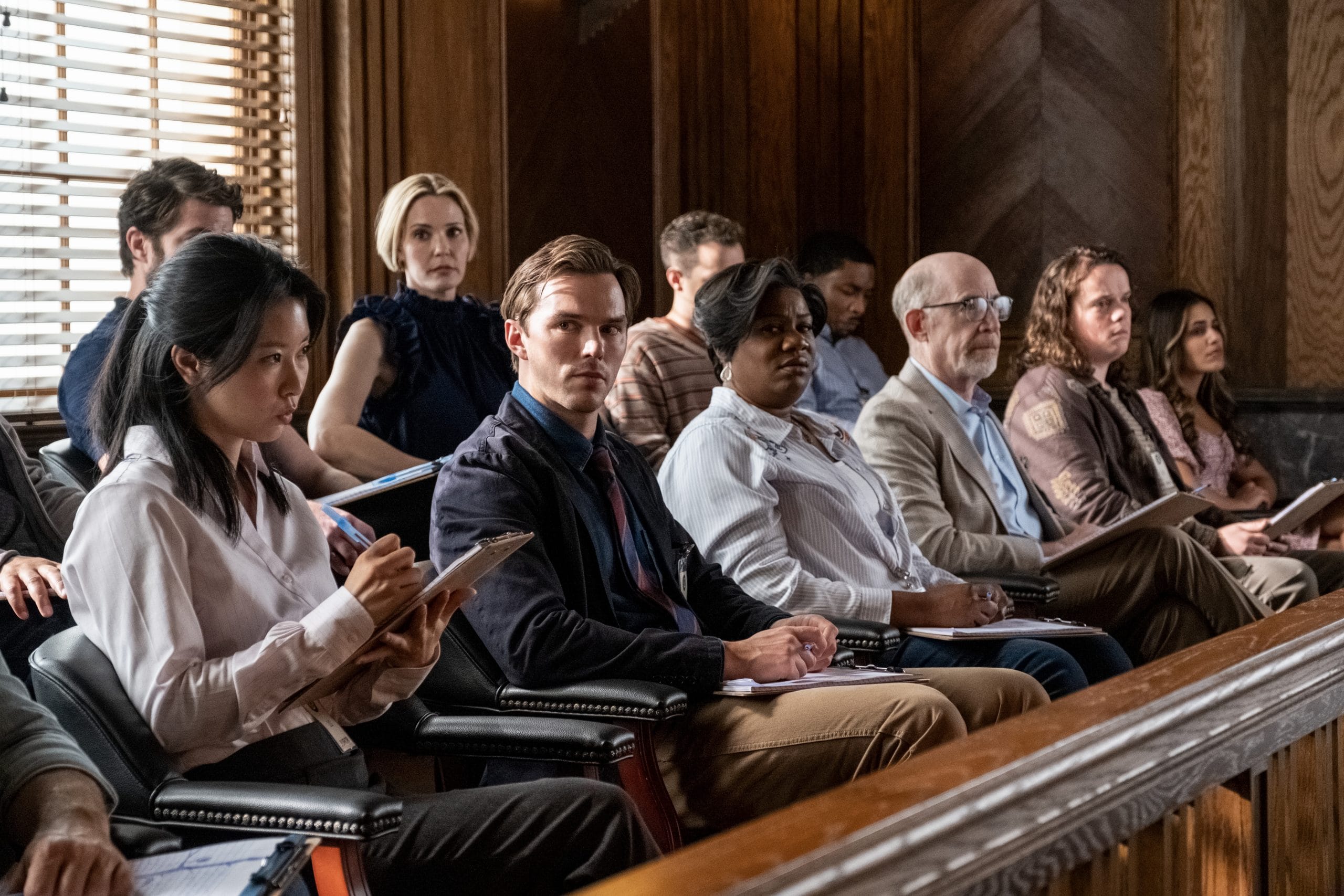
A layered, compelling, and expertly paced blend of courtroom drama and psychological thriller, director Clint Eastwood’s masterful bit of entertainment Juror #2 is another feather in a cap full of accolades, and if this turns out to be the nonagenarian’s final movie behind the camera, he goes out on a strong, crowd challenging note that moves so swiftly it stops for nothing. A film that exists in a moral area so grey it’s almost fully black, Juror #2 is full of escalations and twists that will leave viewers on the edge of their seats, while forcing them to think about their own feelings towards the American legal system and the nature of justice. On a storytelling level, Juror #2 might appear like a throwback to the 80s and 90s when this type of thriller was all the rage, but Eastwood’s talent for fashioning an entertaining yarn and keen eye for casting mines the material for every ounce of dramatic and social worth that can be found.
Georgia based lifestyle journalist and recovering alcoholic Justin Kemp (Nicholas Hoult) is in a tough spot. His partner, Allison (Zoey Deutch), is in the final stages of a troubled pregnancy when he’s informed he can’t put off his civic duty of serving on a jury any longer. Against his gentle protestations, the judge (Amy Aquino), prosecutor (Toni Collette), and defence attorney (Chris Messina) select Justin to serve during the trial of James Michael Sythe (Gabriel Basso), a man with a troubled past accused of running down his girlfriend (Francesca Eastwood) with an SUV following an argument at a bar one rainy night. Only after the trial has begun does Justin realize he has was a witness to certain events that unfolded that night, and his connection to the case could be deeper than anyone realizes.
To give away any of the major twists in Juror #2 is to spoil the efficiency and shock value that Eastwood employs to deliver them, the biggest of which happens early on and adds a lot of depth and nuance to something that could’ve been just another run-of-the-mill potboiler. Returning to the sort of moral ambiguity that marked the likes of Mystic River and Midnight in the Garden of Good and Evil (another southern set story of murder), Eastwood revels in keeping viewers on their toes, as Justin tries to repeatedly get out of his duties, and after failing at that, trying to sway the jury into believing the accused could be innocent after all.
In the early stages, Eastwood – working from a darn good script by Jonathan A. Abrams – employs Rashomon styled flashbacks from the competing points of view of the accused, witnesses, and even Justin himself to illustrate the unreliability of perception and objectivity. Everyone is very sure of themselves, but the flawed, sometimes deeply unlikeable protagonist always tries to convince himself that he’s doing the right thing. It’s a hard dynamic to explain, but Eastwood uses these conflicting viewpoints to foster a sense of unease and dread that will carry on beyond the portion of the film that contains the bulk of the case’s legal arguments, and well into the discussions of morality that permeate the deliberations carried out amongst the jury members.
The tone set out of the gate by Eastwood allows his principal cast members plenty to work with. Hoult mesmerizes as the cunning and anxious Justin, showcasing a wealth of emotional awareness and heart palpitating fear, often without needing to utter a single word of dialogue; constantly teasing out new sides and conflicting viewpoints about his character. It’s also a tremendous showcase for Collette – whose character is currently in a hotly contested race to be the DA – and Messina, with Eastwood giving them a collegial dynamic that runs counter to the normal depiction of legal rivals. Messina, quite refreshingly for this type of role, plays the one person creating a strong moral and judicial centre for Juror #2, while Collette gets the equally difficult task of portraying someone who’s slowly learning that they might be wrong about everything they held true.
Once the legal arguments and posturing are out of the way, Eastwood shifts into 12 Angry Men mode during the deliberations, where Hoult leans into his character’s deep imperfections and stomach churning conflict. This section of the film allows for Deutch to give the best performance of her career as Justin’s loving, but suspicious wife, and Kiefer Sutherland to deliver a small, but morally pivotal turn as Hoult’s AA sponsor, who delivers the film’s biggest talking point: that our secrets can make us sick. That the jury itself includes the talents of J.K. Simmons (as a retired cop who believes Justin’s theories that the police got the wrong guy), Cedric Yarborough (as the youth counsellor who vehemently believes Justin is absolutely wrong), and Leslie Bibb (as the comically embattled foreperson who doesn’t want another jury she has served on to end in a deadlock) just adds to the embarrassment of riches at Eastwood’s disposal.
And to his tremendous credit, Eastwood lets nothing go to waste in the type of thriller lesser talents and journeyman directors could’ve easily phoned in. Juror #2 has plenty of momentum and suspense, but also a great deal of substance, particularly in its scathing indictment of the jury system and its reliance on preconceived notions and prejudices, something he has tackled in the past (very well in Mystic River, not so well in True Crime). Eastwood wants to make it crystal clear that confirmation bias is a very real thing, and that the burden of proving a case relies on the power of the prosecution, not the defence. Everyone in Juror #2 has a lot to lose, and everyone involved in the trial comes at the case from a place of personal investment, some of whom are more self-serving and assured than others. The clock is ticking throughout Juror #2, but Eastwood never shies away from portraying everyone as real people with serious problems that extend beyond the courtroom. It’s as rich as this type of film ever gets.
If there’s any knock against Juror #2, it’s that the life of the victim kind of gets lost amid everything else going on. It’s the one piece of the puzzle that looks to have been misplaced somewhere along the way, but that also could be by design. Singular misgiving aside, Juror #2 is much better than the film’s extremely limited North American release (at press time, anyway) and lack of publicity would suggest. It’s a damn good movie with a broader appeal than I think the powers that be realize. It deserves to be seen, not just because we might not get anything else from Eastwood behind the camera. It’s just a damn fine movie and one of the finest thrillers of the year.
Juror #2 is now playing exclusively at Cineplex Varsity in Toronto.
