
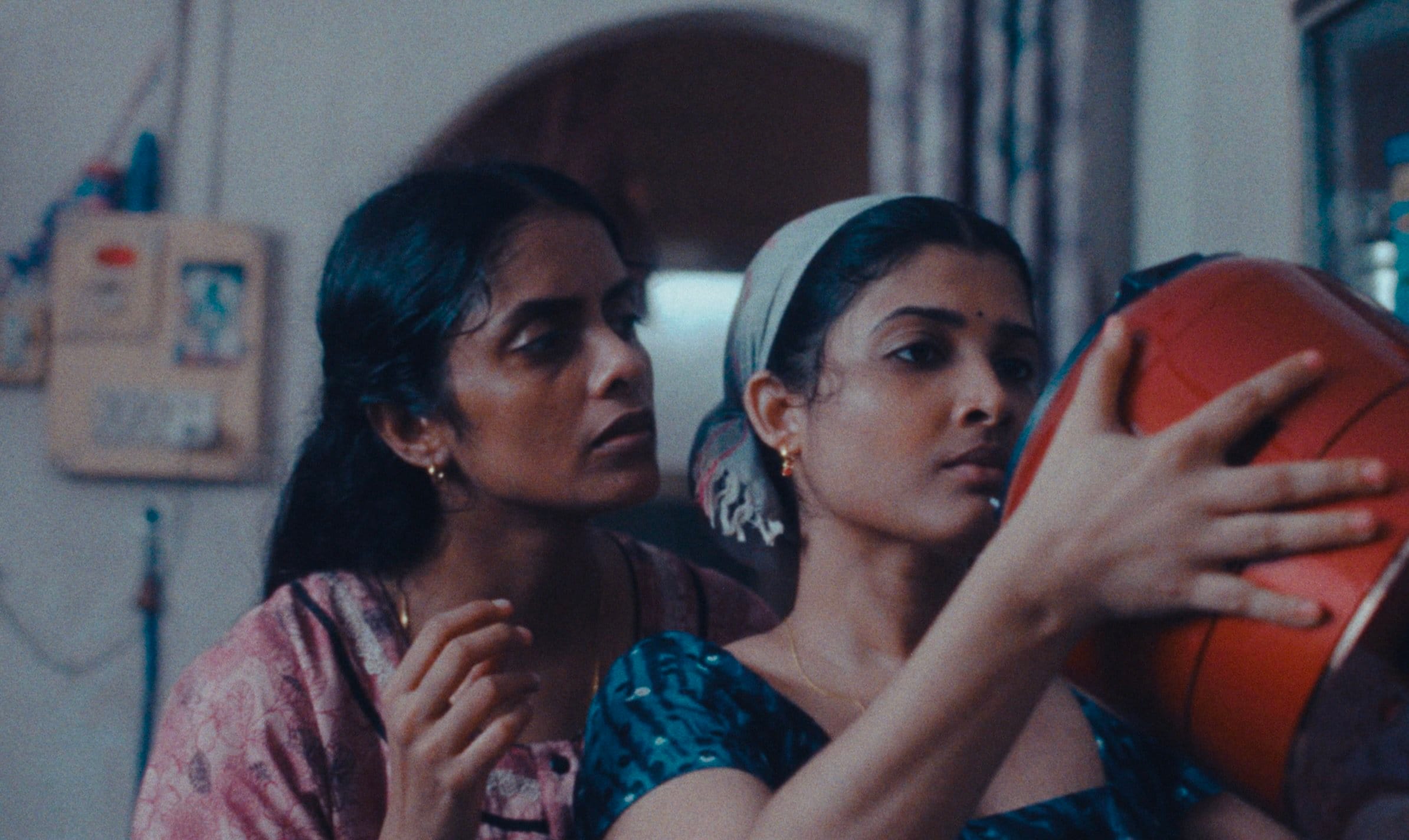
The unexpected gift of a rice cooker provides a unique and emotional jumping off point for writer-director Payal Kapadia’s debut feature All We Imagine as Light. It’s a seemingly innocuous and curious moment, at first, but one that proves how the strangest things can impact our emotions, memories, and futures. Keenly attuned to little details of life like these while capturing the enormity of living in a city as large as Mumbai, All We Imagine as Light is a female driven character drama rife with darkness, but never wallowing in depression. It’s a film about female empowerment that prefers quiet revelations over grandstanding melodrama, and signals the arrival of Kapadia (who won the Grand Prix at Cannes this year for her efforts here) as a major voice in international cinema.
Prabha (Kani Kusruti) and Anu (Divya Prabha) are unlikely roommates and nurses working at a hospital in Mumbai. The older and wearier Prabha hasn’t spoken with her husband – who went to Germany in search of work – for over a year, and said rice cooker is the only sign that he’s even still alive. Younger Anu is constantly having to deal with her parents sending her dating profiles from eligible potential husbands, while trying to carry on a romantic relationship with Shiaz (Hridhu Haroon), a young man she actually loves. Anu and Shiaz carry on their sure to be frowned upon relationship in secret, as if they were spies, while Prabha mentally spirals into a state of uncertainty and anxiety about her own partnership.
That’s not all that’s going in in All We Imagine as Light, but they provide a lot of motivation for the film’s primary characters: women who find themselves underestimated and alone in a male dominated society. There are some romantic elements to be found (sweet moments between Anu and Shiaz, a low key flirtation between Prabha and a kind-hearted doctor, played movingly by Azees Nedumangad), but Kapadia’s primary focus is on resilience in the face of a city seemingly built on apathy. The love of others and the pressures women face in Indian culture to settle down and have a family are omnipresent, but All We Imagine as Light instead chooses to go down a path of learning how to love oneself in a place that can drain people of their life’s essence.
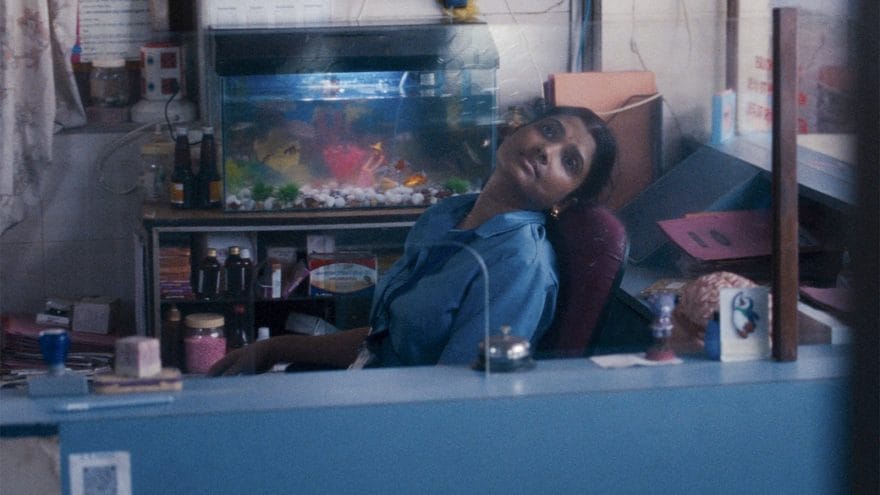
Kapadia opens and occasionally returns to voiceover from real life Mumbai residents – past and present – who talk about how the city can be the short term solution and long term cause of many people’s problems. Like many cities in the world, people live under cramped conditions, estranged from close family members, and barely make enough money to make their rent. Poverty amongst people who still work hard is rampant, as evidenced by a subplot where Prabha is trying to help a co-worker (Chhaya Kadam) from being forcibly evicted from their apartment so a new luxury condo – one that has giant billboards touting how “classy” it will be – can be erected in its place. The voiceover segments blend well into Kapadia’s verite dramatic sensibilities, speaking to the ways people have to buy into the illusion of prosperity that Mumbai sells itself as, or else they’ll go mad. Everyone knows someone in Mumbai who is supposedly doing well, but often those stories of success are nothing more than an illusion. “The Spirit of Mumbai,” as it’s once called, is an unspoken code amongst residents that says no matter how bad things get, you aren’t allowed to complain about them.
This makes being a single woman even harder. Although they don’t have the easiest relationship as roommates and colleagues, it’s clear that Prabha and Anu share a common bond that doesn’t need much explanation. They understand each other, even if they come from different generations and backgrounds. There is a togetherness, one that comes into sharper focus later in the film when they leave the hustle and bustle of the city for a brief time. It’s not so much a bonding experience between the two women as it is a chance to decompress. Their jobs working in a hospital are already stressful enough, but the city weighs even harder on their minds and hearts.
There’s a lot of warmth and heartbreak throughout Kapadia’s naturally illuminated All We Imagine as Light, but all of it is delivered with a touching, delicate sense of authenticity. The writer-director strikes a deft balance between displaying the importance of female friendships, while also espousing the need for women to have a place of their own and space to follow their own dreams and emotions. It’s the sort of film where viewers will effortlessly be able to see reflections of their own lives, regardless of their geographical locations. All We Imagine as Light speaks quiet truths, but within those volumes are boundless echoes of women past and present.
All We Imagine as Light opens on Friday, November 22, 2024 at TIFF Lightbox in Toronto, Bytowne Cinema in Ottawa, Sudbury Indie Cinema, Metro Cinema in Edmonton, Carbon Arc in Halifax, Dave Barber Cinematheque in Winnipeg, Vancity in Vancouver, and The Vic in Victoria.
