

The animated franchise spin-off The Lord of the Rings: The War of the Rohirrim fails to capture so much as a fraction of the narrative and visual magic that made everything that came before it so iconic and enthralling. Boasting an old school style of Japanese animation that sounds like a good fit for such a grand fantasy on paper, but a bad one in terms of execution, The Lord of the Rings: The War of the Rohirrim feels like a throwback in a bad way, not a pleasing one. A clunky assembly of spare parts birthed from a story found in the appendices of author J.R.R. Tolkien’s original trilogy, veteran animator Kenji Kamiyama’s take on material better adapted by the likes of Peter Jackson and Ralph Bakshi has all the charm and importance of… well… reading an appendix.
Narrated by Miranda Otto’s Éowyn, the (kinda sorta) only returning character from the recent films, The Lord of the Rings: The War of the Rohirrim looks into the history of the significant battleground, Helm’s Deep, an impenetrable mountain-set fortress that protected the people of Rohan during their darkest hour. Set 138 years prior to The Fellowship of the Ring, the story begins with political intrigue and unrest. Rohan ruler Helm Hammerhand (voiced by Brian Cox, who actually has a better animated showing as Santa in the recently released That Christmas) is coming under fire for promising the hand of his daughter, Hèra (Gaia Wise) to Gondorian nobility. This infuriates the leader of the mountain peoples (Shaun Dooley), who believes his son, Wulf (Luke Pasqualino), should marry Hèra. A brawl between the two leaders turns deadly, sparking a vengeful Wulf to seek revenge, with the help of a turncoat Rohirran general (Michael Wildman). Helm’s hubris and ego gets the better of him, and with his people under siege, it’s up to Hèra to rise up and defend the freedom of the kingdom of Rohan.
The story found within The Lord of the Rings: The War of the Rohirrim (co-produced in part by Peter Jackson, Fran Walsh, and Philippa Boyens, all major players in the success of the live action Tolkien adaptations) isn’t a bad starting point, and it’s framed well early on. Initially, this feels like it wants to tell the story of a woman whose contributions have been unjustly left out of the history books, which is a neat take on a series that has so much lore to sift through. It wastes no time with the set-up, but then proceeds to waste a lot of time by focusing on minutiae that adds little to the overall narrative. So much of The War of the Rohirrim is about planning and restating the obvious. The character depth and ingenuity that were all hallmarks of Jackson’s films is all but gone here, replaced by heroes and villains with cut and dry morals, predictable story beats, and long, dull periods where not much of note transpires; the film simply killing time until the next big action beat hits, and making the viewer’s investment and patience pay dearly for it.
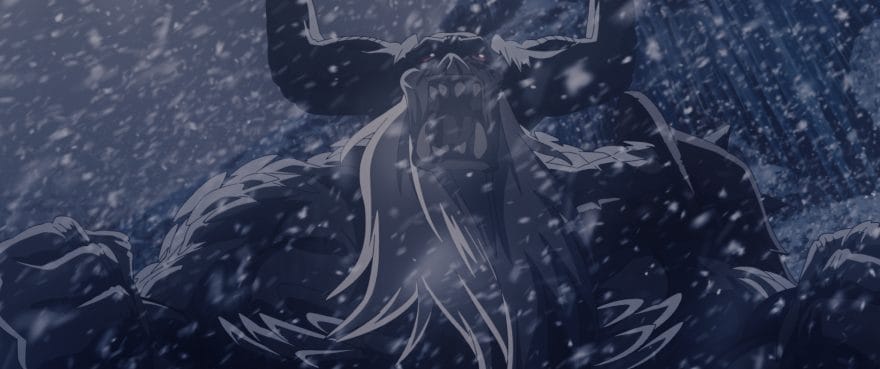
There’s little genuine emotion and substance to be found here, outside of a remarkably tender and bittersweet moment between a man and his aging horse. None of that is helped by a poorly executed story pivot leading into the film’s climax that nearly robs Hèra of all her agency as a leader and hero, and ultimately adds little once that moment has passed. Every time the story starts to gain momentum and the characters feel like they are growing, Kamiyama and the writing team throw it all out the window for a variety of set pieces that – with the notable exception of a bit involving a rabid elephant and a bog monster – never get the pulse racing. Everything that happens in The Lord of the Rings: The War of the Rohirrim is situational, meaning stuff goes down in a bid to break up the monotony without realizing that these beats are the very cause of the story’s slowdown.
But even more than the stop-start nature of the pacing and the predictability of the story, it’s the animation itself that provides the biggest letdown for The Lord of the Rings: The War of the Rohirrim. Kamiyama has worked on a lot of notable anime projects over the years (including several incarnations of Ghost in the Shell), but his style doesn’t match to the lush grandeur of Middle Earth. This is a film that looks cheap; more like an 80s import that has been retrofitted to feel like a made-for-TV special than a theatrically releasable movie. The backgrounds look like they’ve been completed by a very different set of animators than the people who were in charge of the characters, and the disconnect suggests there was little communication between departments. The movement of the characters in dialogue scenes is inorganic and jerky, making me sometimes question if the DCP was failing or skipping, only for the next scene to have a lot of action. It’s a project that might’ve had some ambition at one point, but the final product looks like a fair number of corners have been cut. Even the musical score (here produced by Stephen Gallagher, who worked on The Hobbit films as a music editor) feels perfunctory and like a placeholder for something better down the road.
While I can admit that the cheapness of The War of the Rohirrim conjured up some warm feelings of watching a cut-rate animation program on a Saturday morning, I was convinced that this wasn’t a good thing for a project taking itself so seriously. It’s a slack film that disappoints at every turn. It’s not the kind of thing worth getting mad about, but definitely one where viewers will likely wonder if there wasn’t a better way of telling this particular story. Or, better yet, simply leaving Tolkien’s supplementary materials as seasonings rather than full blown meals.
The Lord of the Rings: The War of the Rohirrim opens in theatres everywhere on Friday, December 13, 2024.
