

An interesting and trippy footnote in the career of a major Italian horror movie icon, the made for TV production The Mask of Satan isn’t a great film in terms of quality and pacing, but it’s still worthy of preservation and collection. It’s also noteworthy because it’s the work of a son paying direct homage to one of the films that made his father famous. A reworking of Mario Bava’s landmark Black Sunday, this 1989 effort from Lamberto Bava isn’t nearly as skin crawling or terrifying as the original adaptation of Nikolay Gogol’s novella Vil, but its strange visuals and dreamlike logic are nicely preserved on the new North American Blu-Ray from Severin Films.
A group of young people out for an extreme skiing adventure in the mountains of Northern Italy find themselves in a fight for survival after they fall into a snowy, icy crevasse. Inside the chilly cave, the skiers discover a frozen body with an unusual metal burial mask nailed onto the face. As is often the case with these sort of movies, they fuck around, remove the mask, goof off, and soon realize they’re in a heap of trouble. Through a series of events that are hard to explain, the friends make their way through a network of caves that lead to a strange village that seems stuck in the past, and the only resident there is a skeptical, blind priest (Stanko Molnar). It turns out that this is a cursed place that killed a powerful witch (Eva Grimaldi) at the stake back in 1647, and that body and mask the skiers found were her’s. The friends all start coming unhinged, acting violent and erratic, all except for the likeable young lovers Sabina (Debora Caprioglio, then credited as Debora Kinski, since she was dating Klaus Kinski at the time and his name held more marquee value) and Davide (Giovanni Guidelli). The witch’s power grows stronger, leading Davide into a gristly and unsettling psychological state where he can’t tell what’s real and what’s in his head.
The Mask of Satan is also known in some territories and circles as Demons 5: The Devil’s Veil, which makes sense. It certainly owes a fair bit to Lamberto Bava’s first two outstanding Demons films in terms of style and the inclusion of deadly metal masks. (And if you don’t already know about the strange numbering and classifying of films in the Demons series, I wouldn’t start trying to figure it out. It makes even less sense than The Mask of Satan does.) As a remake of Black Sunday, it’s less effective, something the younger Bava more or less admits in the Blu-Ray’s special features. In spite of working on several sequels and remakes over the years, Lamberto states that he doesn’t enjoy watching them. The Mask of Satan was more or less suggested by one of Lamberto’s producers – who had worked with his father in the past – as an homage. Lamberto in that same interview on the disc also suggests that his father wasn’t much impressed by The Mask of Satan, and posits that could be the reason why the film fell out of circulation for so long.
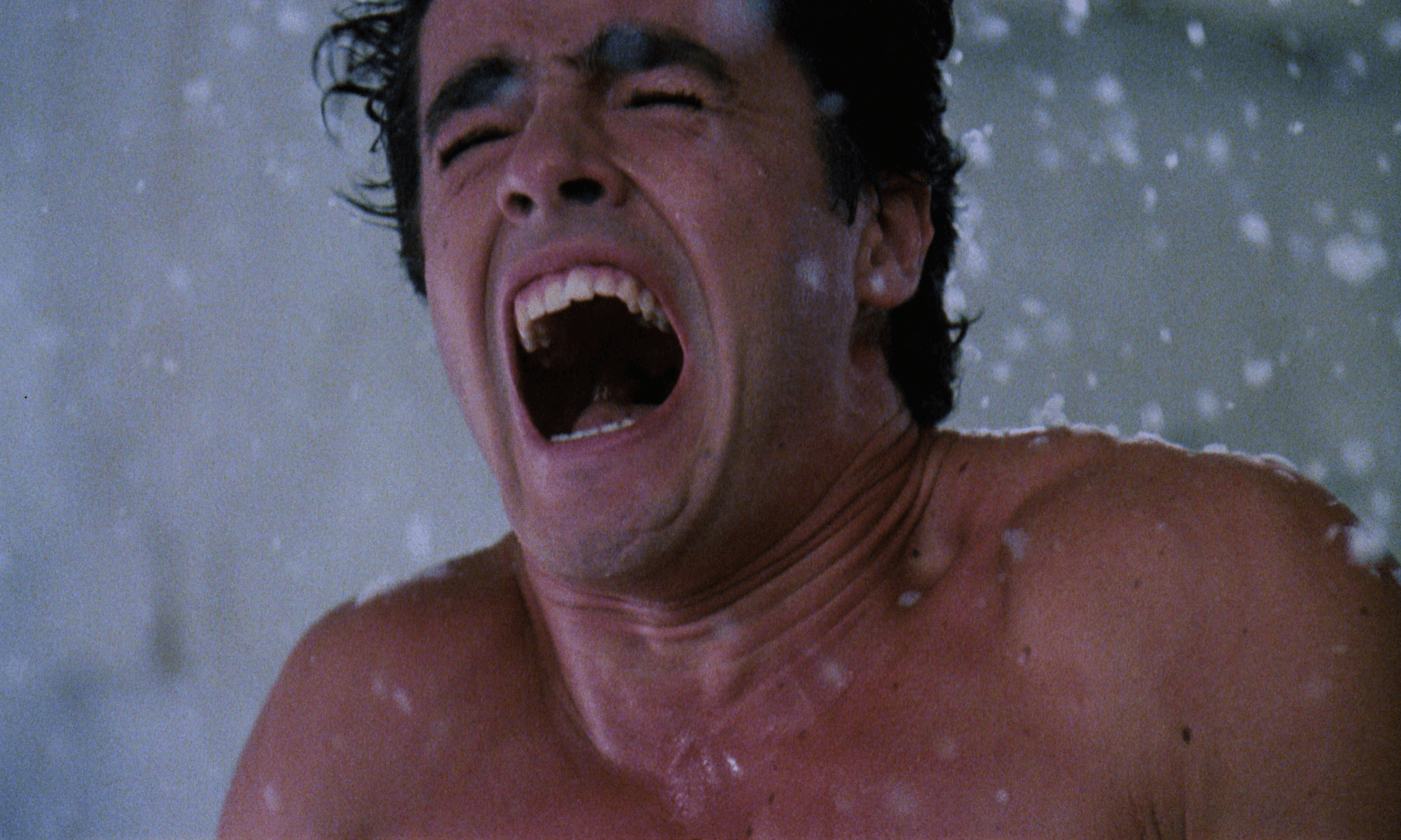
Another reason to account for its scarcity is the film’s made for television nature. The Mask of Satan was the fourth episode in a Spanish produced anthology series titled Sabbath, revolving around stories of witchcraft, where each instalment would take place and be produced in a different European country and culture. It wasn’t the most popular or memorable episode in that series. Going hand in hand with the medium, diehard Lamberto Bava fans might find The Mask of Satan a lot slower paced and less gruesome than some of the director’s career highlights. While there are still wince inducing bursts of grotesquerie and violence (most notably a sex scene in a barn that’s pure nightmare fuel), the tone and pace of Bava’s film is a lot more low key.
It’s also a film that runs on repetition, especially in the second half, which could also account for this not being everyone’s cup of bloody tea. As Davide shifts into full on protagonist mode and his friends all start turning on him, The Mask of Satan becomes beholden to a dreamlike sense of logic and near misses. Things become incoherent by design, not by accident, and the viewer feels like they are stuck in a time loop where characters repeatedly make the same mistakes over and over again expecting different outcomes. It’s par for the course for this sort of thing, but also an acquired taste that’s best experienced by die hard genre buffs and Bava completists.
But that’s why it’s also important to preserve films like The Mask of Satan. For all the negative things one could say about it, Bava still sounds pleased with the work he turned in and is excited for people to view it with fresh eyes. The production design inside the ice caves and the spooky church is great for its time and budget level, and while some of the computer generated visual effects are primitive, the practical make-up and set pieces are well done (save for some hokey rubber flying creatures that will bring some giggles and an abundance of soap bubble snow). The leading performances of Caprioglio and Guidelli also bring some much needed emotion and balance to an otherwise unhinged cast, chock full of people one wouldn’t want to be caught in a room with even if they WEREN’T possessed. If you know what to expect or what you’re getting into, The Mask of Satan will hold some appeal. This one is mainly for the fans and collectors, but that doesn’t mean it’s lacking in significance.
