
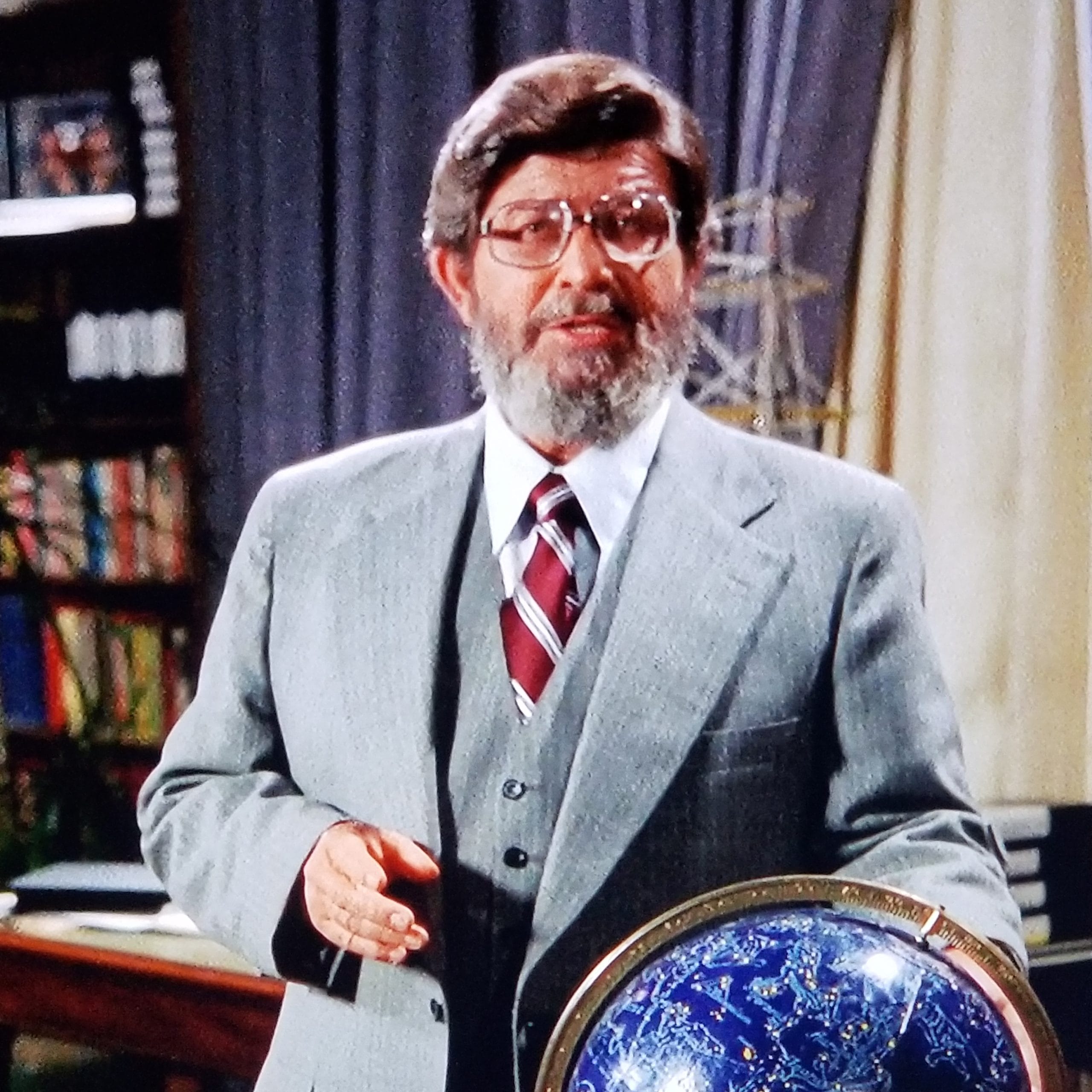
The eyebrow raising theories at the heart of the 1979 pseudo-science based documentary The Bermuda Triangle are almost quaint compared to the kind of things foisted upon the public today. Back then as it is today, such documentaries – which traffic in sensationalism and speculation – were popular with the moviegoing public. While it was never a massive box office sensation, The Bermuda Triangle was able to procure a theatrical release (where it would briefly become a a drive-in staple) and rode a moderately sized wave of fascination surrounding that mysterious and deadly patch of ocean between Miami, Bermuda, and San Juan.
That fascination was fuelled in part by the publication of the film’s source material, a book by Charles Berlitz. Directed by Richard Friedenberg and scripted for the screen by Stephen Lord, Berlitz still gets top billing, and with good reason. The Bermuda Triangle, the book, sold twenty million copies during a time when such things were possible. Offering up “theories” and “explanations” about the mysterious nature of the area formerly known by sailors as the “sea of fear,” Berlitz’s book was understandably met with a healthy degree of skepticism from other researchers and scientists, none of which satiated the reading public. It also didn’t stop Friedenberg’s film from being the SECOND adaptation of the book in the span of a little over a year, with the first being a fictionalized Italian-Mexican produced sci-fi horror directed by René Cardona Jr. (Tintorera) and starring John Huston, Gloria Guida, and Hugo Stiglitz.
The fictionalized take on the “non-fiction” book, published in 1974, is no less overblown and campy than Friedenberg’s movie, but the production values are better on the documentary. A considerable amount of admirable effort went into making The Bermuda Triangle into a great looking motion picture, complete with large scale (but still silly) recreations that look better than anything in Cardona’s film. The Bermuda Triangle looks better today than it likely did on the big screen or via television airings, thanks to the gorgeous, recent transfer to Blu-Ray (put out by Kino Lorber, with the assistance of Paramount Pictures). Through the use of miniatures, camera trickery, and visual effects that appear dated by today’s standards, The Bermuda Triangle boasts a level of production value that makes it look endearing and scrappy. It also helps to let the modern viewer take what Friedenberg and Berlitz are laying down with a healthy truckload of rock salt.
The Bermuda Triangle comes across like a prototype for the more supernatural leaning segments that would be featured on Unsolved Mysteries throughout the 80s and 90s. An untold number sea faring and high flying crafts have disappeared in this odd patch of the Atlantic, which lends to the mysterious appeal of the region. (Untold, because prior to the demise of the USS Insurgent in 1800, records weren’t properly kept about precisely how many crafts met their ends there.) The reality of the Bermuda Triangle itself isn’t that mysterious. It’s a perfectly normal part of the ocean that’s prone to sudden, volatile changes in weather that can conjure up devastating currents that prove difficult to navigate. But don’t let meteorological truth get in the way of a good tale.
Friedenberg, Lord, and Berlitz go all in on the metaphysical explanations for what could be going on. The film opens, hilariously, as Columbus’ men see a UFO in the skies during their 1492 exploration of The New World, with the story constantly going back to the presence of extraterrestrials as an explanation. Someone with a terrible French accent shows up to talk about “blue holes,” theoretical time portals within the ocean. Psychic Edgar Casey pops up to talk about the area being the location of the sunken ancient city of Atlantis. Berlitz gets to tie this region of the world the The Philadelphia Experiment, which just so happens to be the topic of another one of his bestsellers. And naturally, the film suggests that the secrets of the Bermuda Triangle are so incendiary that people are willing to kill over them.
The stern, arch, and authoritative tone of The Bermuda Triangle offers plenty of unintentional hilarity when viewed in a modern context, but at the time this was the state of the mainstream documentary. Hammy acting abounds in the film’s dramatized portions, looking more the part of a 50s or 60s sci-fi thriller than a late 70s documentary. This focus on entertainment above information was part and parcel of the film’s Salt Lake City located distributor, Sunn Classic Pictures, an independent outfit that scored some minor hits throughout the era with the likes of The Lincoln Conspiracy, Beyond and Back, In Search of Noah’s Ark, and perhaps most notably, In Search of Historic Jesus, which had quite a lengthy run in some markets, well before anyone saw “faith based cinema” as a viable source of revenue. The Bermuda Triangle also makes good use of Brad Crandall, a former New York City talk radio host who would be the on screen narrator and lecturer for many of the company’s efforts.
Crandall’s on screen presence and the film overall hold zero credibility, and Berlitz’s book and this adaptation are footnotes to (alternative) history. But while I would have a hard time praising any of the themes and subjects broached in The Bermuda Triangle, the film does manage to entertain. There’s a compulsive watchability to The Bermuda Triangle that sucks the viewer in. One wants to see just how crazy and outlandish these theories can get, even if the lot of them are unbelievable or easily disproven. As a documentary, The Bermuda Triangle is pure rubbish. As a relic from a bygone era, The Bermuda Triangle doesn’t disappoint, and collectors of off-beat media will absolutely want to add this to their library.
The Bermuda Triangle is now available on Blu-Ray from Kino Lorber Studio Classics.
