
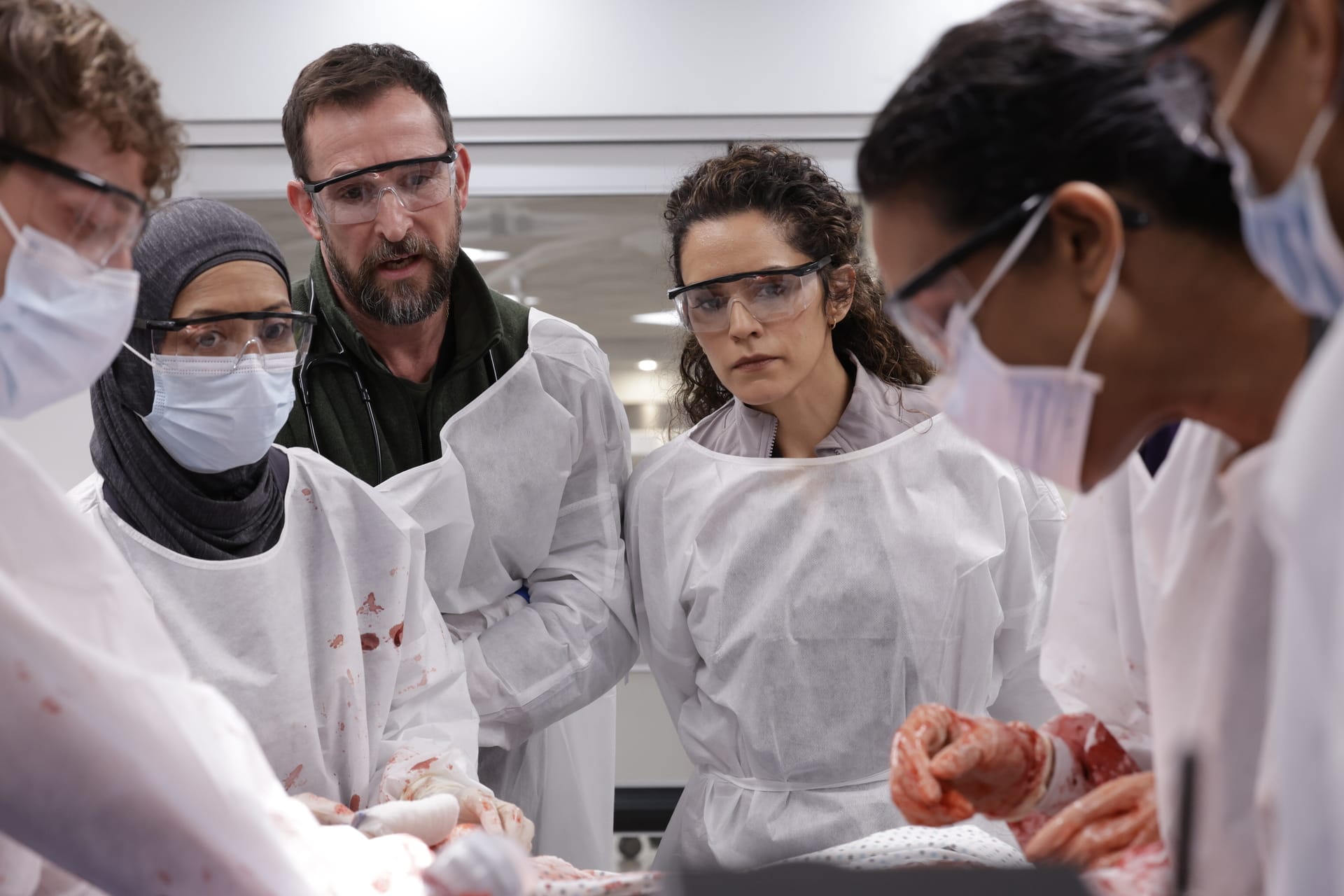
Season two of the outstanding medical drama The Pitt doesn’t tinker with the formula that made it such a critical and audience success last year. It throws viewers headlong into the everyday life of a care provider at one of Pittsburgh’s busiest trauma centres and teaching hospitals; barely taking breaks or breathers along the way. The Pitt might take place at a different time of year than the first season, and some of the players have changed, but the song remains the same. Working in such a chaotic environment takes great dexterity, bottomless reserve, plenty of nerves, and an ability to compartmentalize matters of life and death in fractions of a second. The pressure cooker, pin-balling tone of The Pitt returns with just as much impact as the first time around without variation. And in this case, that’s a great thing, not a detriment.
Season two of The Pitt takes place ten months after the events depicted in the first outing, with Dr. Robinavitch (Noah Wyle) riding into work on his motorcycle at 7am on the fourth of July. Dr. Robby has mixed feelings, which isn’t anything new for the character, but his specific emotional state on this date falls somewhere between relief and concern. It’s his last day of work before a three month sabbatical, which he intends to spend going on a cross-country trip on his bike to rural Alberta. He’s very much looking forward to getting out of the city, but he’s also avoiding plenty of loose ends that need tying up before taking off.
His replacement, Dr. Al-Hashimi (Sepideh Moafi), has an enthusiasm for technology, AI, and patient satisfaction scores that he doesn’t share. The resident psychiatrist, Dr. Jefferson (Christopher Thornton) wants to have a word with Robby before the day ends. And it’s the first day back to work for Dr. Langdon (Patrick Ball), who Robby attempted to fire for stealing meds, but he’s successfully completed a rehabilitation program and has been allowed back to work. Robby was hoping to be long gone on his trip before Dr. Langdon returned, and while the former addict expresses regret, his superior wants no part of any twelve-step mandated apologies.
And that’s all in addition to the day-to-day crises that come through the hospital’s sweltering waiting room over the course of a fifteen hour shift and dealing with the constantly clashing personalities and neuroses of all the other student doctors, nurses, and attendings. Series creator R. Scott Gemmill and his creative team (which extends to Wyle, who pitches in to write and directed several episodes) ease viewers into The Pitt this season, which starts off as an abnormally slow day for the hospital before growing increasingly stressful and untenable for the frazzled staff as a result of another local ER being forced to close for the day under mysterious circumstances. There are plenty of new maladies, illnesses, and injuries on display (dislocated joints, parkour accidents, car crashes, potential cases of abuse, an odd case of what appears to be pinkeye, even an abandoned baby), and the characters need to constantly stay on top of ever escalating situation at the same time.
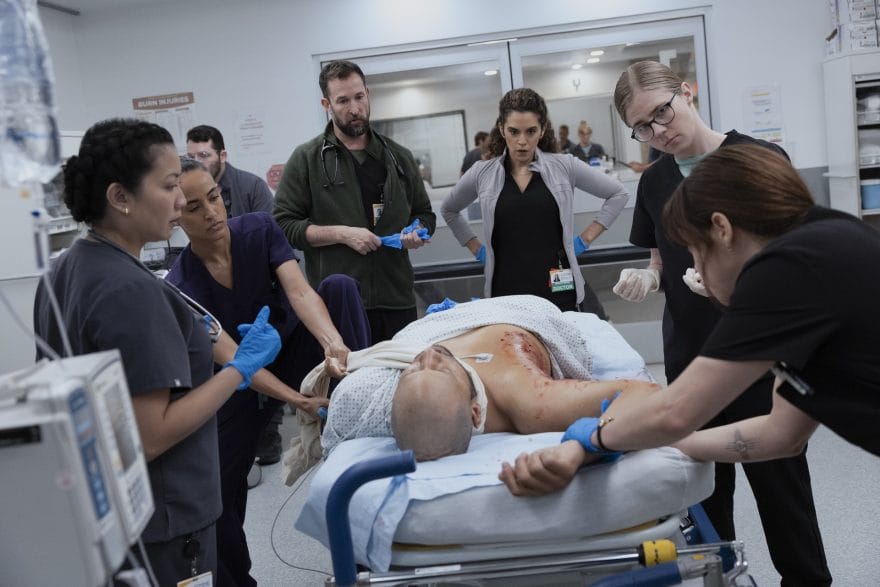
One of the best aspects of The Pitt is its ability to constantly remind the viewer of numerous threads at once, making the outstanding rigours of life in a trauma centre easier to keep track of. The action, editing, and camerawork are always able to move effortlessly from one situation to the next without missing a beat. While The Pitt is often mistakenly referred to as a “real time” show (even though each episode is less than a full sixty minutes), it feels like a rundown of events that a staff member might be given in a compact amount of time. The viewer is always aware of when a patient is triaged, seen, treated, and either admitted to the hospital proper or discharged to go home. This second season’s decision to have the day start off on a slower note is actually a savvy way to build the viewer’s tolerance for retaining information once things start to grow increasingly more stressful. It tries to prepare the viewer for situations even the most skilled and stoic of professionals have little training to comprehend.
The Pitt also allows a wide variety of viewers to see themselves in and empathize with a large amount of characters who float in and out of the core dynamic, be they patients or the staff. Lovably awkward Dr. Melissa King (Taylor Dearden) isn’t her usual chipper self, fretting the day away as an imposing deadline looms later that afternoon. Student Doctor Victoria Javadi (Shabana Azeez) still feels pressure from her mother to pursue a surgical residency, although she has been carving a unique path of her own in recent months. Dr. Santos (Isa Briones) is as cocky as ever, but starting to exhibit signs of burnout and is in danger of falling behind on her reporting. Dr. Whitaker (Gerran Howell) has become a full fledged physician and is now in charge of teaching the ropes of the ER to a pair of students: Ogilvie (Lucas Iverson), a know-it-all, hard charger who could give Santos a run for her money, and Joy (Irene Choi), a smart but often aloof and nonplussed figure who can’t stand being around all the trauma and chaos (or Ogilvie, for that matter). And the bedrock of the emergency department, Charge Nurse Dana Evans (Katherine LaNasa), has a trainee of her own to deal with in the form of the soft spoken, but attentive Emma (Laëtitia Hollard).
Amid the tackling of a wide range of hospital issues from accessibility to services (as seen through the eyes of a deaf patient struggling to be heard) to the high cost of medical care (a hard working father with severe diabetes) to other delicate situations, this season, much like the first, also has an overarching theme. If the first season focused on confronting latent, inner trauma, this one largely revolves around not being able to do things that we might’ve taken for granted in the past. The ability to walk, access to helpful technology, being there for a loved one, and razor sharp memory are all things that can be taken from us in the blink of an eye, and nothing can prepare people for these potentially life altering or ending events. If the first season of The Pitt was about confronting loss, the second is more about finding acceptance.
The cast hasn’t missed a step, even if their characters have evolved in the unseen gap between the first and second seasons. Dearden and Briones, in particular, find intriguing and enriching new layers to their characters that make both of them more endearing and relatable than they were in the previous season, even though the former played an already likeable person while the latter is the kind of personality one definitely has to warm up to. Moafi is able to match the show’s tone perfectly as a character that’s both Dr. Robby’s equal and antagonist, and her sometimes frosty/sometimes jovial on-screen relationship to Wyle adds a different kind of tension that the show was missing before. Thornton and Meta Golding (who plays a bed control nurse and case manager that has a curiously flirty relationship with Dr. Robby) are outstanding additions to the cast along the periphery, with Iverson and Choi slotting in nicely as characters that look like they could be joining the core team sometime soon. Wyle’s balance of weariness, professionalism, skepticism, and empathy continue to provide The Pitt with a solid beating heart, and somehow the award winning LaNasa ups her game from the first season with even more to do and absolutely crushing it with some of this instalment’s toughest material.
Like a well oiled machine, The Pitt is a series with no weak spots that continues to function to the highest standards of series television. Casual observers might see this second season of the show to be a case of not fixing what wasn’t broken, but thoughtful viewers will be able to immediately clock what’s different and how things are starting to evolve and change. A lot of the repeated problems and people might look like they stay the same, but even the tiniest of modifications can have tremendous ripple effects for the show and everything around it. The balance between predictable routine (the sort of things that can help people deal with stressful situations) and unforeseen events is perfectly calibrated by everyone involved with The Pitt. These writers, performers, directors, and craftspeople are more than willing to invite viewers into a place that’s instantly recognizable and almost impossible to fully know. It may well be the finest, most unflinching show of its kind.
Season two of The Pitt starts on Thursday, January 8 at 9:00pm EST on Crave, with new episodes every week until the finale on April 16. It streams on HBO Max in the U.S.
