
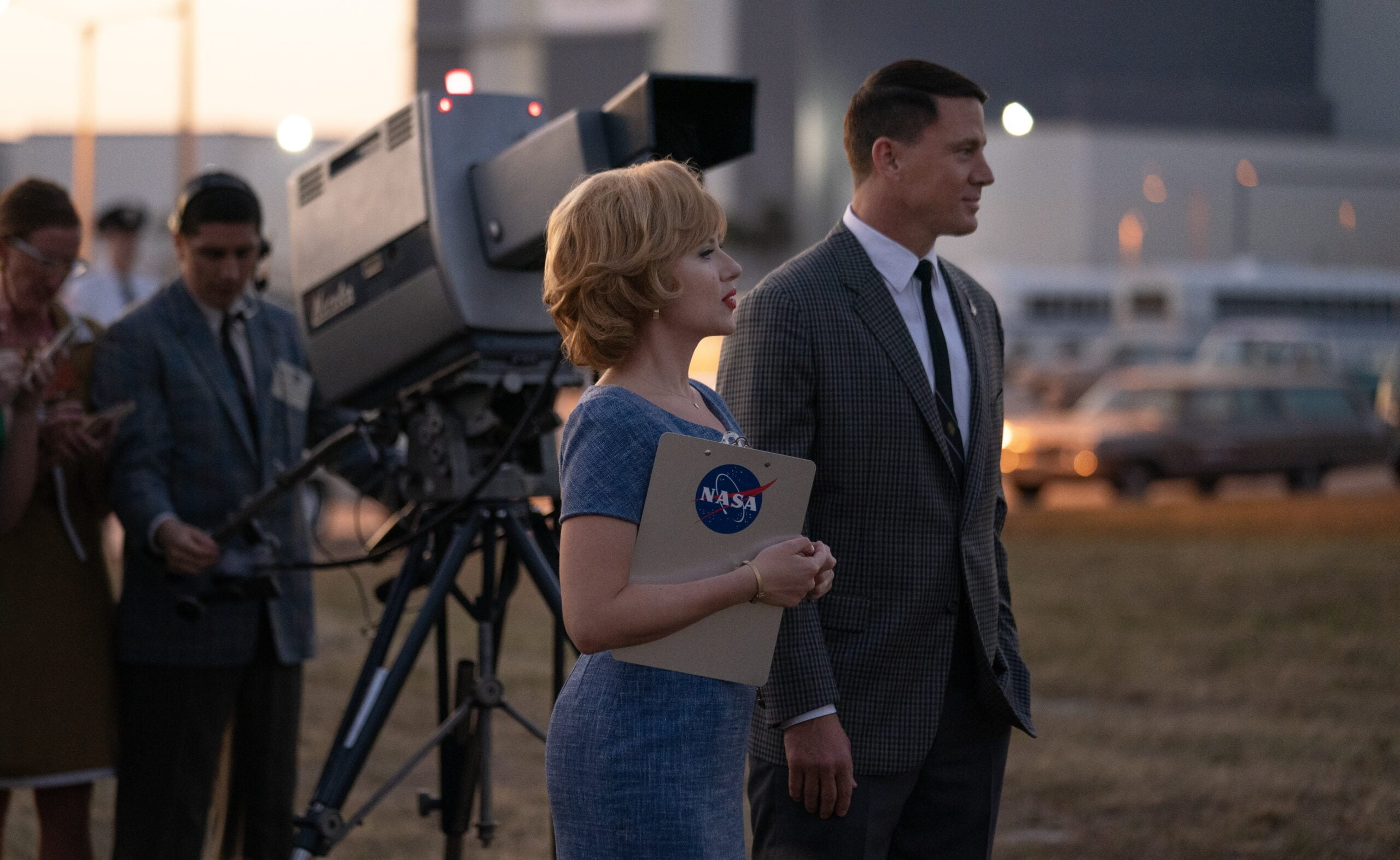
Leadenly paced and not particularly funny, the period piece rom-com Fly Me to the Moon has an eagerness to please that exhausts more than it entertains. It’s a project that wants to capture the feeling of an old school screwball comedy of the 1930s, but it takes place in the late 1960s, when such things were already out of fashion. Similarly, a lot of the writing and tropes make Fly Me to the Moon appear like a film about the 60s that was made in the 90s with all of its snappy banter and a bunch of “helpful” side characters on hand to enhance a will-they-or-won’t-they romance.
But it’s also a film that’s trying to feel like the 30s, 60s, and 90s simultaneously, while also including a bunch of modern era references and snark that only serves to make the latest effort from director and television veteran Greg Berlanti feel completely out of step with anything the script from first time writer Rose Gilroy is trying to achieve. Oh, and it’s like watching two separate scripts that are vaguely about the same topic frankensteined together, with one beginning just as the film should be ending, dragging things jaw-droppingly past the two hour mark. It’s an absolute mess.
Fly Me to the Moon revolves around NASA’s final push to get an astronaut on the moon. Public interest in going to space is waning thanks to the ongoing war in Vietnam, not to mention a bunch of other horrible things that happened in 1968, when this largely takes place, but there’s no interest in any of that here. A shadowy operative (Woody Harrelson) working under the employ of the president wants to hire a marketing maven that can sell the American public on the upcoming Apollo 11 mission, with hopes the heightened profile would mean a victory for the US over the Russians in the space race. He chooses (meaning: blackmails) ace corporate bullshitter named Kelly Jones (Scarlett Johansson), a huckster with the gift of gab and no knowledge whatsoever about what happens at NASA. Immediately upon her arrival at Kennedy Space Center in Florida, Kelly gets under the skin of stressed out launch director Cole Davis (Channing Tatum), a consummate pro who sees all the added hullabaloo as an unnecessary distraction while his team works under a tight seven month deadline.
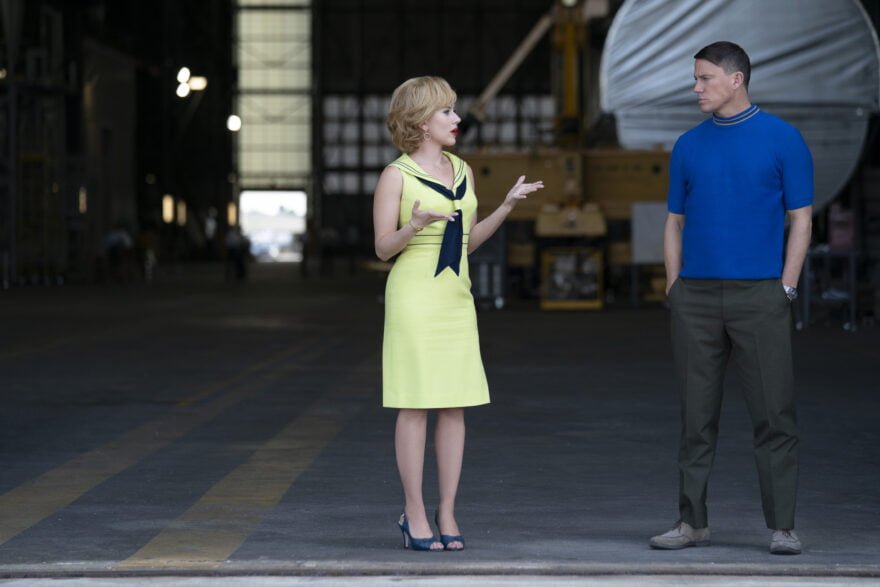
The pairing of Johansson and Tatum sounds inspired, but while they have a pleasing rocket fuel and champagne chemistry and a requisite amount of skeletons in their characters’ closets to play with, the script and direction are constantly working against them. Berlanti (Love, Simon, Life as We Know It) is so focused on making everything vibrant and colourful that the cast is on their own to figure this one out. There’s some nifty bits of period accuracy here, but it’s also the cleanest and tidiest the space program has ever looked on film, which is a distraction from the weight of both the romance and the characters’ objectives. (Although the use of real NASA facilities does add a large scale that’s sometimes cool to observe.) And the script is so rigidly focused on hiding its derivative nature that it gives the cast nothing worth saying that hasn’t been said before.
For a film this bright and sunny in disposition, Fly Me to the Moon is unusually cold and calculated in its presentation. Johansson and Tatum bring the full powers of their charm offensive, getting the occasional chuckle out of the former’s guile and the latter’s talent for comedic understatement, but their romantic partnership is always operating at a deficit. Fly Me to the Moon has a lot of ingredients to make several different films on the same variation, but little idea how it wants to bring them all together. So it settles for putting all of these ingredients out in pretty dishes on a perfectly set table without ever making anything from them.
This becomes horrifically evident when what – I think – is the film’s main plot kicks in: a full SEVENTY minutes into the movie. Just as things look to be wrapping up in a fashion that would’ve been passably unexceptional, Berlanti and Gilroy decide they also want to make a movie about the long rumoured notion that there was a fake version of the moon landing made in secret in case the mission failed. Not content with an already laid out arc that brings Kelly and Cole together nicely and with the requisite amount of enemies-to-lovers tropes, Fly Me to the Moon starts the story basically from scratch, so it can once again look good at doing nothing all that exciting. If the story in the first half of Fly Me to the Moon is cornier than side dishes at a barbecue joint, the second half is flat out maudlin, disingenuous, and slow to boot.
Berlanti’s desire to wring laughs, tears, and drama out of this rotten material is consistently desperate. Fly Me to the Moon is giving its all, but it’s giving too much. With a clearer objective, there’s some decent matinee movie potential here, probably enough for a movie and a sequel. But Berlanti and company refuse to pick a path and stick with it. If this were a simpler workplace story about the space program and the ethical issues about how powerful influencers keep stories firmly in the public eye, this would probably work. If it were a simple rom-com set at NASA, it would probably work. If it were a movie about faking the moon landing, it would probably work. But together, it doesn’t work.
Fly Me to the Moon opens in theatres everywhere on Friday, July 12, 2024.
