
Although hampered by an off-kilter sense of pacing and structure, the historical and spiritually tinted true crime documentary Monkey on a Stick offers a head-spinning deep dive into the darker side of the Hare Krishna movement during the 1970s and 80s. Based on the 1988 book of the same name by John Hubner and Lindsey Gruson, Monkey on a Stick refers to someone being made an example of in hopes that other followers would be dissuaded from running afoul of their gurus, but director Jason Lapeyre (I Declare War) has a lot of groundwork to lay before getting around to the overall thrust of the story at hand. It’s a start-stop-speed-up-slow-down documentary that weaves one heck of a story, but the ins and outs of explaining a complicated and wide reaching criminal enterprise, combined with an examination of other cover-ups within the organization and discussions as to whether or not Hare Krishna is a cult or a scam lead to a final product that would be better served in a series format than a single volume film. There’s too much to fit into Monkey on a Stick, but on the positive side, all of it is fascinating.
Established in New York City during the mid-1960s by Swami Prabhupada, Hare Krishna is a spiritual movement that seeks to offer followers bliss through the love of the deity Krishna and an escape from a world of suffering. Thanks in no small part to the counter-culture movement of the 1960s, within a decade the popularity of Hare Krishna – also known as ISKCON (The International Society for Krishna Consciousness) – spread worldwide. While many devotees find peace and enlightenment within Hare Krishna, others were exposed to a darker side of the organization that included shady fundraising techniques, selling counterfeit merchandise, sexual improprieties, child abuse, weapon stockpiling, drug dealing, and murder. Many of those indiscretions (many of which were expressly outlawed in Prabhupada’s own edicts) reached the highest levels of the organization, and things only got progressively worse for the Hare Krishna movement following the passing of Prabhupada in 1977, which left a power vacuum that could be filled by any number of unqualified candidates for leadership because all other gurus were seen by the deceased leader as being equally close to God.
Monkey on a Stick is decidedly and understandably skeptical towards Hare Krishna, but stops short of being an all out hit piece. Instead, Lapeyre (who has dabbled in true crime before) shows the flaws in Prabhupada’s system of beliefs and the various ways bad actors and charlatans could take advantage of loopholes and unrestrained power. Many of the “special devotees” selected to become gurus were young men in their 20s who still coveted material things and became drunk with power (and many other substances, usually hash, cocaine, and acid). And to further muddy the waters, many branches of the spiritual movement had little to no connection to each other, creating further corruption through conflicts of interest.
The title most specifically refers to the murder of Steve Bryant, a whistleblower who sought to expose the sexual abuse of children within a massive temple in West Virginia. This incident sent shockwaves throughout the church, but it wasn’t the first time Hare Krishna’s devoted PR team had to wade through muddy waters. And those earlier brushes with the law are ultimately what makes the first half of Monkey on a Stick so tricky to get through.
There are so many other conspiracies, injustices, and crimes to get through before finally arriving at Bryant’s assassination that everything feels like its is competing for time and space. There’s almost too much to sift through and cram into a limited amount of space. Every aside – whether it’s about Krishna fundraising, the unfair treatment of women, their heavily censored and controlled in-house newspaper, gurus who wanted to be rock stars, and various busts for a variety of crimes – could fill its own episode. There was a recent series made about the criminal underbelly within the Krishna movement – albeit one that isn’t available in Canada at the moment – and that feels like a better approach than the early episodic structure Lapeyre has to adapt to here. The first half rattles through the foundations of Hare Krishna and a lot of misdeeds, but only really finds footing when it talks in depth about Bryant and his flawed crusade against the organization.
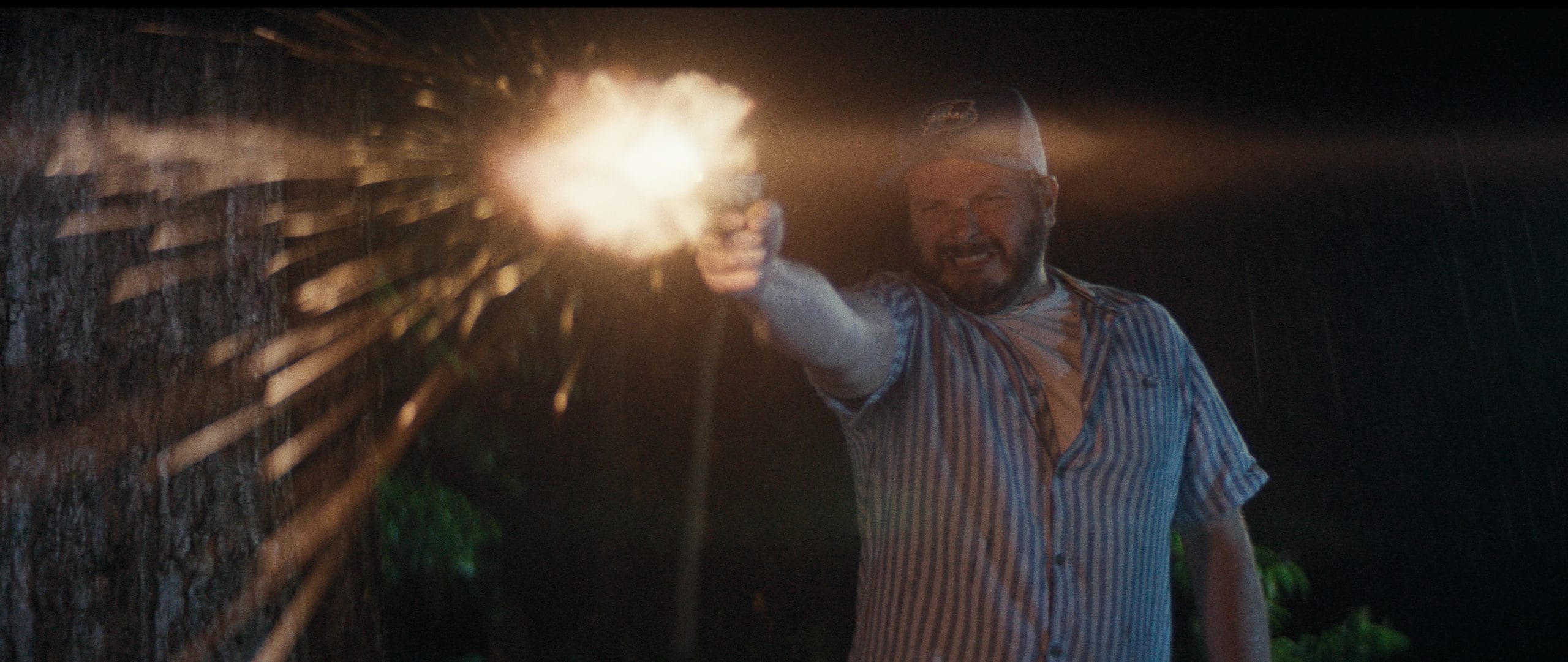
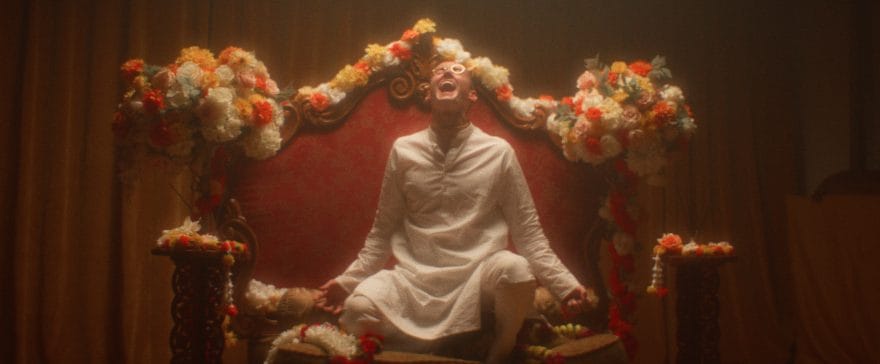
Monkey on a Stick has a massive trove of archival material to pull from, as well as many in-depth sit down interviews with former and current devotees that provide some much needed context and personal connection. And while Monkey on a Stick paints a whole picture and moves at a snappy pace, it’s an awkward attempt to get through a lot of necessary information. The pain and suffering inflicted upon followers and their families has to compete with flashier true crime epic re-enactments of events that don’t add much to the whole outside of some slick artifice. The filmmaking is overcomplicating an already complex and wide ranging issue, so while the overall goal of exposing criminality within the Krishnas is achieved, it comes at the cost of shortchanging some of the most sorrowful and poignant aspects of the issues being discussed. It’s a worthwhile primer on the ways absolute power corrupts, but Monkey on a Stick needs more tweaking and breadth to come across as wholly comprehensive.
Monkey on a Stick opens at Scotiabank Theatre in Toronto and Cineplex Forum in Montreal on Friday, October 18, 2024, and at VIFF Centre in Vancouver on October 25 (with a filmmaker Q&A on the 25th and 26th).
