
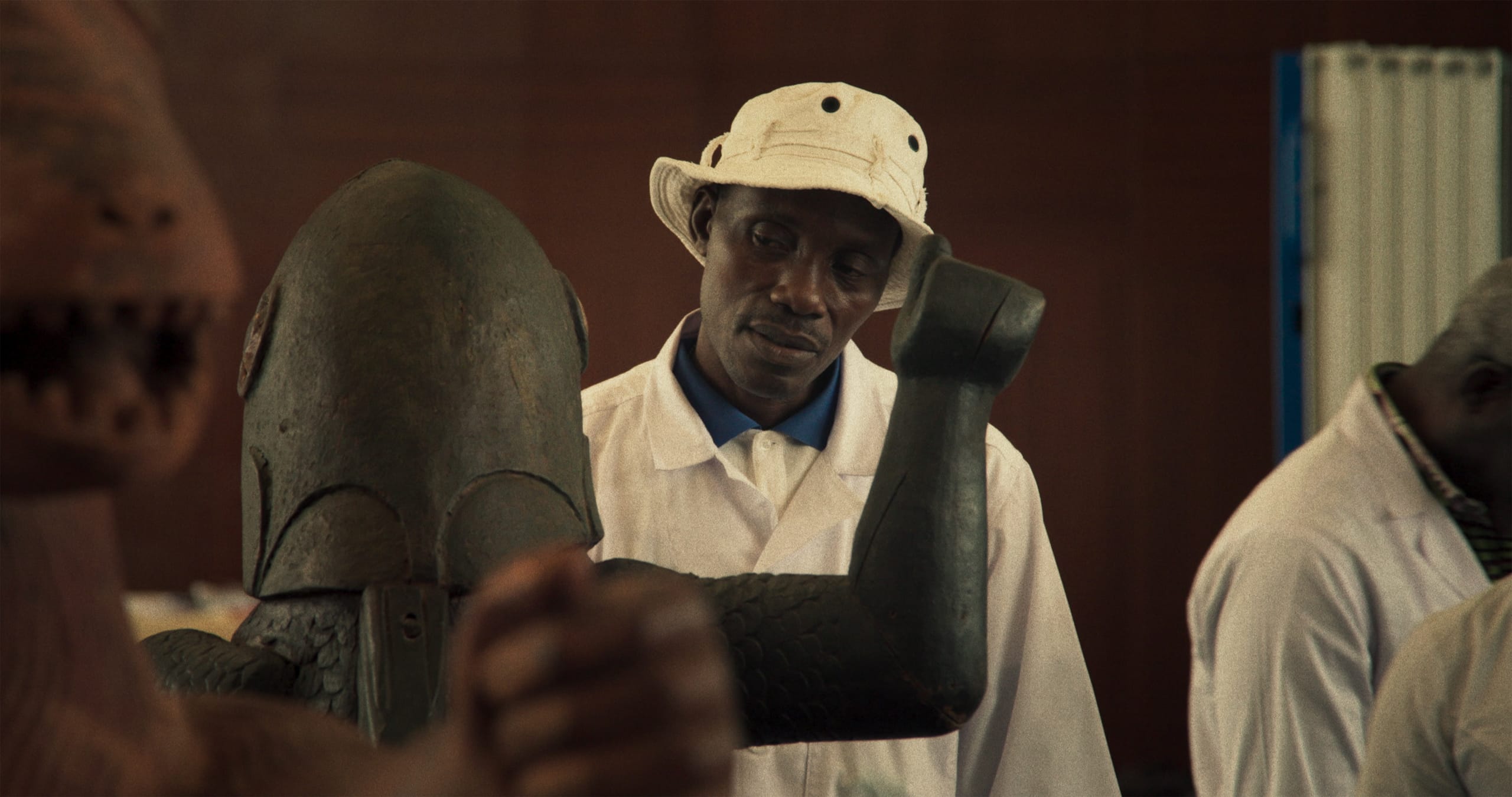
Visionary filmmaker Mati Diop’s hybrid documentary Dahomey lives at the intersection of generational trauma and reconciliation, making it a potent snapshot of similar events unfolding around the world in various different cultures. It concerns art, loss, memory, oppression, and reclaiming history for future generations to learn from. Dahomey barely lasts more than an hour, but Diop’s concise and creative look at the repatriation of stolen and looted artifacts being returned to an African nation after over a century away creates a space for dialogue about how such things are to be handed over and presented in the shadow of settler culture.
Dahomey is a former kingdom located within the West African Republic of Benin. Throughout the 1890s, invading French colonialists looted, seized, and transported over 7000 works of art out of the country, many of them housed within the Musée de l’Homme (then known as the Musée d’Ethnographie du Trocadéro). In 2016, President Patrice Talon made a formal request to the French government that the stolen artifacts be returned to Benin, but no effective movement on the issue was made until Christmas Eve of 2020, when a law was passed securing the repatriation of these cultural touchstones to their proper home.
But when 26 of the artifacts taken during colonization efforts are returned to Dahomey, that’s when things start to get sticky. Not only is there the question as to how long it would take for the thousands of other pieces to return – if they ever will or if they even still exist – but also in terms of how to display them in a proper context. How does a populace that has been kept at arms length from its own cultural history for over a century begin to repair itself? At first, the artifacts are greeted like returning heroes, but it’s not long before Diop shifts to debates among students as to what the timing of this repatriation means and how it squares with the ever-present scars of colonial occupation.
Dahomey adds a fictional element to Diop’s observational documentary elements that helps to further these insightful conversations. Diop (Atlantics) adds an etherial voiceover in the kingdom’s native Fon language from the perspective of one of the statues being recovered, speaking in a future tense. This voiceover, often presented over a black screen, provides the viewer with some much needed subtext and context to foster a full understanding of the impassioned debates Diop captures among students at the University of Abomey-Calavi, which can often get quite heated.
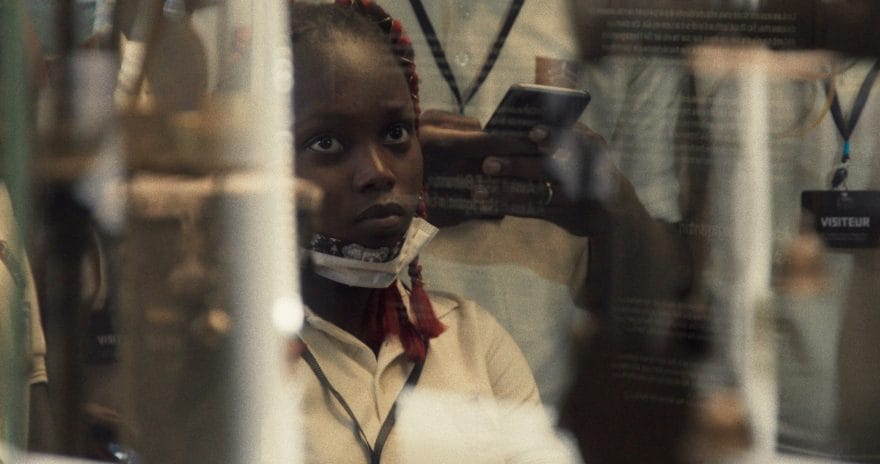
As with her other works, Diop’s latest is a work of pointed politics and historical resonance that looks to the future generations for guidance and healing. While watching these artifacts getting crated up in France to be shipped back, one is struck by the physical labour involved, until the viewer gradually realizes the depth and depravity of the colonizer mindset. These are only two dozen or so artifacts being returned, and the labour involved in moving thousands of pieces out of Dahomey speaks to the determination of France’s desire for occupation and an erasure of ancestral histories.
The restoration and repatriation efforts aren’t about reclaiming history, but nurturing it, as well. That becomes murkier when the younger generations tasked with caring for these artifacts in the future continue to debate if these signposts of the past are material or immaterial to their lives. To top it all off, it’s unclear if the French government’s efforts are truly in the name of reconciliation, or if it’s a gambit designed to strengthen relations in the region during a time when the country’s influence is flagging in Africa.
As a documentary, Dahomey achieves a sort of poetic perfection, and Diop finds powerful parallels that makes this geopolitical and cultural microcosm resonate on a global scale. The numbering of the artifacts is made to look convincingly and harrowingly like the dehumanizing of slaves. The haunting voice of the past offers thoughts, but never imposes or skews the debates happening on screen. The artifacts still remain enclosed behind glass, with the descendants of their ancestors unable to connect in a meaningful way. It all amounts of a great work of historical and educational value that sparks and invites conversation about feelings and events that won’t be fully reconciled or unpacked any time soon. With Dahomey, Diop makes a hairline fracture in an enormous wall feel like a major milestone of note.
Dahomey is now playing at TIFF Lightbox in Toronto and Cinéma Moderne and Cinéma du Musée in Montreal. It will be streaming exclusively on Mubi at a later date.
