
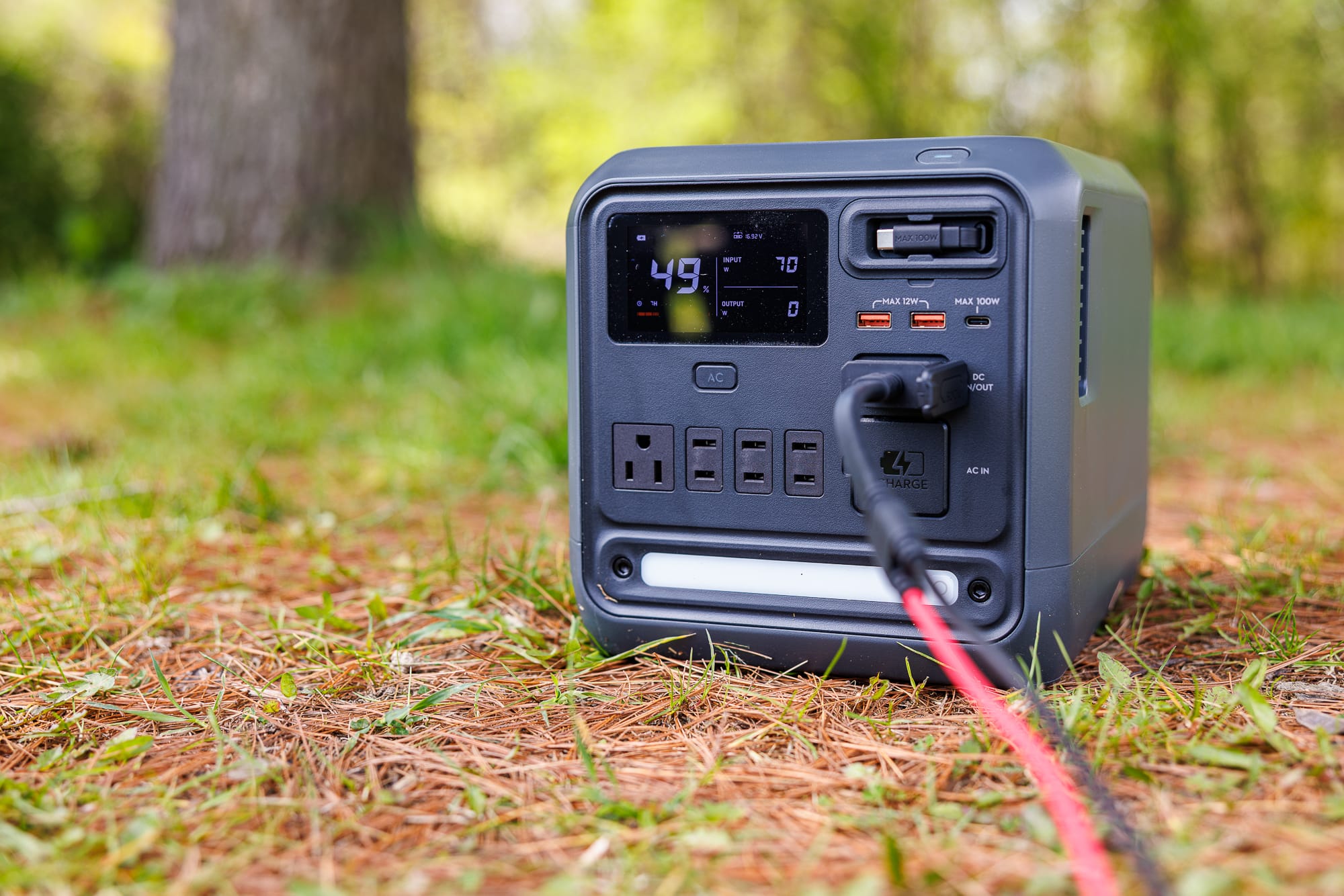
Creators, campers, and travellers are bringing more and more power-hungry devices with them, and the latest DJI power station makes it easier to go off the grid, while keeping everything charged.
DJI’s Power 1000 Mini is their latest device offering long-lasting portable, dependable power, that’s also easily rechargeable from a variety of options, including solar.
The 1kWh power station delivers 1000W output, so you can power small to mid-sized appliances, at home in an emergency, or on-the-go, or charge devices like drones, cameras, phones, and laptops.
While the Power 1000 Mini isn’t made for backpacking, it’s light enough that you can put it in your trunk and take it with you on the road.
Overall, I was very impressed with the size and weight, the versatility, scalability–especially when it comes to solar charging–and it offers a lot of impressive features for creators.
Pricing, combos, and accessories
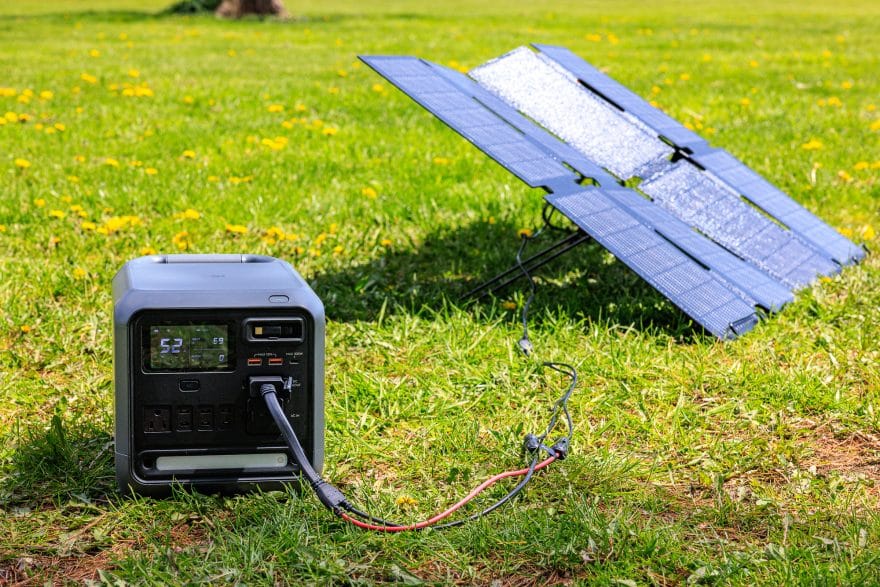
The Power 1000 Mini retails for $467 USD from DJI, $486 with the fast drone charger, and $676 with the foldable solar panel.
While the base unit can power most functionality that you may want, DJI also sells additional accessories that are very useful, from extra solar power panels, to a drone fast charging cable, a car power outlet extension cable, and MC4 parallel cables.
When shopping, I highly recommend planning out want to do with the power station, and covering all your needs since they’re proprietary cables. As one example, if you want to use more than one solar panel at once you’ll need the solar panels, plus parallel cables to connect the panels together.
Likewise, for drone pilots, the drone fast charging cables are a great idea if you want to get more air time on a trip.
Outlets and features
The DJI Power 1000 Mini features both a USB-C retractable cable and a USB-C port that charge up to 100 W, two USB-A ports at 12 W, four AC outputs up to 1000 W, an SDC port up to 400 W input or 300 W output, and an AC input up to 1000 W.
The built-in USB-C cable is one of my favourite features, making it easy to charge almost any modern device, from phones and drones to tablets, and the whole unit is replaceable, in case it breaks or gets damaged.
The power station weighs 11.5 kg, it operates quietly for small spaces, with an adjustable LED light that’s perfect for camping trips, or for an emergency.
And the form factor is pretty much perfect at 314×212×216 mm, making it small enough that it fits almost anywhere in your car, trunk, or just to carry in and out of a cottage or campsite.
While 11.5 kg is not exactly light, it is lighter than other battery units and even DJI’s previous power stations. An average adult can likely even carry it one-handed, like I’ve been doing while I’ve been testing it, and I appreciate the handle on the back.
A range of charging options
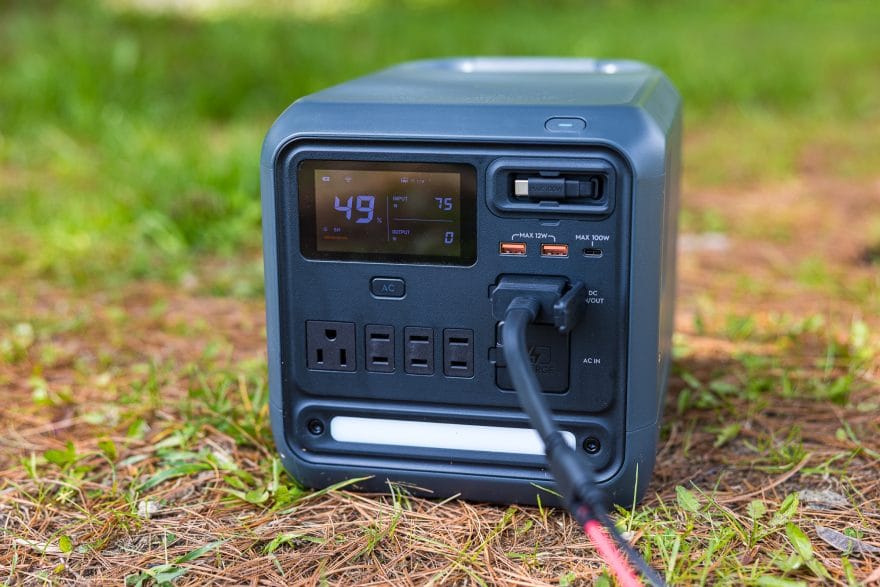
The Power 1000 Mini charges up to 80% in just 58 minutes, thanks to the fast charging option. You can charge it using the built-in 400W MPPT module, for a direct solar panel connection, or through the 400W car charging, in addition to the standard AC power cable.
That means that you can charge almost anywhere. Plug it in to your car, with the car adapter, and charge it while you drive. Attach the IBCPOWER 100W foldable solar panel and get either 100 W charging, with one panel, or up to 400 W input with four panels.
In an emergency you can even charge the power station using the built-in USB-C cable.
For mountain climbers and travellers who need versatility, the device works up to 5000 meters altitude, so you can take it almost anywhere for dependable power.
And the lithium ferrophosphate battery is rated for up to 4000 cycles, and up to 10 years of daily use, at temperatures from -10° to 45° C, or 14° to 113° F. DJI also notes that the design resists condensation, is made from flame-retardant materials, and it’s made to be durable, protecting issues due to drop damage.
Using the solar panels does take some getting used to, but you essentially just need to adjust them to the right angle facing the sun. On a cloudy day I got anywhere from 40 W to 70 W input, which meant a full charge could take anywhere from 7 to 10 hours. Depending on how much you used the power station, that could be enough to get you through a number of days of travel.
If you need more than 1000 W of power in a day, that’s definitely when you would need to consider using multiple solar panels for charging. The cables are also just long enough that you can place the unit inside a tent or structure, and place the solar panels outside.
Powering your next adventure
I tested the Power 1000 Mini with a range of devices, and it’s really interesting to see how it works. You can really charge or run almost anything with it.
My phone fast-charged with the USB-C cable, and DJI suggests it can support up to 54 charges for mobile phones. Or you can run an electric fan for up to 7 hours, or use it with a small portable fridge for up to 18 hours. A few other ideas include running a toaster, coffee machine, electric kettle, or even a small electric stove, all perfect for those off-the-grid camping trips.
At home, you can also use the Power 1000 mini as a UPS, and it can switch from grid power to battery power in just 0.01 seconds, according DJI.
The uses are really endless, all with a very portable power station. For anyone who can work anywhere, it would be easy to work off the power station at the dock this summer, a camp site, or a city park, as just a few ideas.
Using the DJI Home app
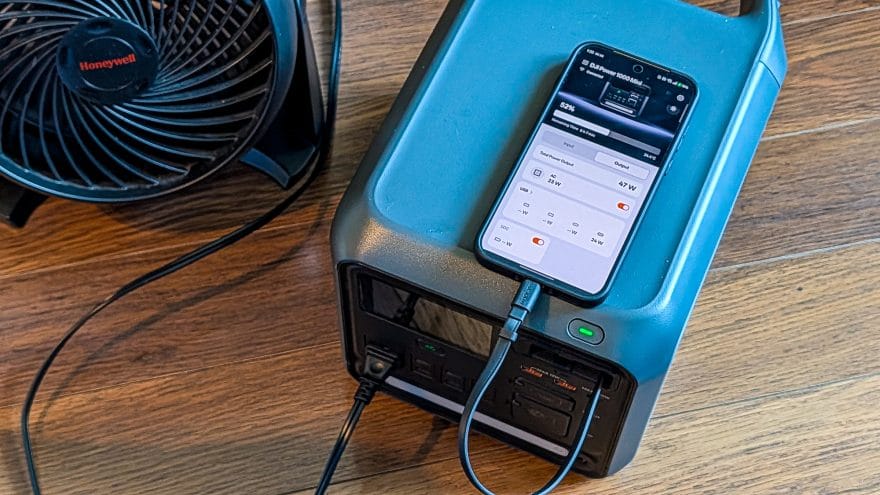
Finally, the DJI Home app offers remote control so you can turn power on or off, monitor temperature and power usage, and much more.
For setting up the device with the app, it did require a Wi-Fi connection so it could update the firmware, and configure the device. That means that you definitely should plan to charge and setup the Power 1000 Mini at home before you travel with it.
Once it’s setup though, you can use the app to control the power station, and I really appreciated how that let me even turn on the LED light, or turn connected plugs on and off. That would be very useful for a trip when I want to turn on a fan, a heater, or even just watch to see how much power is left, and how long the system will continue to run at the current load.
That also means it’s useful to monitor charging time, and ensure that you get a full charge from solar.
Final thoughts
The DJI Power 1000 Mini is made for creators and campers who want a more portable option for charging and power when they’re travelling and on-the-go. It’s robust enough to offer lots of power and recharging, without being too big, or too heavy.
While it won’t offer the range of options and ports that you can get from a larger power station, that’s also the point. If you need something larger, there are quite a few options out there already. I think this device fills a niche that is very welcome.
My biggest complaint is that the IBCPOWER solar panels are a little too lightweight. They’re very portable, but they feel a bit cheap setting them up, it’s difficult to get them to stay flat on the supports they come up with, and wind will easily knock them around. I would love to see DJI offer slightly more premium and solid panels down the road.
Watch my video review below to see more:
