
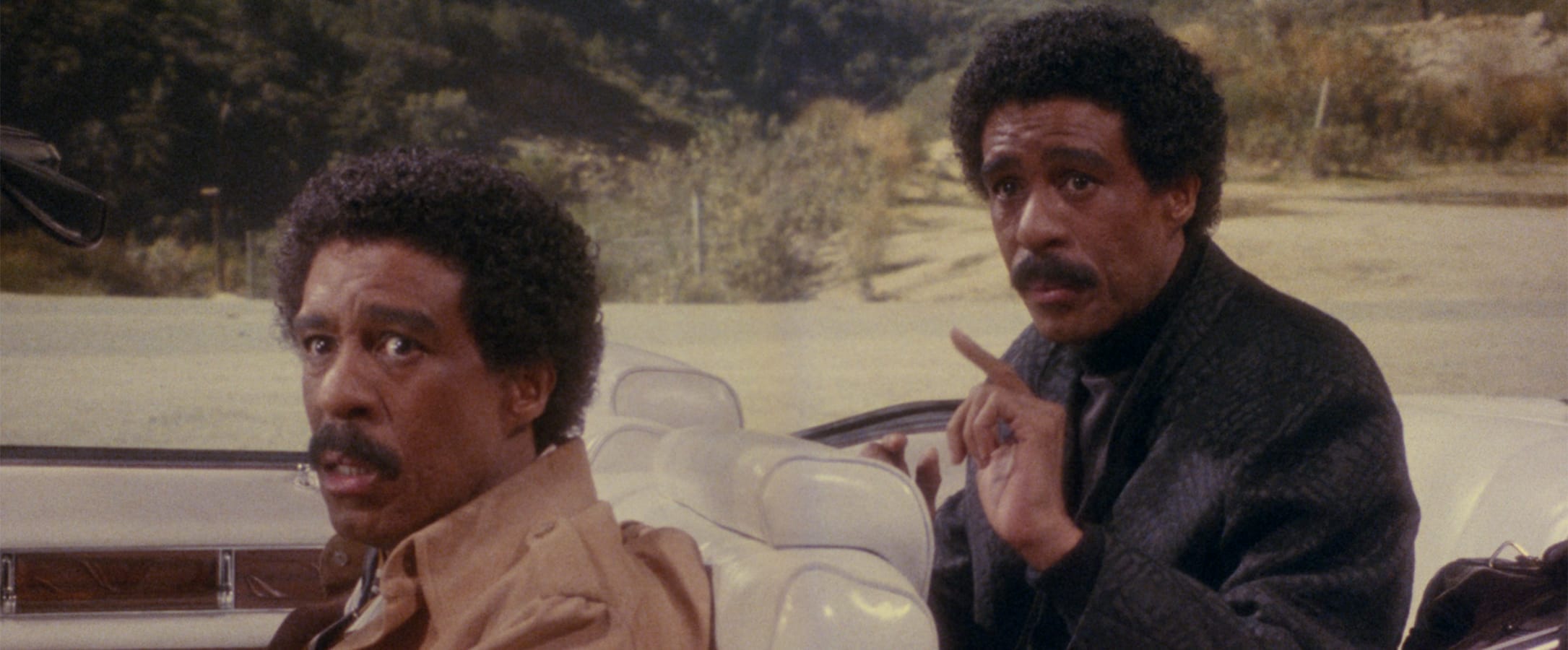
When talking about Richard Pryor’s sole feature directorial outing Jo Jo Dancer, Your Life is Calling it’s tempting to skip to the end, as this dramatic, but still darkly comedic story of a superstar’s fall from grace creates a bridge between the two halves of his own career in front of the camera. Recently released on Blu-Ray from the Criterion Collection following a 4K visual and Dolby audio restoration by Sony Pictures Entertainment, Jo Jo Dancer, Your Life is Calling bears a lot of thematic and stylistic similarities to another title in the venerable, historic film collection: Bob Fosse’s 1979 masterpiece All That Jazz. While Pryor never hits the same successful and dizzying heights that Fosse did, both are carefully measured, thinly veiled biopics that look inside the fraught mind of an uncompromising, prickly, and hopelessly addicted talent branded by millions as a creative genius.
Pryor’s look back on the life of fictional stand-up comedian and actor Jo Jo Dancer is virtually in lockstep with Fosse’s look back at made-up choreographer, director, and all around showman Joe Gideon. Both characters are thinly veiled avatars for the person working behind the camera, with the storylines of each film adhering very closely to the director’s own personal experiences and struggles. And both feature their main character on death’s door for almost the entirety of their running time.
Jo Jo Dancer, Your Life is Calling opens with the titular entertainer – played by Pryor – insisting that he has kicked drugs once and for all before frantically searching his lavish estate for anything that might be able to give him a buzz. In a flash (quite literally), Jo Jo is in the hospital, severely covered from head to toe in burns and fighting for his life. It’s the first of many examples in Jo Jo Dancer, Your Life is Calling where Pryor – alongside co-writers Paul Mooney and Rocco Urbisci – cuts close to his own bones. Although released in 1986, the opening of Jo Jo Dancer, Your Life is Calling is a knowing reference to Pryor’s own hospitalization following a horrific accident that looked like a drug related incident, but was actually something a lot more complex. Although there’s some moments of levity throughout the film, Pryor makes it known early on that this isn’t only going to be personal, but a lot of it won’t be played for traditional laughs.
In Fosse’s All That Jazz, his on screen surrogate (played memorably by Roy Scheider in his best performance) has to atone for his womanizing, workaholic, and hard living tendencies to an angel of death (Jessica Lange). In Pryor’s take on a similar structure, Jo Jo’s soul leaves his body in the emergency room and takes his barely conscious psyche through all of his life’s greatest successes and mistakes to see what went wrong along the way.
Pryor goes back into his character’s past further than Fosse does, all the way back to his childhood, where he was raised in a brothel in Peoria, Illinois. Jo Jo acquires many female suitors along the way, who mostly loved him and all of whom he takes for granted in some fashion or another. Jo Jo believes in his abilities as a comedian, striking out on his own and dealing with a variety of shady underworld characters that run the nightclub scene of the 1960s and early 70s. Jo Jo, like Pryor, starts off as a respectable comic doing safe, clean material, but as the weight of a harsh world continues to influence him, those boundaries of taste are pushed and his targets become more laser focused. It brings him a lot of success, riches beyond his wildest dreams, and a crippling addiction to drugs and alcohol that – as we see from the opening – nearly kills him.
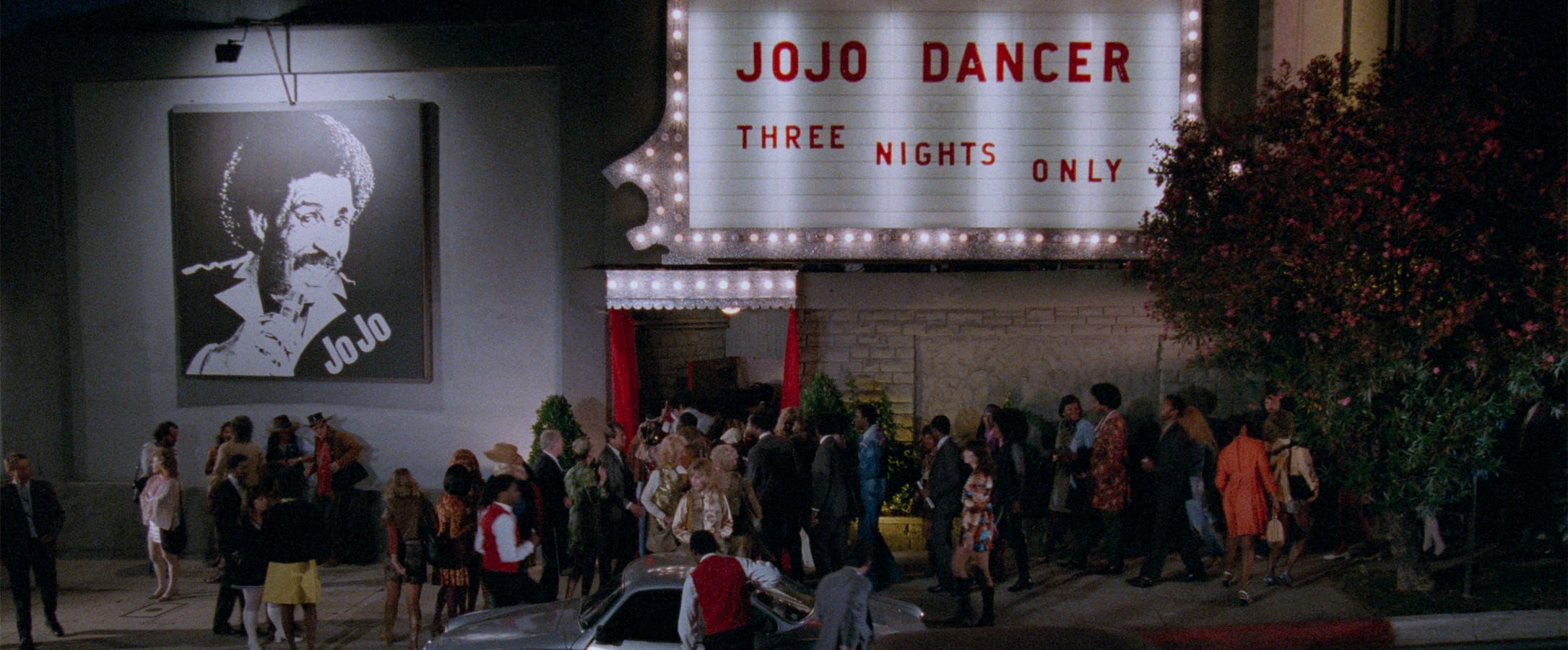
Although Pryor always insisted that Jo Jo Dancer, Your Life is Calling isn’t an autobiography of sorts, and that a lot of the characters and scenarios are made up, anyone familiar with his rise to fame and struggles along the way will immediately identify those obvious influences and blatant references. Fosse did the exact same thing with All That Jazz, and people believed him just as much, which is to say, not very much at all. And while the critical and commercial reception to Jo Jo Dancer, Your Life is Calling doesn’t measure up to the all time classic status that All That Jazz received, it’s no less an effective bit of harshly critical self-reflection on the part of an artist using their art to atone for their past. It’s a flawed film, but Jo Jo Dancer, Your Life is Calling puts all of Pryor out there for the world to see and judge.
The staging of many scenes in Pryor’s film are surreal, but one wonders if that’s intentional or whether some sequences show the inexperience of the director behind the camera. It all oddly works, even when things are at their clunkiest, most melodramatic, and least assured. Aided immeasurably by artful cinematography from John Alonzo (Chinatown, Scarface, Norma Rae) and an eclectic score from Herbie Hancock, Pryor turns his not-o-biography into a fast paced cautionary tale. Pryor conveys an understanding that there are many things in life he can’t be forgiven for, but he desperately desire to learn from what he’s done. Jo Jo Dancer, Your Life is Calling is – both for better and worse – a work of pure emotion that examines the human need for reflection and betterment. The film moves so quickly in its pacing that it captures a true feeling that life is fleeting, and it’s always later in our timelines than we want to admit to ourselves.
There’s a great deal of gratitude on display among the bleakness of Jo Jo Dancer, Your Life is Calling, as evidenced by Pryor peppering his cast with people who helped him out as he climbed the showbiz ladder. While Pryor attempts to take accountability for some of his actions through his fictional character, there’s also a love for being alive and making it through to the other side. It’s not a film that wants to teach or lecture the viewer into making huge lifestyle changes, but equal parts thank you and apology to those who choose to watch it. It’s not a film that’s meant to entertain in traditional ways. It wants to connect with the audience through barely filtered catharsis.
And while that always comes with a lot of bias and uneven emotional beats that mean more to the artist than it does the viewer, Jo Jo Dancer, Your Life is Calling proved to be Pryor’s last truly noteworthy work of art. Moving on to the regrettable likes of Critical Condition, Moving, Another You and Eddie Murphy’s monotonous directorial misfire Harlem Nights, Pryor would fizzle out as a star prior to succumbing to the effects of multiple sclerosis (which he was diagnosed with the same year Jo Jo Dancer was released). With the possible exception of his second to last collaboration with frequent co-star Gene Wilder – the silly, problematically dated, but still quite fun See No Evil, Hear No Evil – and his brief cameo in David Lynch’s Lost Highway, Pryor largely faded out after his most personal effort. It’s sad on one hand, but also inspiring. This is a work where someone is trying desperately to get something out of their system. They just got through one terrible phase and their life, only to be staring down the tunnel of another hard road ahead. We should all be so lucky to be afforded such an opportunity before it’s too late.
Jo Jo Dancer, Your Life is Calling is now available on UltraHD 4K and regular Blu-Ray via The Criterion Collection.
