
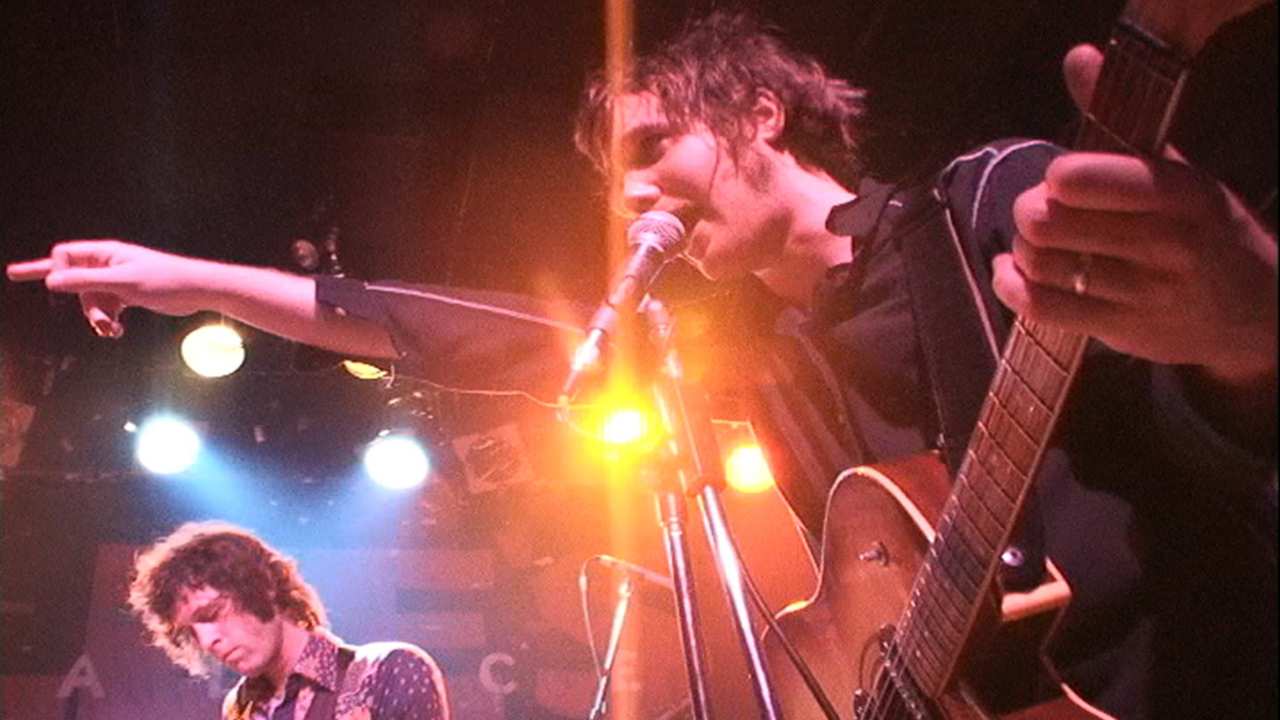
Stephen Chung’s decades in the making documentary It’s All Gonna Break has a tough task ahead of it and a unique approach to the standard music doc template. A look at the countless formations, dissolutions, and collaborations between the various members of the wide ranging musical collective Broken Social Scene, It’s All Gonna Break has lots of material and media to sift through to paint its grand picture of the resoundingly popular indie supergroup. Thankfully, Chung has a unique “in” with the members of the band, and in turn, the musicians help him find a way to untangle a story that never fully aligned from the start.
Chung, who has a background in cinematography, has been friends with almost all of them since before Broken Social Scene was even a thing. To hear from the mouths of past, present, and future Broken Social Scene members, Chung was the guy who was always there dutifully documenting everything that was going on from their disorganized freewheeling collaborations in the late 90s that played like a who’s who of Toronto area indie rockers until they became a bonafide “thing” in the early to mid-2000s. No one involved with Broken Social Scene ever expected much from something that was – for most intents and purposes – just a side project for everyone involved. This led to the sort of inter-band instability that wasn’t contentious or acrimonious, but instead a side effect of the band’s scattered nature. But the one constant seemed to be Stephen, who had enough footage by 2007 to produce a feature length documentary about the band. But when he presented a cut to the members of Broken Social Scene, they declined his request to release and distribute the film.
That might sound harsh on a surface level, but there’s nothing genuinely gutting on display in It’s All Gonna Break, which is a refreshingly kind and gentle film in a documentary subgenre that thrives on dirt and conflict to make a point. In sit downs Chung has with the likes of Brendan Canning, Kevin Drew, Charlie Spearin, Emily Haines, Leslie Feist, and dozens of others who came through the Broken Social Scene scene, it becomes apparent that a documentary back then wouldn’t have worked for a number of reasons. It wasn’t the right time. There wasn’t a concrete focus. The band’s whole vibe was a tenuous push and pull between being “a celebration and an existential crisis” (or maybe a celebration of an existential crisis). And most importantly, it’s hard to convey a band dynamic that’s so laid back and rooted in the nature of unforced friendship and collaboration. It’s not that Broken Social Scene never pushed themselves to be great, but rather that most of their connection to the fan base was organic.
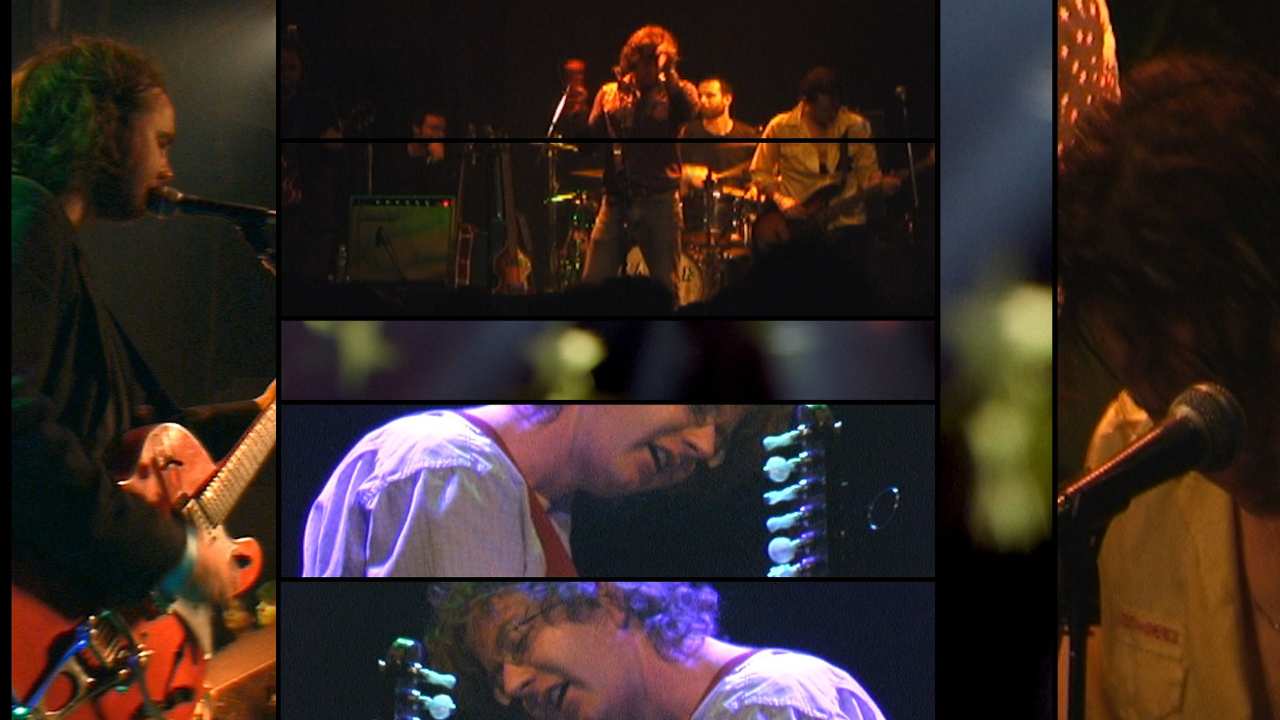
It’s All Gonna Break will appeal greatly to anyone well versed in the late 90s Toronto music scene, with plenty of nostalgia to go around for a time when it was easier to make a living as an artist in the city. There are shout-outs and nods to the likes of Len, Do Make Say Think, By Divine Right, KC Accidental, and dozens of other acts with tangential connections to Broken Social Scene through it’s revolving door of members. Chung does a good job of mapping out the roots of the band and connecting them to points where others would come into their orbit. It’s a lot of people, personalities, and varied talents to keep track of (with the band’s own Wikipedia page hilariously guessing that BSS would have anywhere between six and nineteen members at any given time).
Chung is there when – as a side effect of band members touring with their primary bands – the remaining members of BSS would have to sometimes pull musicians off the street to fill out the line-up for a live show. He’s there when the band is caught off guard that their initial pressing of You Forget It In People sells out its modest 1,000 copy run and pressure is placed on them to take things to the next level. He’s there for jam sessions, talk show appearances, big festivals, and backstage parties. And like everyone in the band, Chung was treated as a friend.
And while It’s All Gonna Break shows what made this unprecedented conglomeration of Canadian music talent such a phenomenon, that isn’t really the point of the film. Towards the end, Chung’s film comes into sharper focus and becomes something more than just a clip show deftly assembled along a timeline with some eye catching use of split-screens. It becomes a film about growing up, moving on, and what it takes to sustain a friendship across decades. There’s lots of love in It’s All Gonna Break, and none of it is of the sappy, saccharine variety. It’s just easy going acceptance and reflection. That might not appeal to the uninitiated, but for fans of Broken Social Scene and their various incarnations, spin-offs, and day jobs, it’s quite fitting.
It’s All Gonna Break opens at Hot Docs Ted Rogers Cinema on Friday, January 24, 2025, with a Q&A featuring various Broken Social Scene members following the 7:30 pm screening on the 24th, and a Q&A moderated by Hot Docs programmer Gabor Pertic following the 6:00 pm screening on the 25th.
