
TIFF’s annual Canada’s Top Ten event unfolds this weekend at the TIFF Lightbox in Toronto, showcasing the best in national cinema from the past year. While it’s best known as a chance for viewers and TIFF Members to catch up with some of the hottest features from the 2024 festival scene, including Guy Maddin and Evan and Galen Johnson’s Rumours, Kaniehtiio Horn’s Seeds, and Matthew Rankin’s delightful and hilarious Universal Language (which also starts its local theatrical run at the same time), it’s always worth acknowledging that it’s a great chance (and one of the few opportunities on the big screen) to catch up with some of the best short films produced in Canada across the past year.
Screening across two programmes this Friday and Saturday afternoon, The Canada’s Top Ten shorts speak to the boundless creativity and economic storytelling chops of some of the country’s emerging and established artists.
Stories about identity and our place in the world abound in the first presentation of shorts, screening Friday, February 7 at 1:00pm.
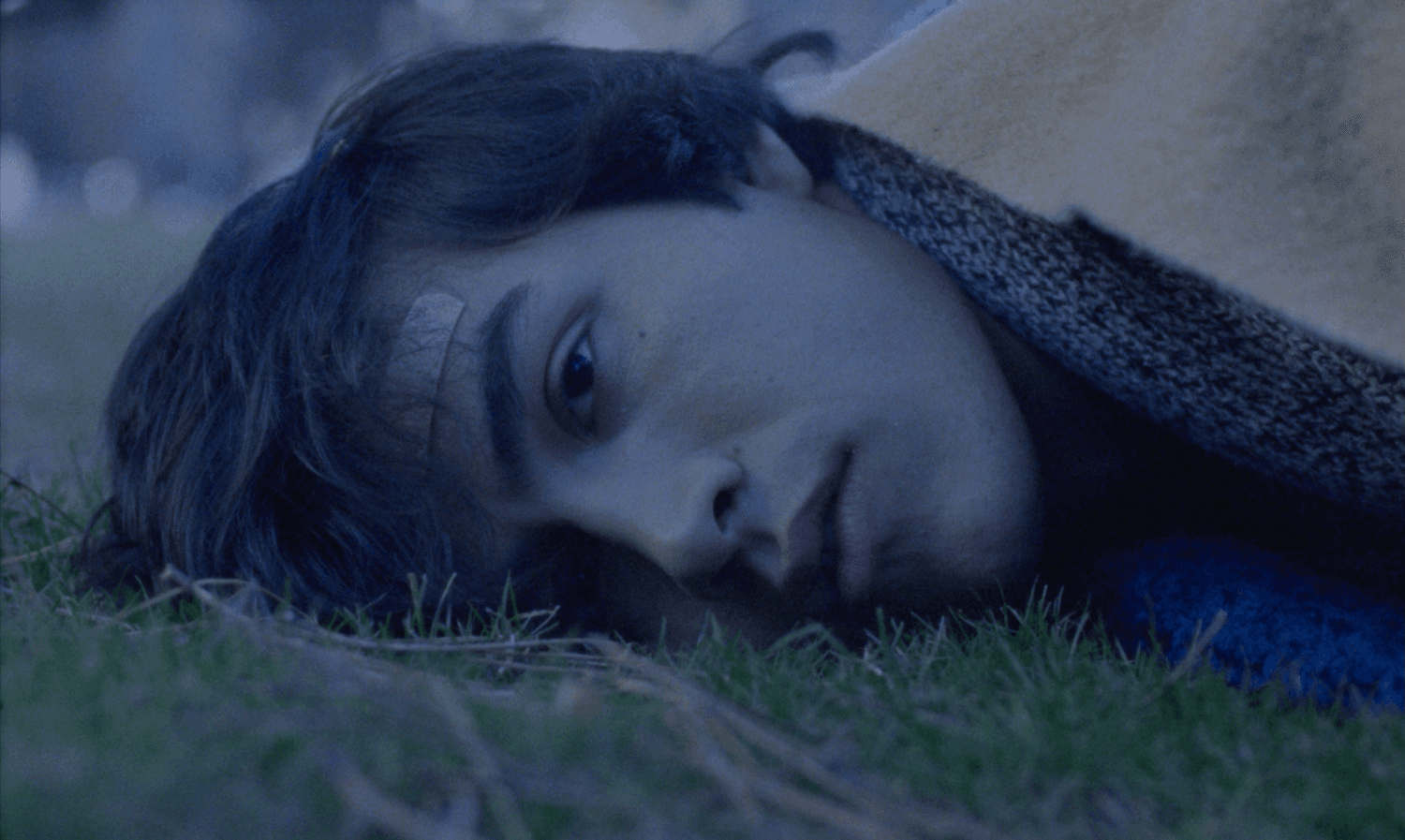
Winner of Best Canadian Short at TIFF 2024, filmmaker Bec Pecaut’s Are You Scared to Be Yourself Because You Are Afraid You Might Fail tells the story of Mad (played expertly by Lío Mehiel), a person adjusting to life after undergoing top surgery. Mad is in pain, understandably prickly, and not yet used to their new appearance, which makes the odd behaviour of their partner, Kat (Sadie Scott) harder to take, and their mother’s well meaning, but ill informed attempts to be inclusive all the more stifling. A story of accepting oneself and making the brave decision to own their identity, Pecault’s film is honest, moving, and builds to a quiet, but resoundingly hopeful moment.
Director Phillip Barker and physical artist Seungwoo Park collaborate closely on the dazzling performance piece Earthworm, a disorienting, gravity defying, and unclassifiable work that turns the sci-fi tropes that traditionally revolve around aliens trying to assimilate into human culture and turns them on their side, head, back, pretty much every direction. A stunning work that makes the most of Park’s talents, Earthworm has more meaningful images worth parsing than many feature films display.
Adapted from a short story by Richard Van Camp, animator Amanda Strong’s Inkwo for When the Starving Return is an indigenous driven take on an apocalyptic narrative. Set sometime during the future in the arctic climes of the Northwest Territories, Strong uses a tactile looking stop motion style to tell the story of Dove (voiced by Paulina Alexis), an indigenous teen trying to survive in a world where long buried humanoids have resurfaced from centuries of slumber to reclaim a broken Earth. With the help of a magical frog and an elderly survivor (voiced by Tantoo Cardinal), Dove learns about the power of inkwo (or, medicine) and heritage. Strong’s film is a visually dazzling look at finding strength and resilience in tradition and cultural empowerment.
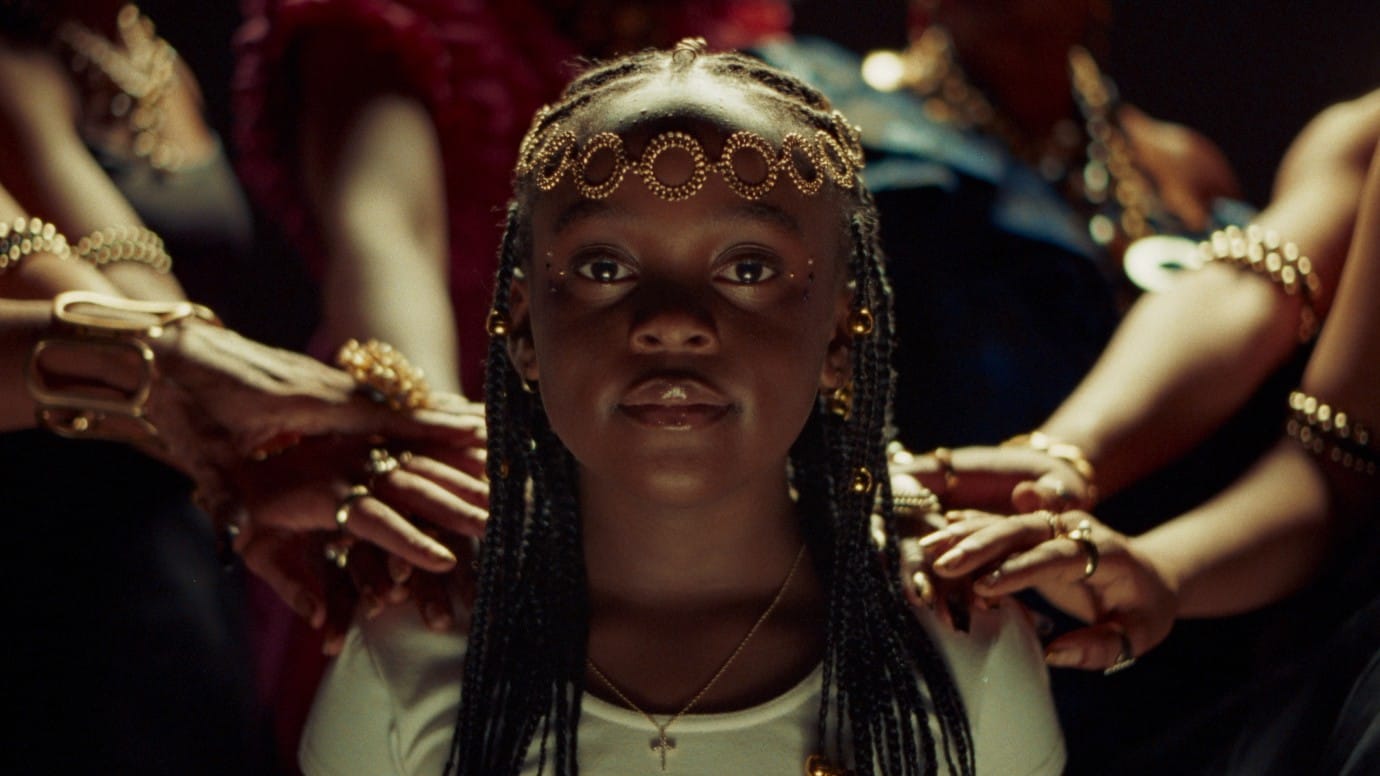
A young black ballerina (Zoe Peak) struggles against conforming to white beauty standards in Alicia K. Harris’ empowering On a Sunday at Eleven (pictured above). The struggle to fit in with the appearance and gaze of her white classmates and instructors transports this young woman to a place in her mind where she isn’t intimidated or overwhelmed, surrounded by strong, black females who share a similar sense of style and grace. It’s a brief, but powerful reminder that conformity can be the killer of not only joy, but also identity.
Rounding out the first programme is director and cinematographer Arshia Shakiba’s Venice prize winning observational documentary Who Loves the Sun? It’s a surreal, etherial depiction of life at decrepit, unsafe looking oil refineries in the war torn area of Northern Syria. Under a perpetually gloomy haze, Shakiba captures life amid decaying machinery and raging infernos. People grab a quick cigarette inches away from billowing black smoke, an older worker shows a young child the ropes of his job, and a very lonely, soot coated dog looks like they’re barely coping with their surroundings. The living creatures at the refinery look out of place among the hulking infrastructure and decaying conditions, amounting to an unfiltered look at the price of energy in the world today.
The second selection of shorts, screening on Saturday, February 8 at 1:00pm, continues with a lot of films that are still dealing with the nature of identity and our place in the world, but these focus more heavily on feelings of empathy to those around us.
Oscar winning animator Torril Kove’s personal short Maybe Elephants is brimming with life and colour, and a story about learning to appreciate and empathize with the choices parents often make on behalf of their kids. It finds Kove (The Danish Poet) recalling the time her architect parents grew tired of their lives and uprooted the family in a move to Kenya. More than a film about a family facing a steep learning curve, it’s a loving reflection on the autonomy that children rarely see in their parents.
Accomplished actor and filmmaker Connor Jessup returns once again behind the camera for Julian and the Wind, a story about two all male boarding school roommates who harbour secrets. Arthur (David Webster) has a crush on his roommate, Julian (Joel Oulette). Julian not only doesn’t notice, but can be mean towards Arthur during his waking hours. But Arthur notices that Julian – who is prone to sleepwalking – treats him a lot better when asleep. Jessup builds his story literally towards a weather system that brings winds to change with it, and a thoughtful conclusion.
The forming of queer identity also runs throughout Alexander Farah’s One Day This Kid, which was inspired by an untitled 1990 piece written by iconic gay artist David Wojnarowicz. Utilizing precision editing and minimal dialogue, Farah relays the maturation process of Hamed, a first generation immigrant living in British Columbia with his accepting Afghani mother and traditionalist Iranian father. Told through individual memories from Hamed’s youth, teen years, and adulthood, Farah poignantly illustrates the wedge coming out of the closet can place within families and the ways in which some bonds will remain unbroken. The conclusion in particular is subtle, but memorably resonant.
Pier-Philippe Chevigny’s gritty, but emotionally loaded character drama Mercenaire is built around a story that was shaped in part by the short’s leading actor, Marc-Andre Grodin. In an intense, but sorrowful leading turn, Grodin stars as David, an previously incarcerated person who can only find work at a slaughterhouse upon his release. Almost immediately upon seeing the violent nature the job entails, David wants out. But no one else will give him the time of day, his parole officer demands he keep the job, and there are no departments for him to work on other than on the killing floor. A perfect metaphor for the myriad ways that life can be worse on people after prison, Mercenaire builds uncomfortable tension, but also a wealth of emotional outpouring for a clearly broken person stuck in a bad situation that’s destroying his mental health.
And Alison McAlpine’s playful, awe inspiring observational short perfectly a strangeness has the power to change the way people see the world around them. McAlpine follows a trio of charismatic donkeys – Palomo, Ruperto, and Palaye – as they make their way around the desert based, industrial looking grounds of a large scale observatory. As these creatures scratch themselves on some of the structures and look puzzlingly at everything around them, McAlpine creates a mirror image of how we see the cosmos through the eyes of the lasers and telescopes within the observatory. Does the viewer see the world through the eyes of the technology, or are we just as confused as the donkeys? McAlpine’s film suggests that the answers lie somewhere in-between, but the visuals provided by the filmmaking team offer a lot of visual poetry with which to contemplate such questions. It also has a great musical score from Ben Grossman, too.
Each of this year’s selected shorts offer something special and unique to viewers. Shorts have the ability to turn audiences on to big ideas in small packages. None of these ten films spell everything out for the viewer, offering a lot to interpretation and careful parsing of the characters, themes, settings, and images. They don’t take up much of a viewer’s time in the moment, but they will linger in the memory long after they’ve ended. It’s a lot to take in, but in a good way.
