
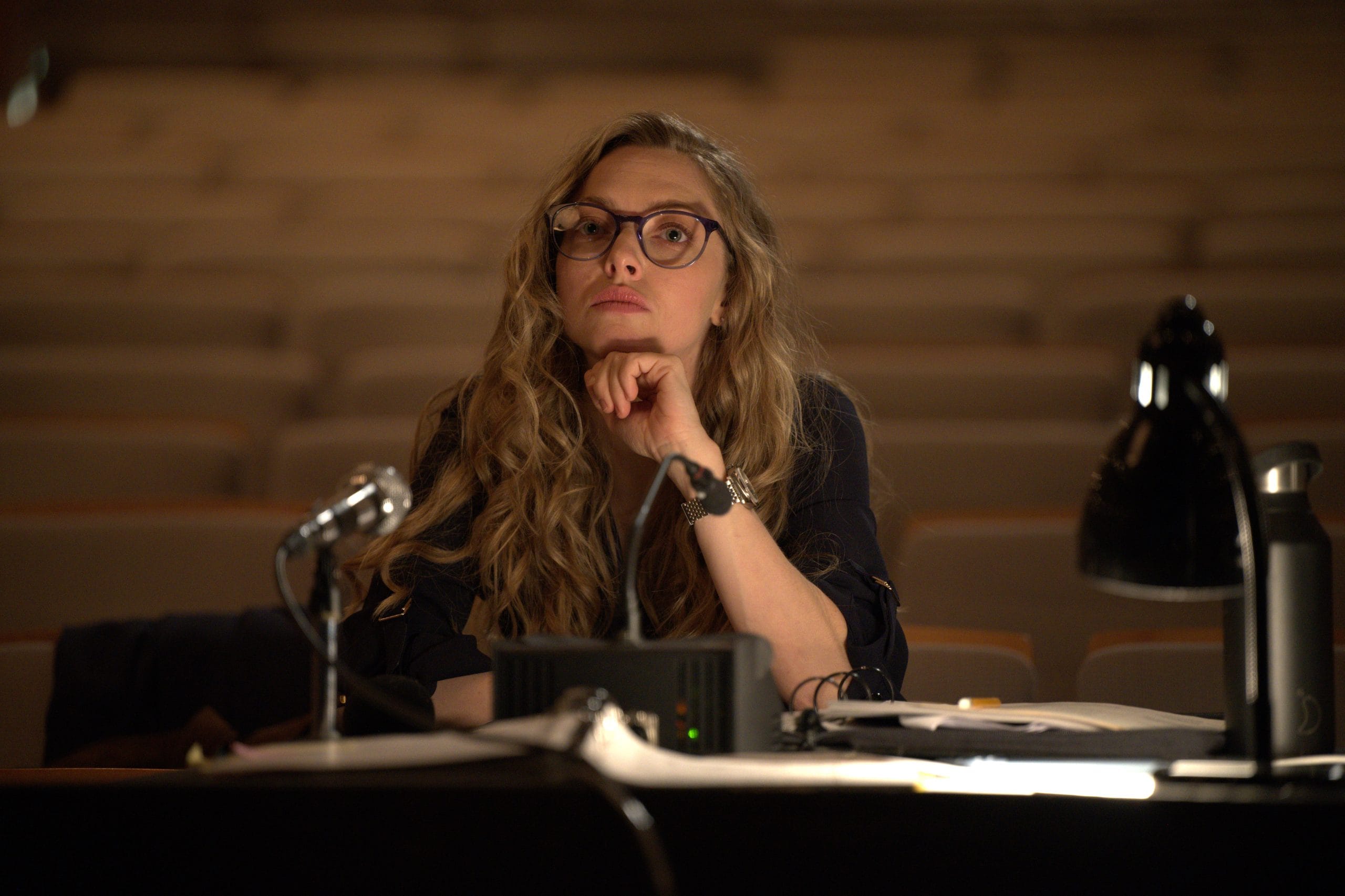
Canadian filmmaker Atom Egoyan’s latest drama, Seven Veils, blends modern reality, classicism, and meta-commentary into a a tightly formed, estimable package. A backstage psychodrama built around an opera director tasked with remounting one of her mentor’s most memorable (and emotionally taxing) productions, Seven Veils was filmed concurrently with Egoyan’s own, most recent staging of Salome for the Canadian Opera Company. But instead of merely using his main character as an avatar for himself, Egoyan (The Sweet Hereafter, Exotica) twists Seven Veils into a more thoughtful cinematic sculpture that examines how much creative people put of themselves into a production, and how that passion can lead to conflict and resentments. It’s a smart film and Egoyan’s best in in years.
Director Jeanie (Amanda Seyfried) has come back to the Canadian Opera Company to put on a new production of Salome, which she worked on ages ago as an intern under the tutelage of her mentor. It’s a big responsibility and a project that comes with a high profile, thanks to the casting of a pair of leads (Michael Kupfer-Radecky, Ambur Braid) who recently wrapped up a controversial, but groundbreaking German production of the same opera. Jeanie has to navigate an emotional minefield both on stage (leads who don’t like each other, understudies who want a shot) and off (an estranged husband who’s probably cheating with her infirm mother’s caregiver, the reemergence of an actor who might be more than a friend, fights with top brass, dealing with a creepy member of the press who knows way more about her personal life than he should). Jeanie is in over her head, but steadfast in her desire to see the production through, even though the memory of her mentor looms large.
Seven Veils takes some time to fully coalesce into a well rounded backstage drama, but once Egoyan has laid out all the players and plots, it comes together very well. By choosing a classical work he has himself directed twice before and has an understanding of as a backdrop, Egoyan is free to explore the emotions that could change a project behind the scenes. Jeanie is caught in a paradox. She’s asked to make her take on Salome personal, but to only make “small, but meaningful” changes to a legendary part of the operatic canon.
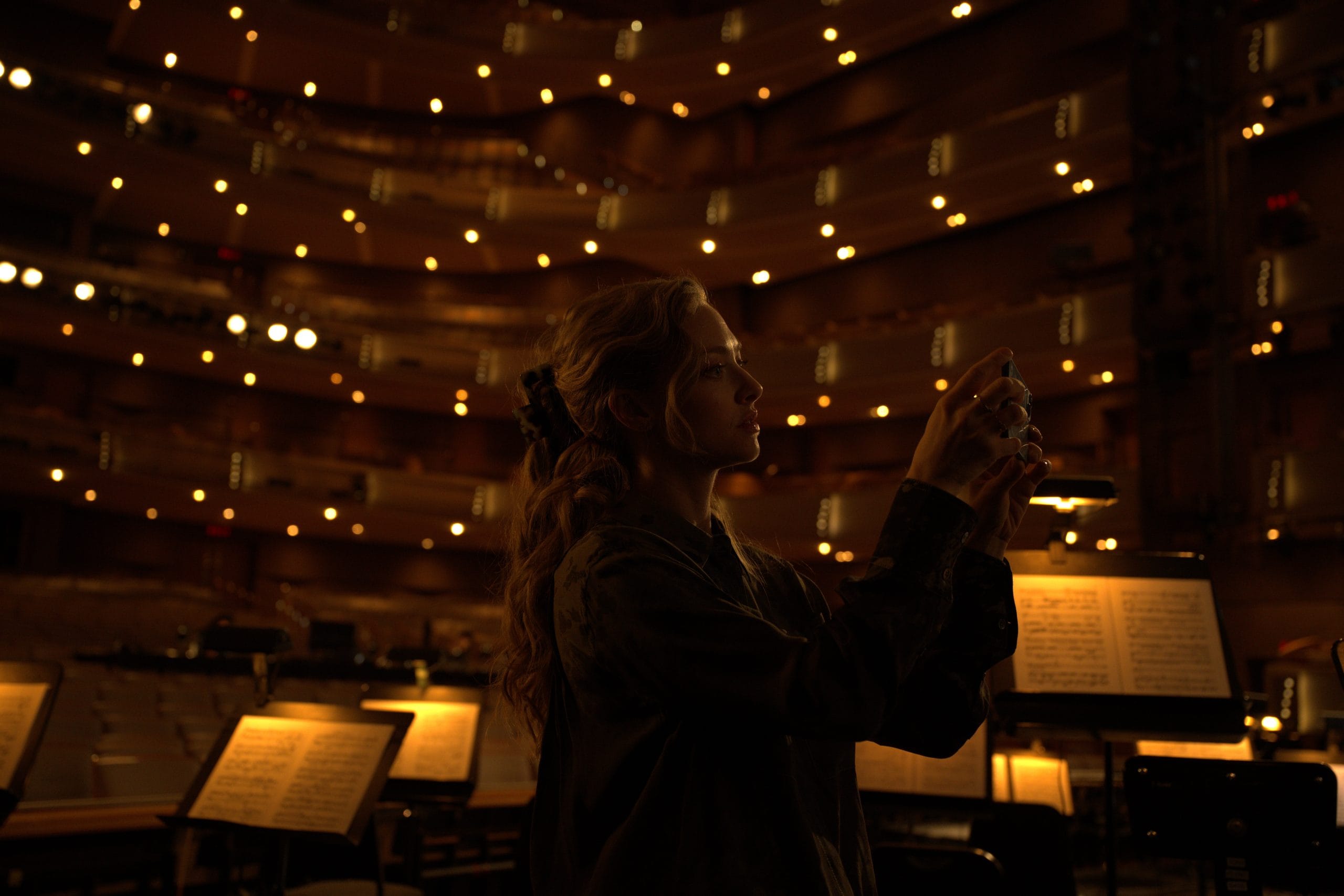
With Seven Veils, Egoyan attempts to unpack what it means to pick at old wounds in a medium where there are only so many new ideas and even fewer new works to pull from. Opera is a world where expectations become hyper-specific, and the style can change, but the text is gospel. A personal approach to Opera requires deep attachment to the chosen material, and in this production some people possess that, while others don’t. The varying level of personal investments and artistic visions create different interpretations of classic material, and therein lies all the backstage drama.
While Seyfried proves to once again be one of Egoyan’s best collaborators (following their work on Chloe), and Mark O’Brien and Douglas Smith add character depth as the men in Jeanie’s life, the most fascinating character in Seven Veils belongs to Rebecca Liddiard, in the role of Clea, the prop-master for the stage production. Clea’s partner, Rachel (Vinessa Antione), is the eager understudy for the titular role, and she will try anything within her modest backstage power to put her love on stage. Although this thread doesn’t take up as much screen time as Jeanie’s troubles and struggles, it becomes a fascinating concurrent thread that serves as a nice thematic bridge between the opera, the film, and the production that’s unfolding on screen.
Visually, Egoyan can simply play Seven Veils as it lies, thanks to his familiarity with both the spaces at the COC and his own staging of the opera in question. Projection screens, creative camera angles in places one won’t normally find them in filmed stage productions, and monitors help to create the parallels between the world of stage and screen, and not much has to be explained about their implementation. There’s a cold, gloominess to Seven Veils, but that’s what Egoyan specializes in. Veteran composer Mychael Danna once again produces a score for Egoyan that adds some much needed modernity amid all the classical pondering, and the notes fit the images expertly.
Seven Veils isn’t a thriller in the most traditional sense, even though it certainly has suspenseful elements. Nor is it just another workplace drama where people have to corral their own egos for the sake of a greater project. And although it brings up a lot of subjects that are certainly timely (sexual impropriety, male ego, actors who take things too far), Seven Veils doesn’t care very much about remaining current, so much as it does being in the moment. It’s more pointedly an examination of emotional investment and inspiration among creative people, and how real life often imposes on one’s goals in both inspiring and inconvenient ways. There are moments that feel particularly intense, but that’s a result of Egoyan making sure that the viewer’s investment is on the emotion of the moment, not necessarily the action. It’s an intelligent approach to a smartly realized project.
Seven Veils opens in Canadian cinemas, including at TIFF Lightbox in Toronto, on Friday, March 7, 2025.
