
The 1923 silent drama A Woman of Paris is one of filmmaker and screen icon Charlie Chaplin’s most fascinating efforts. More of a critical success than a commercial smash at the time of its release, A Woman of Paris is a purposeful change of pace for the artist then best known for his Tramp persona. It’s a bold morality play that eschews melodrama, but still displays Chaplin’s innate ability to know what an audience wants from a movie, be it serious or silly. While it had a misunderstood reputation for decades, reappraisals began as far back as the late 1970s, and continue on into the modern era, thanks to a recent Blu-Ray release and restoration of of the film courtesy of The Criterion Collection.
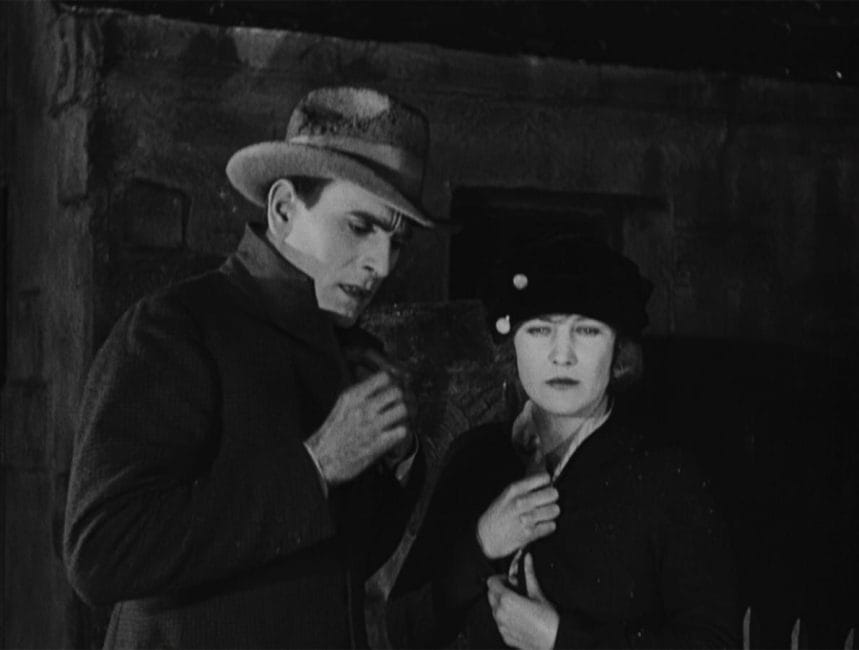
Marie St. Clair (Edna Purviance) is deeply in love with her boyfriend, Jean (Carl Miller), but her loathsome step-father (Clarence Geldert) and his stern, unwelcoming dad (Charles K. French) have both turned their back on the young couple. Marie and Jean concoct a plan to take a train to Paris and elope, but when his father unexpectedly dies as he’s going home to pack a bag, she’s left alone at the station. Heartbroken, unsure of what happened, and still wanting to leave the small minded people of her village behind, Marie gets aboard the train anyway. One year later, Marie is rubbing elbows in high society, dating Paris’ richest eligible bachelor, Pierre Revel (Adolphe Menjou), who just so happens to be in the process of getting engaged to a much wealthier lady. When Jean and his mother (Lydia Knott) make a trip to Paris, the former lovers’ paths cross again, and Marie is forced to make a decision between true love and the comfortable life she could have as Pierre’s mistress on the side.
A Woman of Paris became writer-director Chaplin’s first “serious drama,” and really only compares to his late career work on Limelight in terms of full on serious subject matter. (Most of his “serious” films still took on the appearance of comedies, like The Great Dictator, City Lights, and Modern Times, all of which spoke eloquently to the pitfalls and injustices of society during their production.) It was conceived not only as a chance to break free from the character Chaplin had become shackled to, but also as a star vehicle for frequent collaborator (and on again/off again girlfriend) Purviance. Having worked together since his 1915 short A Night Out, Chaplin had developed not only a fondness for Purviance, but also an appreciation of her talents as an actress. This was her first major starring role, but in an odd twist, A Woman of Paris would prove to be more high profile for her on screen lover, Menjou, who would become a much bigger star on the back of this.
It was a film of many firsts overall. In addition to the tonal shift and the choice of a leading lady over himself, A Woman of Paris marked Chaplin’s first project as a partner in United Artists, a company that he would become synonymous with for the remainder of his career. And until A Countess from Hong Kong in 1967, A Woman of Paris was the only film written and directed by Chaplin which he didn’t also star in. (Chaplin does work in a cheeky, “unseen” cameo as an attendant at the train station when Marie is about to embark on her journey.) It was also his first major box office disappointment since becoming a noteworthy star.
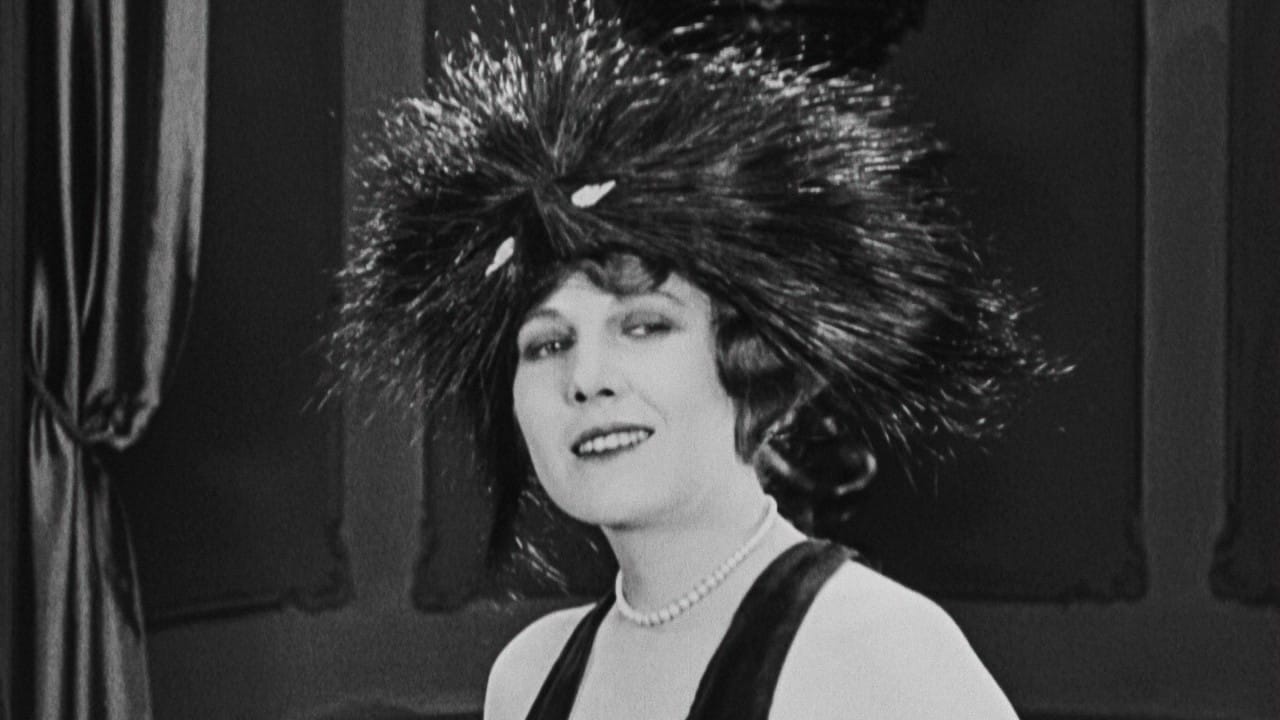
The overall underperformance of A Woman in Paris might be a side effect of an audience’s reluctance to see a performer best known as a clown on screen taking a crack at classical drama, but the film itself isn’t as direly serious as one gleans from its reputation. The always provocative Chaplin manages some genuinely funny digs at high society, from the oddness of haute cuisine to people seeking attention by ghoulishly drowning themselves in make-up. It’s clear that Chaplin holds Marie’s new world with some degree of disdain, but also shows that there’s still an allure to Paris. Life is unquestionably better for Marie than it was back home, or at the very least it’s more opulent, stimulating, and independent. A Woman in Paris is a resplendent looking film that isn’t afraid to go over the top in terms of production design and costuming to make greater visual points.
One of the most elegant parts of A Woman in Paris is the film’s score, produced by man-of-many-hats-and-talents Chaplin. It’s propulsive, mournful, and sets a perfect tone. It was also an element of the film’s production that was once thought lost to time. The Criterion release of the film is a 4K upgrade of the film’s original restoration in 1976, which first sought to reincorporate elements of Chaplin’s original score. The score got further love and attention around the turn of the century, when noted composer and conductor Timothy Brock (who has worked extensively on musical restorations of Chaplin’s music, in collaboration with his estate) gained access to nineteen hours of acetate recordings dating back to 1951, when a cash strapped Chaplin was trying to re-master his older works. A properly restored score was re-recorded and re-mixed for the film in 2010, and its inclusion on the Criterion release makes this a case where the audio component becomes just as breathtaking to behold as the restored visuals.
A Woman of Paris (subtitled “A Drama of Fate”) still isn’t one of Chaplin’s best known works, but it’s an important film in his catalogue and a powerhouse achievement. It’s a rise and fall story told from a refreshingly complicated and reasoned female perspective, resulting in one of the finest characters Chaplin ever created and one of the best performances given in one of his films. The thematically open ended conclusion also ensures that A Woman in Paris will stick with viewers much longer than some of Chaplin’s more disposable comedic efforts. Chaplin’s film builds towards a moment of tragedy – underlined by a simple, but masterfully gutting cutaway – that can be seen either as an ending, or, if you buy into the filmmaker’s sense of piety and morality, a new beginning. It’s a must have for Chaplin completists, and a must see for everyone else with a vested or passing interest in silent cinema.
A Woman of Paris is now available on Blu-Ray from The Criterion Collection.
