
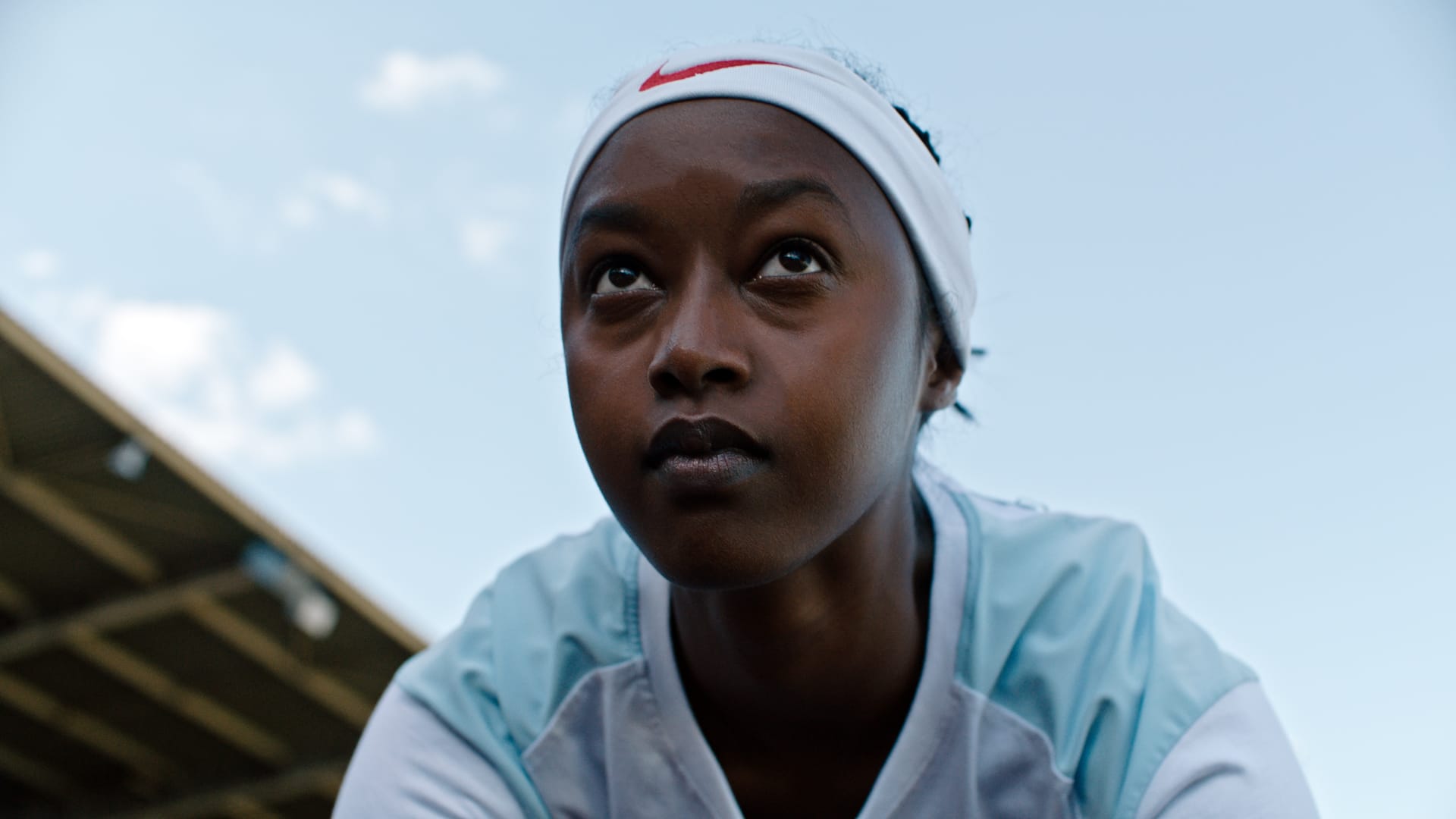
Early on in the sporting biopic Samia, a father tells his daughter that all of life is a dream, but sometimes it can be a nightmare. The latter half of that statement is true more often than not for the film’s titular protagonist, Samia Yusuf Omar, but as director Yasemin Samdereli illustrates, it’s the moments of tangible success against all odds that can make life worth living and fighting for. While it’s an imperfect retelling of Omar’s life and struggles as an athlete living under some of the most oppressive conditions in the world, Samia comes out a winner by showing what can be accomplished by believing in oneself when few others will.
Samia (played as a young person by Riyan Roble and as a teenager and adult by Ilham Mohamed Osman) grew up in Mogadishu, Somalia, a country that has played host to countless coups, revolutions, and militia led insurgencies since a power vacuum formed after the overthrow of a dictatorship in 1989. Running is something that flows through her family’s veins, with Samia hoping to follow in the footsteps of her father, Yusuf (Fatah Ghedi), even though the increasingly powerful grip of Islamic fundamentalism in the country frowns upon, restricts, and then ultimately forbids women from competing and training in sporting events. With the encouragement of her father (who lost a leg in a cafe bombing) and training in secret provided by her brother, Ali (Zakaris Mohammed as a kid, Elmi Rashid Elmi as an adult), Samia eventually works hard enough to become only one of two athletes from Somalia to compete in the 2008 Beijing Olympics. Despite having plenty of promise to build upon for future Olympic games, increasingly barbaric conditions and threats against her wellbeing force Samia to make an escape from Somalia.
Samia, which is based on the book Don’t Tell Me You’re Afraid by Italian journalist Giuseppe Catozella, is one of those stories where the facts and ultimate outcomes are easily Google-able (or in some cases, well known ahead of time to anyone who remembers the 2008 and 2012 summer games). Samdereli (working in collaboration with Doka Mohamed Osman) plays fast and loose with some of the facts surrounding Omar’s life and career, but most of that extends to making some events conveniently timed for maximum emotional impact or details that are minor in comparison to the bigger picture trying to be painted. There are limitations to what can be shown thanks to the film’s budget, and the overall story of Samia has been condensed in such a manner that the pacing is sometimes clunky and inorganic.
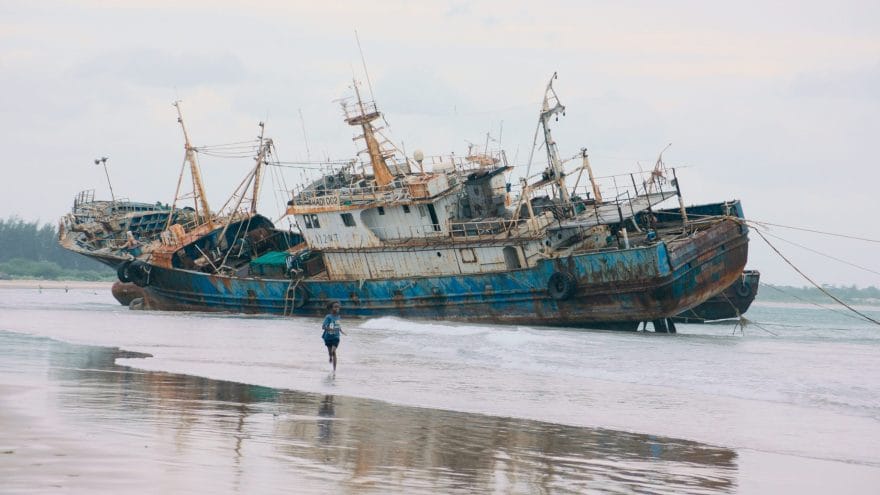
But much like the film’s subject, Samia works by highlighting its greatest strengths. The depth of feeling and passion in ?amdereli’s film is undeniable. The dedication to recreating early to mid-2000s Somalia lends the story’s family dynamic a pleasantly theatrical quality, as if all of their discussions and arguments take place in their own little place of neutral Earth, while the outside world around them falls apart. Anything can be said within the wall’s of the family’s home, both positive and negative, but beyond their doors, every reaction must be carefully thought about and is subject to scrutiny. Fear reigns, as evidenced by a powerful scene where young Samia and Ali are stopped in their tracks by amped up, gun toting child soldiers who take offence to the girl’s outfit of short pants and a T-shirt. But within the family, that fear is experienced on a sliding scale. Some fear it deeply. Some compartmentalize that fear. Others give in to it because it’s the easiest way to cope. That dynamic not only adds layers of depth to the film, but also showcases the influences in Samia’s life.
Samia excels at showing the lengths refugees fleeing persecution and violence will take to secure a better life. Built around a time shifting structure, Samia often cuts back to the point where Omar has left Somalia and is being bounced around Libya by human traffickers, hoping that she eventually ends up in Italy in time to make it to the 2012 London Olympics. Often at gunpoint and frequently while being shouted at and demeaned, Samia and her fellow travellers are forced into prisons, shipping containers, and boats that are far beyond their intended capacities. Many of the other migrants are able to recognize Samia, and her presence in turn gives them additional strength to keep going. If someone of her international level of recognition has to go through the same pain, they must be making the right decision, in spite of the hardship, hoops, and dangers they face in fleeing.
Samia is less about sports than it is about survival. It’s inspirational in the sense that it’s showing the importance of trying against all odds when handed every disadvantage is put in your way, and even if the results are just being pretty good and not the best in the world. The fact that you’re competing is already a victory in and of itself. It’s not a story about winning, but about being tenacious and strong willed. And on a much deeper level, Samia is a story that shines a light on what humanity will lose if exceptional people like her fall through the cracks or are told they have no worth. Not everything about Samia’s story is traditionally inspirational (although the film does try very hard to make it so), but the real inspiration can take root in those who see and process her story.
Samia opens in Toronto at TIFF Lightbox on Friday, July 25, 2025. It expands to Bytowne Cinema in Ottawa on August 3, and to VIFF Centre in Vancouver and Roxy Theatre in Victoria on August 8.
