
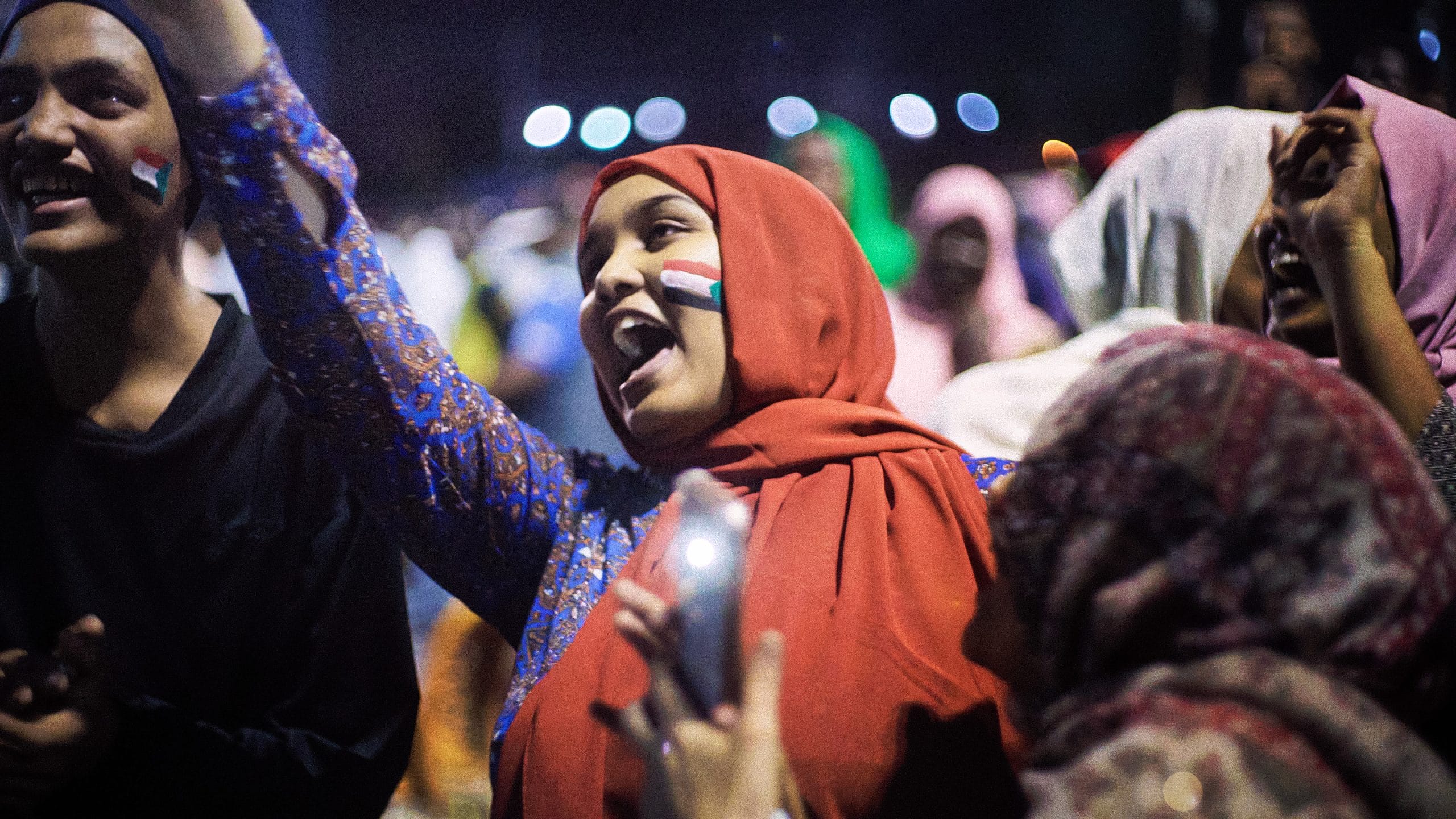
Hind Meddeb’s documentary Sudan, Remember Us celebrates the spirit of togetherness and peaceful demonstration even at the cost of hardship, death, and displacement. While some viewers might remember or have knowledge of the Darfur genocide earlier in the century (which killed over 300,000 people), many more will likely be unaware of the widespread violence that had gripped the nation of Sudan as a whole for the better part of twenty years (which has killed millions more). Looking at a pivotal year in the country’s military and political history from the perspective of young people fighting for change and equality in the city of Khartoum, Sudan, Remember Us takes viewers into an ongoing conflict that frequently goes unnoticed by the media around the world.
In 2019, the thirty year reign of hard line Islamist dictator Omar Al-Bashir came to an end, but like many other countries coming out of oppressive totalitarianism, a power vacuum occurred and various military leaders and militias rushed to take control. One month after the crumbling of Al-Bashir’s military government, large scale sit-ins started to occur advocating for a citizen’s government instead of one dictated by religious or military rule; free from the racism and and tribalism that has plagued Sudan. Meddeb speaks with the young people – many of them artists – involved with the protests, and continues to keep up with them as the unrest in Khartoum ebbs and flows amid numerous coups and outbreaks of violence. These peaceful protestors refuse to budge until their voices are heard and tangible change occurs.
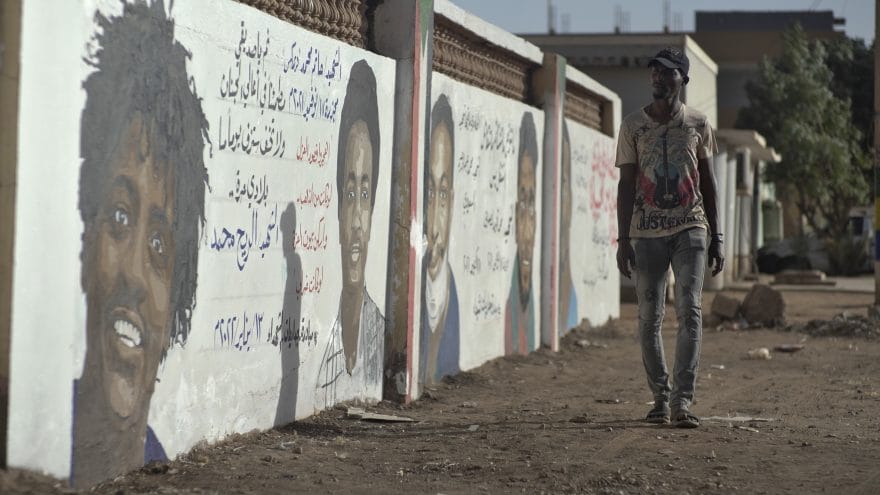
Meddeb (Paris Stalingrad) isn’t trying to mount a comprehensive historical overview of events with Sudan, Remember Us, but rather personal snapshots of a specific moment in time. In part due to a decision made by the filmmaker to include narration from some of the film’s subjects recorded in 2023 via messages to Hind back in France, it can be difficult to decipher when certain events happened along the film’s timeline. The lack of specificity sometimes works against Sudan, Remember Us, but the life and vibrancy captured by Meddeb more than makes up for gaps caused by the film’s narrower viewpoint.
Sudan, Remember Us poignantly looks at the togetherness among the protestors and the sense of community they foster, even in the face of danger and violent reprisals. On June 3, 2019 (the last day of Ramadan), military forces brutally attacked the protestors, with many being shot, beaten, or burned alive while they slept. (Meddeb includes shocking, stomach churning footage of these events from the perspective of some of the soldiers carrying out such horrific acts.) But by October of the same year, the protests were back, bigger, louder, and more committed than before. If military oppression wasn’t going anywhere, neither were those committed to fighting against it.
The streets of Khartoum in Sudan, Remember Us are alive with music, poetry, grand oration, and visual arts that serve to bolster the spirit of the people, while remembering those who died or were disappeared for the cause. As one demonstrator notes to Meddeb, silence in such cases can be deadlier than a bullet, and the film functions primarily as a testament to those willing to speak up. While the film could benefit from a bit more context, Sudan, Remember Us captures the spirit of young men and women that want to see their country move forward, not backward.
Sudan, Remember Us opens at VIFF Centre in Vancouver on Friday, August 8, 2025, and screens at Hot Docs Ted Rogers Cinema on Saturday, August 9 (at 7:00 pm) and Sunday, August 10 (at 3:45 pm).
