
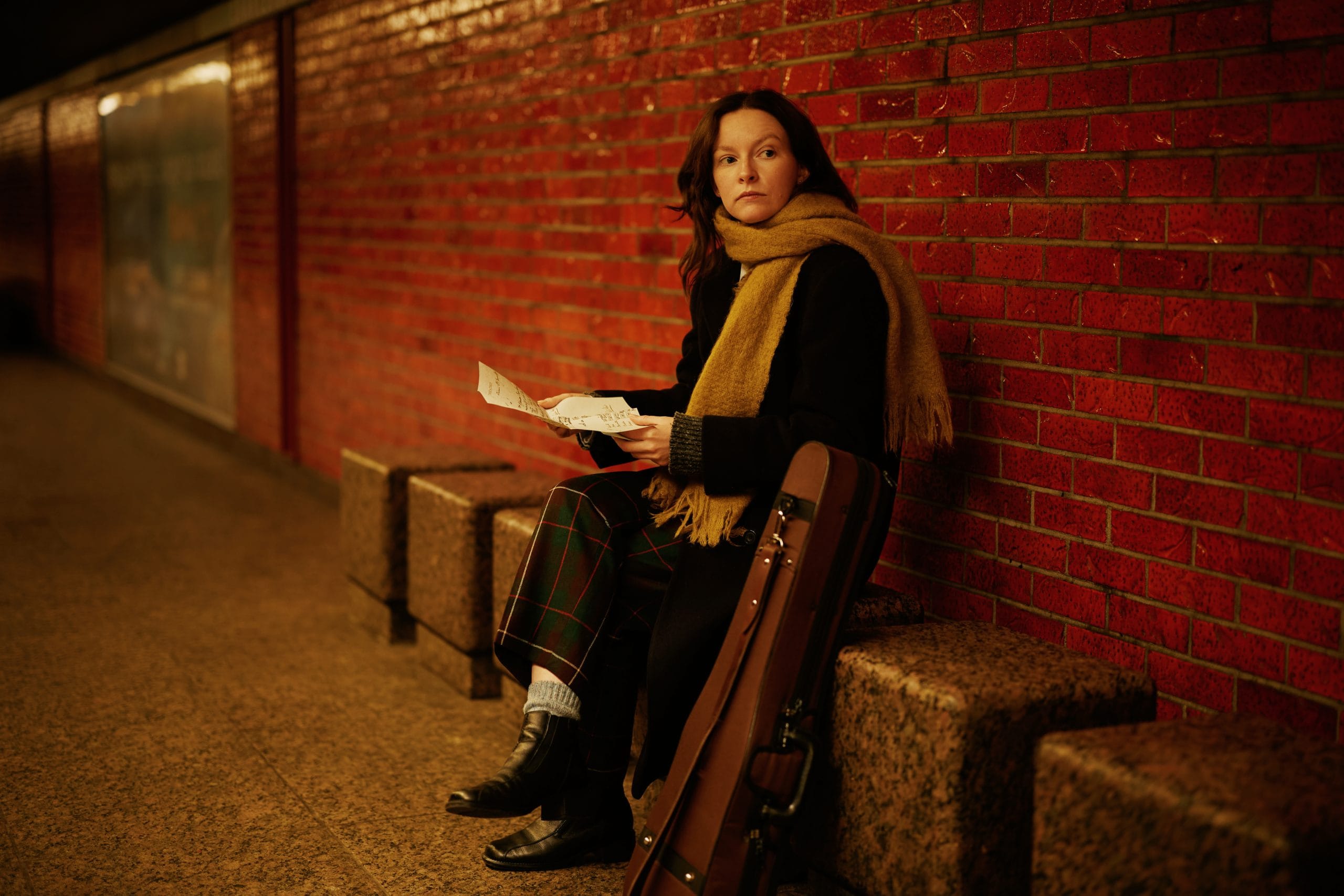
Canadian filmmaker Sofia Bohdanowicz has created something both monumental and intimate with her latest feature, Measures for a Funeral. Boasting links to other works she has produced over the years (most notably the 2018 short film Vaselmøy’s Song, which this is an extension of), Measures for a Funeral is the kind of work that if a much older filmmaker had made it, one would say it was the culmination of their career; a summation of themes that had been previously explored but were only fully cracked open on this attempt after years of experimentation. But Bohdanowicz still has a long way to go as a filmmaker and hopefully keeps providing viewers with this same kind of erudite, intelligent, and philosophical work for years to come. Instead of acting as a period on the end of a sentence, Measures for a Funeral is akin to a semicolon or ellipsis; a conversation with the viewer, the world, and the filmmaker herself that looks to keep going in the most intriguing of ways.
Measures for a Funeral finds Bohdanowicz (Maison du bonheur, MS Slavic 7) once again re-teaming with co-writer, leading performer, and close collaborator Deragh Campbell, who reprises her role as graduate student and ace researcher Audrey Benac, a character the actor played previously in the director’s shorts Vaselmøy’s Song, Point to Line and Plane, and A Woman Escapes, and in the feature Never Eat Alone. But Measures for a Funeral isn’t a franchise picture by any stretch, nor is it necessary to know much about the character of Audrey heading into this one, despite some clever nods to the way Benac’s reputation precedes her.
Audrey has a lot on her plate and is stuck in a depressive, financial, and spiritual rut. She’s supposed to be wrapping up her thesis about Canadian violinist Kathleen Parlow, but nothing seems to be moving along. Her supervisor has reached about all she can take from the wheel spinning Audrey, saying that she can’t keep funding a research project that isn’t yielding any results. Audrey keeps digging further into Parlow’s life and career, poring over diaries, planners, photographs, and private letters found in her school’s archives, but her mind perpetually seems elsewhere.
Going to school in Toronto, Audrey is far from her ailing mother, Elisabeth (Julia Beyer), who has been living in hospice care. She also recently broke up with her boyfriend of five years. Audrey’s research into Parlow isn’t merely academic, as her family has a connection to the artist. Both of Benec’s parents used to be violinists, but her father left to pursue his career, while Elisabeth abandoned her dreams to raise her daughter, something Audrey suspects has caused no small amount of resentment. Needing to find some direction for her thesis, Audrey travels to England and Norway to learn more about Parlow, eventually coming to the conclusion that she wants to remount a bombastic, technically demanding, long thought lost concerto: Johan Halvorsen’s Opus 28, which was dedicated to a then seventeen year old Parlow.
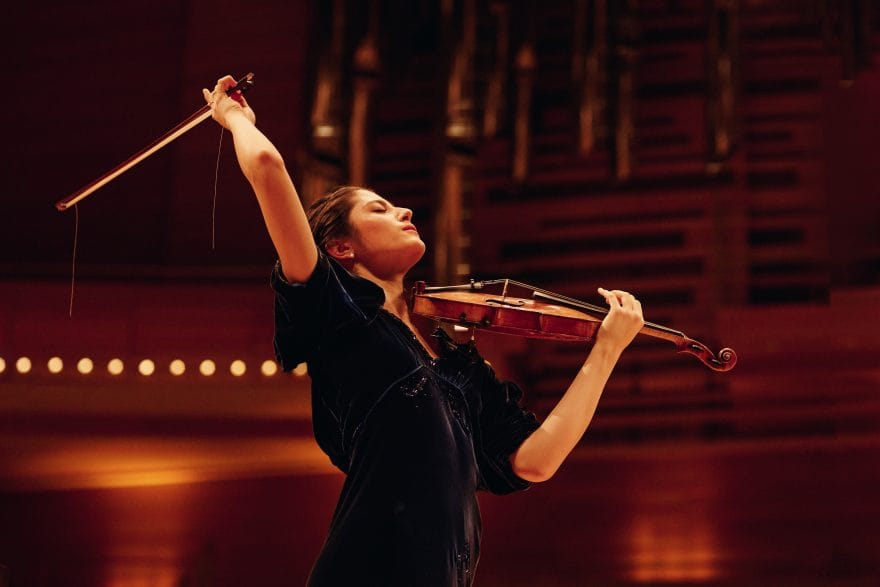
Melancholy and burnout are pervasive feelings throughout Measures for a Funeral; a mood matched by the perpetually gloomy late-winter/early spring settings of Toronto, London, and Oslo, all of which appear gorgeously damp and dreary. Measures for a Funeral isn’t a light film in terms of tone, visual composition, or substance, but it is driven by an act of love disguised as scholarship. As Audrey immerses herself in Kathleen’s life and world, the protagonist connects to her own history and confronts psychological underpinnings in a uniquely healing manner. Measures for a Funeral is something rare: a love letter to academia and its ability to create stories and pull emotions out of people. It sounds dry, and at points it can be, but Bohdanowicz has crafted a work about the art of research that’s finds warmth in all things academic.
With Parlow’s written words providing a lot of historical context (via narration provided by Mary Margaret O’Hara), Measures for a Funeral also functions well as a gothic sort of ghost story. One can always feel the weight of connection in Bohdanowicz’s works, and here an unseen hand can always be felt guiding the sometimes wayward and wandering Benac. The look of the places Audrey finds herself in can be cold, but there’s always a presence to be felt, like when a wax cylinder recording brings someone to tears or the way one can sense the historical significance of a now liminal space that looks vastly different from old photographs. There’s also a love for all things tactile in Measures for a Funeral, which places significance on the way things feel physically, not just emotionally. There is wonder and warmth abound in Measures for a Funeral, but like Bohdanowicz’s protagonist, the viewer has to do their own research to find it.
The film features another outstanding performance from Campbell, whose work here is allowed a lengthy on-ramp to gradually build and bloom. From the start, it’s clear that Audrey isn’t in a great place, but over time Campbell illustrates a sense of agency, power, and renewed vigour that starts to take root. An exceptional scene in a British pub where Audrey has a moderately tense conversation with the friend and colleague she has been staying with (a very great Melanie Scheiner) proves to be a tipping point in the character’s journey, with a spark slowly starting to ignite a fire that will bring the film to its conclusion. Campbell’s work brilliantly illustrates a person at a crossroads in life who’s finally starting to formulate a plan to get out of her personal and academic predicaments.
Once Bohdanowicz shifts gears from research toward the actual composition of music, the film has already laid a lot of groundwork to show why all of this matters to the characters. Measures for a Funeral deftly shows how history is largely kept alive by two of humanity’s biggest emotions: spite and love. This goes for both academic history and more deeply personal matters. This dichotomy also asks the viewer to question what constitutes an act of true love and admiration. These moments of catharsis and valuation often come from a blend of hard work and emotional soul searching, two things that Measures for a Funeral can speak to at great, eloquent length.
Measures for a Funeral screens at TIFF Lightbox in Toronto on Sunday, December 7 at 12:00pm, with a post screening Q&A featuring director Sofia Bohdanowicz, cinematographer Nikolay Michaylov, and sound mixer Lucas Prokaziuk, moderated by Atom Egoyan.
