
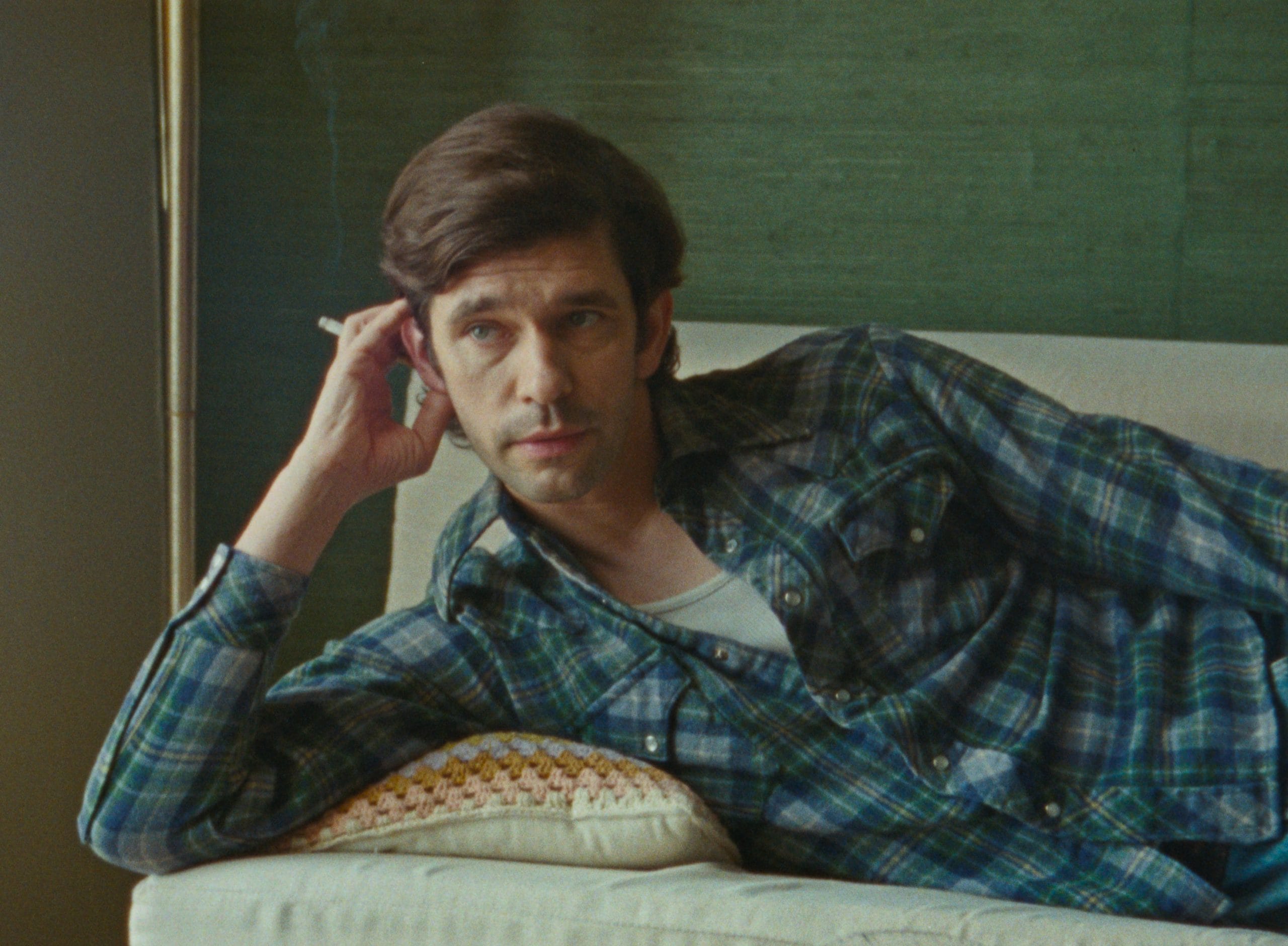
Writer-director Ira Sachs’ Peter Hujar’s Day is a film about nothing that’s really something to behold. It captures a feeling that’s hard to define; almost like you’re in a room with two mutual friends who know each other, but you had no clue they were acquainted. And then you let them chat about everything that’s on their mind while you remain a silent observer. And through all of that, somehow you’re never bored or lost. You hang on every word they’re saying and go along with it, even if one of them controls more of the conversation than the other. It’s oversharing by design, and there’s almost nothing else like Peter Hujar’s Day out there; a mixture of history, biography, art world trivia, and stream of consciousness that arises from the simplest of questions: what did you do yesterday?
That question is posed by writer and founding editor of Auction magazine Linda Rosenkrantz, played here by Rebecca Hall. The person she poses this question on the afternoon of December 19, 1974 is iconic queer photographer Peter Hujar, played by Ben Whishaw. Rosenkrantz had the idea that she would interview a bunch of her friends in the New York City art scene by asking them to describe their previous day in great detail and compile the responses in a book. That book never materialized, and the audio of Rosenkrantz’s talk with Hujar was long since lost, but a written transcript of the encounter was found in the photographer’s personal archives after his passing in 1987. In 2021, Rosenkrantz would turn that transcript into a book.
It sounds patently impossible to capture on film and make it even the slightest bit dynamic to watch, but Sachs (Keep the Lights On, Little Men, Love is Strange, Passages) finds great elegance and candour in the simplicity of Peter Hujar’s Day. Without much prompting or need for follow-up questions from Rosenkrantz, Hujar is able to rattle through all the details of the previous day, both professional and personal. A self-professed name dropper who frequently crossed paths with other noteworthy artists of the day, Hujar describes in vivid, minute detail a rather extraordinary day for most people, but just another day for him. It starts with having to traverse the city to photograph cantankerous and paranoid beat poet legend Allen Ginsberg for a New York Times profile, before settling into a period of chores and attempts to get paid for his work, grabbing Chinese takeout with a friend, and offering up tangential anecdotes about any number of other famous types, from Susan Sontag to Fran Lebowitz to Rod Stewart, before talking about winding his day down in the darkroom.
Peter Hujar’s Day doesn’t slow down for a moment, a reflection of its titular character. It’s clear that Hujar was well prepared for his sit down in with Rosencrantz, and despite any number of asides, his train of thought never fully goes off the tracks. From the sound of his story, Hujar is relishing the chance to simply reflect on a prior day’s events instead of having to field phone calls whenever he’s not rushing between shoots. He’s engaged and excited, even if he questions if Rosencrantz’s book will ever get finished or published. He’s all to happy to oblige and banter. Sachs captures the artist at a turning point in their career, between the commercial work that helped keep a roof over his head and the more artistic photography that would solidify his legacy. At this point, Hujar knows a lot of people on the verge of greatness and some that have already attained it, and there’s a sense that all of these people collide on just another regular, and not particularly extraordinary day.
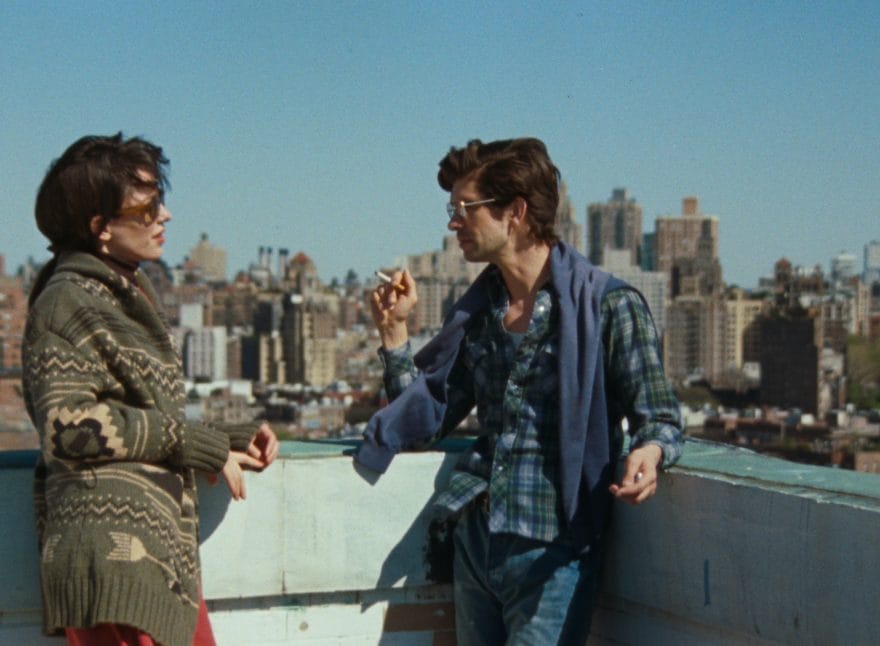
The conversation is interesting, but the way its performed and captured by Sachs is what makes Peter Hujar’s Day revelatory. As their dialogue moves from the living room, to the bedroom, and up to the building’s roof for a couple of smoke breaks here and there, the 16mm photography from Alex Ashe provides a documentary like quality that captures interviews from the film’s time period perfectly. The film includes a few fourth wall breaking moments where the crew can be glimpsed slating the action and starting new scenes, which makes the viewer question if they’re watching a movie that’s meant to appear like a documentary or if Sachs is commenting on the artificiality of the film’s premise. The editing from frequent Sachs collaborator Affonso Conçlaves pays careful attention to the conversations at hand, and sometimes scenes transition with one roll of film ending, the audio continuing, and a new roll starting up again. It’s a kinetic way to stage a script that doesn’t lend itself well to a lot of motion.
But the real attraction of Peter Hujar’s Day is Whishaw’s exemplary leading performance. His Hujar holds court, dropping names at will, dishing out whenever possible, questioning his interviewer (with Hall providing a reliable dance partner whenever called upon to pipe up), and telling a long winded story about something that should be dull but is anything but boring. Hujar is in near constant conversation for the majority of Sachs’ brief, but impactful 72 minute running time, and Whishaw’s balance of verbal energy and effortless ability to portray a character relaxing in the presence of a friend is a balancing act most performers can’t pull off with such breathless aplomb.
The viewer is offered a great deal of insight into Peter Hujar’s day, both the day before being recounted and the day of the interview. Even if the viewer doesn’t have prior knowledge of any of the figures, luminaries, and acquaintances being brought up in conversation, Sachs and Whishaw find ways of making everything accessible amid such an experimental concept. The film never makes the assumption that it will distill Hujar’s life and work down to a single volume, and instead creates an impression of what it was like to be around him as a close colleague and friend. There’s a lot of warmth and value in such an approach that proves more humane than any number of grandstanding biopics could hope to attempt by swinging for the fences. It’s an artist in their natural habitat, met on their own terms, and given an unforced platform.
Peter Hujar’s Day opens at TIFF Lightbox in Toronto and ByTowne Cinema in Ottawa on Friday, December 12, 2025.
