
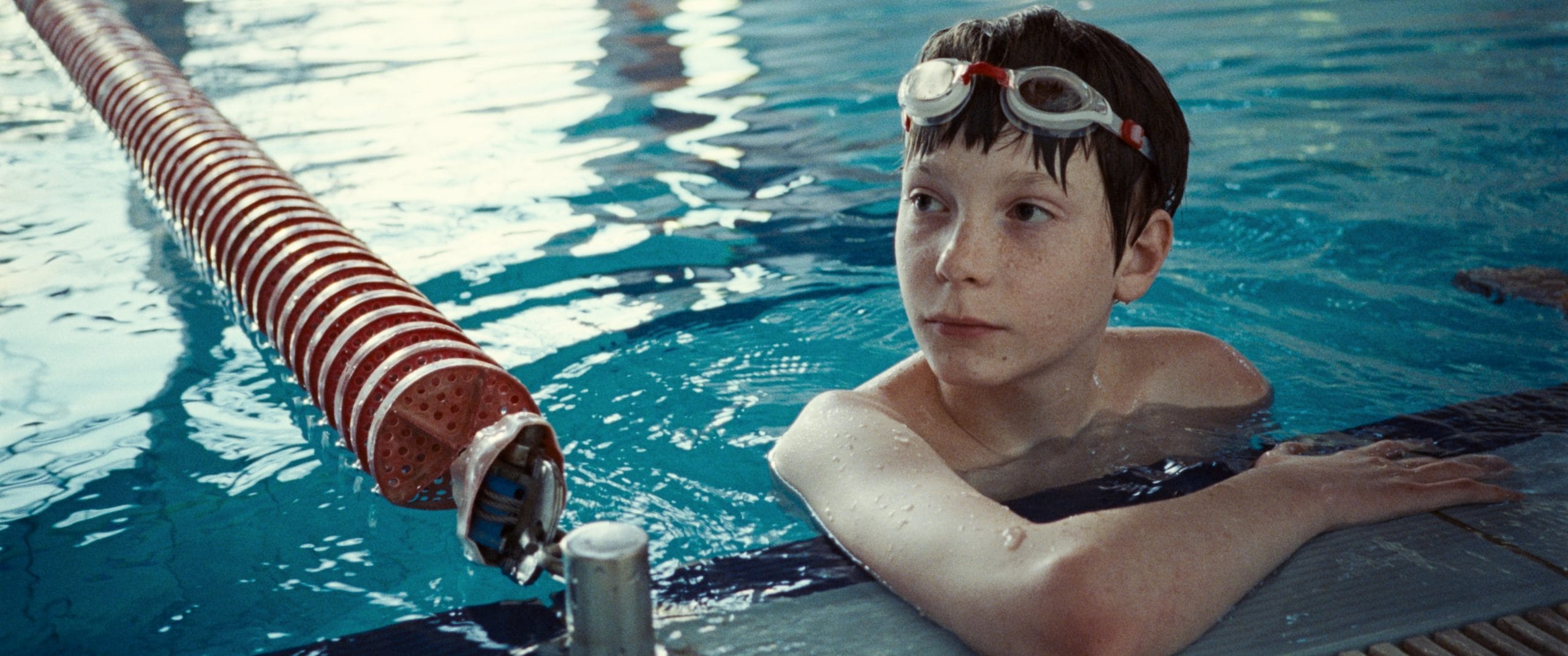
The Plague is a haunting young adult drama, but it isn’t expressly about any sort of disease. Nor is it, strictly speaking, a sports movie that takes place in the world of water polo; a seemingly gentlemanly pursuit that’s acutely filled with full contact violence and borderline bloodlust. There is competition and a mysterious ailment at the heart of Charlie Polinger’s gutsy debut feature, but really the plague in question is the effect puberty and immaturity has on the formation of a masculine identity. Polinger’s approach to a bleak time in the lives of many young people is as unsettling as it is delicate; refined as it is revolting to sometimes watch. It’s emphatically not a horror movie, but it’s certainly genre adjacent, and The Plague (which turned up on my list of the 100 best films of 2025 list last week) slowly burrows its way under the viewer’s skin.
Twelve year old Ben (Everett Blunck) is the new kid in town. He has enrolled in a summertime sleepaway water polo camp with a bunch of other boys his age. On the first day of camp, Ben notices there’s an unbalanced pecking order to his new team. Cocky, arrogant, and measured cool kid Jake (Kayo Martin) holds court at the popular kid table during lunch, while everyone gives awkward, pimple faced Eli (Kenny Rasmussen) a wide berth. Ben does his best to blend in with the in-crowd and endears himself to Jake by participating in dorky sexualized conversations, childish pranks, destructive bacchanalia, and insult slinging. But Ben also doesn’t understand why Eli is such an outcast. Jake and his buddies say the reason Eli always wears a long sleeve shirt in the pool is because he has some sort of highly contagious skin condition (one that he purportedly got from another kid who’s no longer on the team). Ben shows Eli some kindness and understanding, which the other team members immediately see as both a weakness and a belief that he has caught the same “disease.”
The Plague isn’t the sort of thing I would recommend to viewers who have a sensitivity to watching people getting bullied or seeing boys being loathsome little shits, but the skillful handling of the minefield that is early teenage sexuality and rebellion is some of the best put to film in recent years. Polinger lets the cruelty of these youngsters play without embellishment; the sort of thing that used to be excused during the film’s 2003 setting as “boys being boys.” Next to toddlers, there are few ages more unabashedly feral than one’s early teens, a period during which kids try (and frequently fail) to prove themselves as adults, often without realizing their behaviour is crass and immature. They dream of being sexually active and want to talk about what they would do if they had a girl in front of them, but they have no real experience with the subject. They think being cool means being uncaring and acting like everything is beneath them. Shame is hilarious to watch, as long as it doesn’t happen to them. Any circumventing of unspoken guidelines is grounds for excommunication from the group, even if one’s closest friends insist that being yourself is important. It’s a confusing time where those who haven’t bought into a full on tribal male mentality – like Ben and Eli – are often left to fend for themselves.
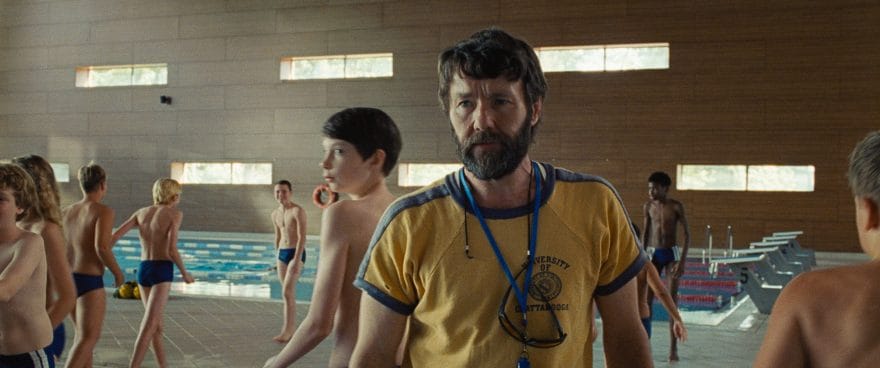
Polinger never shies away from the morally dubious, but unquestionably independent feeling of being a youth in a place where there are no parents and consequences feel minimal as a result. There is a coach to answer to (played by Joel Edgerton, who also acts as a producer), but he can only do so much whenever faced with examples of bullying or inequality. (And in a great scene opposite a crestfallen Ben, the coach shows that he has little capacity for understanding beyond remembering his own experiences as a kid.) Most of these kids have constructed a hive mind built around their budding masculinity, limited world view, and fears of anything that don’t fit neatly into a box. Without real consequence, they’ve given over to the powers of belief, suggestion, and conformity. The only real consequence is not being cool.
The young actors embody the tone Polinger is crafting brilliantly, with all of them fully committed and willing to go to some very dark places. Martin is a fascinating sort of antagonist who says very little most of the time, but makes a huge impact when he decides to speak up. The authority he commands over the team and its coach is easy to see. Rasmussen’s nerdy outsider is also given some rough edges that make him a more intriguing character than it would be in a less sophisticated film. Eli, who sometimes acts outlandishly and says odd things, isn’t all that far removed from Jake’s pack of wolves, but he isn’t accepted by them, either. This two-sides-of-the-coin dynamic between Eli and Jake makes Ben an ideal audience surrogate into this world; an imperfect protagonist who’s willing to side with extremes, but would be much better off carving his own path forward in the world. Blunck deftly leans into Ben’s developing personality and stronger sense of morality with the kind of seasoning one might expect from an actor twice his age. Blunck is the fulcrum that provides The Plague with its unnerving sense of balance.
The pervasive emotions one feels during The Plague are anxiety and tension, not just from the material, but Polinger’s style and assembly. Although the movie is set predominantly at an enormous pool inside some kind of larger institution (you probably know already what it looks like: lots of tile, fixtures, and walls that look like they haven’t been touched up since they were built in the 60s or 70s), Polinger makes it appear like a place full of ghosts. The ghostly glow of the pool water tints almost every frame, adding an etherial touch even to scenes with darker lighting. The sound design grows noticeably louder and more discordant the longer The Plague goes on, and the editing becomes more severe and intense to match the increasingly heightened emotions and situations.
Since its debut at Cannes last year, The Plague has garnered numerous comparisons to The Lord of the Flies, and it’s certainly appropriate. It’s another tale of young people gone feral and cruel in a bid to maintain control and act like adults. But The Plague isn’t a perfect one to one replication by any stretch. In fact, the artistic work I was most reminded of while watching Polinger’s film is Claire Denis’ landmark 1999 drama Beau Travail, a film with older characters and an even older source of literary inspiration (Herman Melville’s novella, Billy Budd). That’s another film where any deviation from an established norm and displays of compassion are treated like affronts to militaristic order. That film’s delicate tone is a lot more appropriate to bring up when talking about Polinger’s work than Golding’s brute force bleakness. It’s high praise. That level of emotional complexity is hard to achieve, especially when working with such young talents.
The Plague opens at TIFF Lightbox in Toronto, Cinema du Parc in Montreal, and Plaza Theatre in Calgary on Friday, January 2, 2026. It opens at VIFF Centre in Vancouver on Saturday, January 10.
