
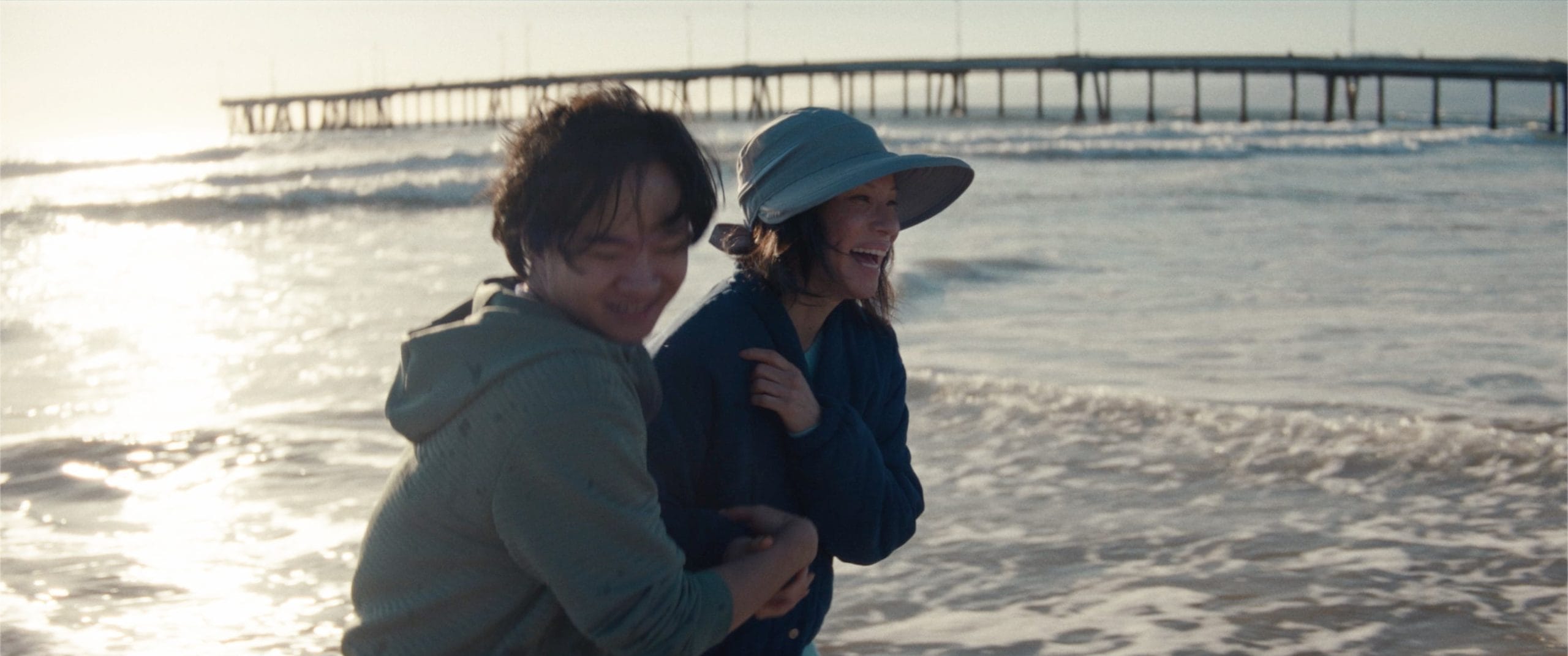
With a career defining performance from Lucy Liu in the lead and an outstanding feature debut turn from Lawrence Shou to support her, Eric Lin’s tragic, melancholic, and devastating drama Rosemead is one of the most morally and emotionally tough films of the year. A film about a fraught mother and son relationship where grief and guilt cut both ways, Rosemead reflects the mentalities of its main characters by never choosing an easy path, because these people are never presented with such an option. For all of the outward advantages and supports Irene and Joe Chao have in their lives, it’s the uncontrollable things inside of them that will forever alter their bond.
Irene (Liu) is a Taiwanese-American widower doing her best to make ends meet. In addition to running a copy and printing business out of a Southern California strip mall, she also lends a hand over at her close friend’s herbal medicine shop. That’s on top of getting treatments for a cancer that is growing increasingly aggressive and harder to maintain. It worries her seventeen year old son, Joe (Shou), a well liked kid with a prominent spot on the school’s swim team, who wants mom to take it easy on herself. But Joe has problems of his own. He’s schizophrenic, and his therapist is concerned that the condition is also worsening. After being triggered, damaging property, and worrying other students, Irene is told that Joe needs to transfer schools, adding to both of their worsening physical and mental states.
Based in part on a true story that was most memorably recounted in a 2017 Los Angeles Times article by Frank Shyong, Rosemead is a bleak, but darkly relatable and uniquely empathetic story, regardless of what opinions audiences might have about where everything ends up. The script from Marilyn Fu (with additional writing from Lin) starkly and realistically conveys the emotional mindset of two people who are linked by paranoia and grief. They’ve lost control over their own bodies and minds, and this mother and son only have each other to truly lean on. But how much honesty can there be between loved ones who don’t want to admit to the other party how bad things have gotten? Irene is always downplaying her cancer, and Joe has been conditioned by society and culture to not speak up about his inner turmoil.
Irene is lax when it comes to joining Joe for his therapy sessions, despite being told by his doctor that her participation in sessions would be welcome. Irene (who predominantly converses outside the English language) finds herself stuck in a tough situation. She’s desperate for her son to get better, but those closest to the family think she’s acting like “a foreigner” for daring to entrust her son’s wellbeing to westernized therapy and medications. Irene also has cause for concern surrounding Joe’s eighteenth birthday. At the point Joe becomes a legal adult, any public facing schizophrenic outbursts will lead to him being placed under involuntary, legally actionable mental health holds instead of having him released into her care. Irene is always left wondering what will happen to her son if things get worse and she isn’t around to help. Similarly, Joe worries what will happen to his mother if he isn’t around to make sure her stubbornness doesn’t override sense when it comes to receiving life prolonging treatment. They live for each other, linked by layers of guilt, trauma, and thin social and medical supports that provide only a baseline of care or solace.
Rosemead is a frequently harsh film, often by necessity. Lin, whose background as a cinematographer provides remarkable images here, has to deliver something that’s heartbreaking without being manipulative. In addition to approaching cancer and schizophrenia without patronization, Rosemead taps into a lot of anxieties that make navigating the modern world hard for those always made to feel like outsiders or minorities; ethnically, socially, mentally, physically, and financially. In addition to the obvious afflictions of its characters, there are plenty of other fears around the periphery of Rosemead that weigh heavily on Irene and Joe, making a bad situation worse, even when these issues are still at arms’ length from them. Lin and the cast make the viewer feel the weight of the world and circumstance pushing down. Again, Rosemead isn’t pleasant or easy viewing (with a conclusion that makes it almost impossible to market this to a mass audience), but it always presents itself with authenticity and empathy.
A huge part of the film’s acclaim should go to Lin’s leads. Liu disappears completely into the role of an aging, ailing immigrant mother growing increasingly frustrated at the lack of options afforded to her family. Liu changes her appearance and voice in ways that make her almost unrecognizable in the part, and emotionally the character comes across as the definition of an open wound that’s only growing larger instead of healing. Liu gets a tremendous scene partner in Shou, a young actor so great that it’s hard to believe this is his first major starring role in a motion picture. Shou’s depiction of Joe’s schizophrenia is so reasoned and granular that it feels like the work of a seasoned pro who’s been at this for decades.
Even at the film’s darkest and most despairing, Rosemead finds great warmth in the performances of Shou and Liu, as well as Lin’s commitment to playing things as they are, not as how the audience would prefer them to be. A film like Rosemead could be off-putting and exploitative in the wrong hands. But in these hands, the weight and gravity of the situation plays perfectly. It’s a film that won’t be easily forgotten or shaken by those who seek it out.
Rosemead opens in Toronto, Montreal, Vancouver, Ottawa, and Calgary on Friday, January 9, 2026.
