

The layered, multi-arc drama Finch and Midland is another shining example of the sort of high level, hyper-local filmmaking that has been coming from the city of Toronto lately. While mainstream courting productions like Nirvanna The Band The Show The Movie have been bringing the city to greater, broader notoriety, there are still films like Scarborough, Morningside, Shook, and Boxcutter that have shone a light on how many different cultures and stories can be found within the city. With his look at four immigrants from Hong Kong coming to major life crossroads, writer-director Timothy Yeung adds to this burgeoning local cinematic legacy quite nicely and with a great deal of cultural specificity and wide reaching empathy.
Although the title suggests that the film takes place in and around the titular Finch and Midland neighbourhood in Scarborough’s north end, the stories told by Yeung could be taking place anywhere in the city, nation, continent, or world. These reflections on middle aged struggles and regrets aren’t directly interconnected in any way beyond the neighbourhood and a shared sense of culture, but all of them revolve around dreams, promise, and potential unfulfilled; an unfiltered look at the immigrant experience shared my many Canadians.
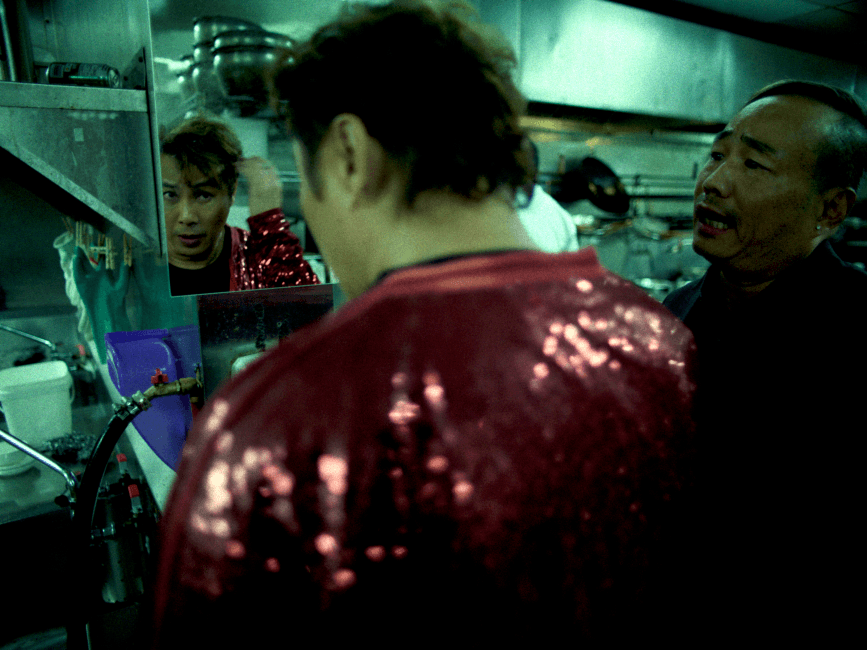
Dan Leung (Patrick Tam) is a washed up former pop star who came to Canada after finding a small bit of success in Hong Kong. Today, he’s a drunk that can barely hold a job hosting parties for tourists at a local banquet hall. Dan has also been deliberately avoiding a meet up with the young daughter he’s never met.
Eva (Harriet Yeung) is a single woman pushing fifty who spends most of her days visiting her mother (Nina Paw) in a long term care home. Mom constantly belittles her daughter, maintains that her more beloved absentee song will soon come to square everything out, and perpetually lords it over Eva’s head that she sacrificed everything to give her kids a better life in Canada. Whenever she’s not doting upon her ungrateful parent, Eva scans dating apps and flirts with her frequent pizza delivery guy with hopes of finding and feeling love.
Fan (Theresa Lee) wants to be a good example for her daughter, holding down two very different jobs (a sex worker at an erotic massage parlour and a supermarket checkout clerk) to make ends meet. Fan studies rigorously to get her real estate license and land a job that can give the family more financial stability.
Tony (Anthony Wong) is the dedicated floor supervisor at a local manufacturing plant. He works hard, does as he’s told, and thinks job security comes in the form of cozying up to his white boss. In reality, it only makes him someone capable of doing the boss’ bidding, especially when it comes to telling fellow labourers that their services are no longer needed.
Finch and Midland cycles through each of the characters in well paced pattern instead of jumping around in a more random fashion. With the exception of Fan, whose pursuits seem most attainable (for awhile, anyway), the other characters are forced to cope with the crushing weight of unattainable expectations. They have to swallow hard pills, pride, and in some cases suffer great humiliation. Finch and Midland is a sad, purposefully cynical, but true to life film about getting frozen in place, culturally, financially, and racially. These are people in need of a boost and desperate to be seen and understood. Some, like Dan, lash out, while others, like Tony, go along to get along and just hope that everything works out okay in the end.
No one has all of the answers in Finch and Midland. Sources of good advice and inspiration are in short supply for these people. They understand their cultural heritage and the expectations placed upon them. But while Finch and Midland is named after a neighbourhood and takes place amid a specific diaspora, none of these people belong to much of a community. They are islands unto themselves, and they try to mask their disappointments in a bid to save face.
It’s a testament to Yeung’s clarity of vision that these stories aren’t competing for the spotlight. Although they are connected mostly by geography and ethnicity, that’s surprisingly enough to keep Finch and Midland together as a cohesive whole. All four leads commit themselves fully to their parts, with Yeung in particular putting in outstanding work as the lovesick Eva. It’s the sort of film where many viewers will be able to see friends, family members, and themselves in the characters. The struggles are both specific and universal, reaching far beyond the borders of Scarborough.
Finch and Midland is now playing in select Canadian theatres.
