
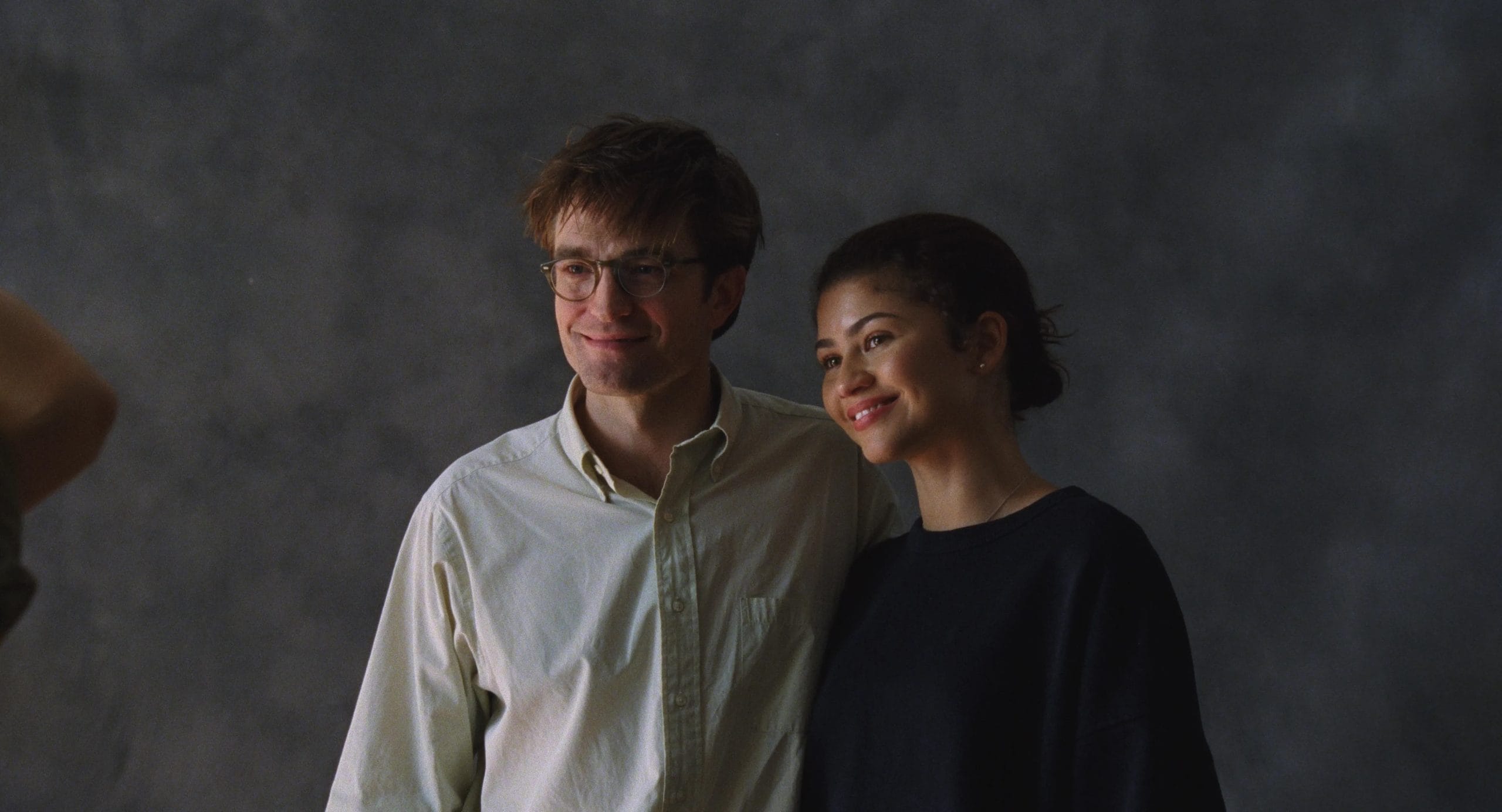
It’s often said that comedy is tragedy plus time. For The Drama, writer-director Kristoffer Borgil pushes for maximum discomfort and shock by forcing the viewer to realize that sometimes comedy is watching a tragedy unfolding in real time. “It’s funny because it’s not happening to me.” But unlike other dark comedies that tend towards the misanthropic side of humanity, The Drama is a thoughtful, layered look at empathy and morality unfolding across a week leading up to a wedding ceremony that is going swiftly off the rails. It’s okay for the viewer to laugh at the characters’ discomfort, but the film forces them to also question just how they would react under similar amounts of pressure. It’s intense and bound to spark plenty of conversations and outrage, but The Drama is an exceptional film built upon awful feelings. I loved it. I also feel terrible after viewing it.
Museum curator Charlie (Robert Pattinson) is almost a week away from marrying the love of his life, Emma (Zendaya), and the last second scrambles to make sure everything is in order are starting to take their toll. They have to practice their first dance together, meet with the photographer, figure out what they’re going to do about their potentially problematic DJ, nothing too far out of the ordinary. They head out to finalize the menu for the wedding, accompanied by their closest couple friends, Best Man Mike (Mamoudou Athie) and Maid-of-Honour Rachel (Alana Haim). After a few bottles of wine, Rachel gets the sudden, alcohol aided idea that they should all dish about the most horrible thing they’ve ever done. Things are kind of innocuous until Emma decides to share a dark secret. It’s, admittedly, shocking and terrible, immediately infuriating Rachel, who feels like this information ruins their friendship on the spot, and making her feel like she never knew Emma to begin with. This incident and knowledge makes Charlie wonder the same thing, sending him into a mental spiral that finds him questioning if he missed other red flags along the way in their relationship.
Borgil (Dream Scenario, Sick of Myself) thrives on provocation, and the script for The Drama is a pointed take-it-or-leave it affair, one where its overall take on the nature of empathy might come with some uncomfortable bits of self-insertion and biography. The script is snappy and affecting, but nothing about the style is subtle. Borgil isn’t above carefully timed edits, smash-cutting to extreme close-ups, or zooming in on someone’s discomfort to make his darkly comedic points. The material’s sometimes rapid bouncing between past and present and via different perspectives sometimes feels like an overthought trick, and the story itself would work just as well in linear fashion on a stage. But the point isn’t the style here, rather it wants to trap the audience in a room with the material and discomfort. It’s not a feel good movie, but The Drama isn’t trying to put on any illusions that it’s supposed to stir feelings of romance or good will.
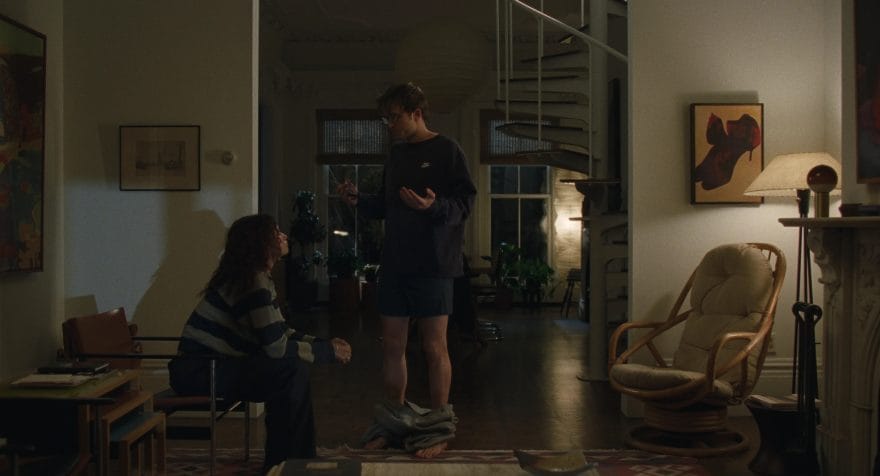
The revelation about Emma’s past is one that drives most of the film, but is also something that shouldn’t be spoiled. Once that backstory is out in the open, it already forces a viewer’s opinion heading into the film, which is the exact opposite of what The Drama is trying to accomplish. Borgil wants the film to feel every bit like an emotional and moral ambush that hits the viewer with a punch out of nowhere and asks them what they plan to do about it. Some will react like Rachel and Mike, seeing the whole thing as being in bad taste. Some will react like Emma and wish everything could go away so she can get on with her life. And many will react like Charlie, stumbling over themselves trying to wrap their head around forgiving someone for a heinous act that was only thought of but never followed through on. And the ways in which all of these characters make things worse instead of making them better will force constant reconsideration of one’s reactions.
Borgil has constructed The Drama in such a way that every scene opens itself up to analysis and interpretation for viewers willing to delve deeper into every aspect of the characters’ internal conflicts. It’s a film about the difficulty of passing judgment on another human being, especially when an emotion as complex as love is front and centre. Charlie even says it himself at one point: “True love is radical acceptance.” Well, how radical is one willing to get? Are Emma’s actions, which were made by the broken teenager she used to be and not the adult she is today, the kinds of things that should define her life going forward. Was this information that Charlie even needed to know heading into their wedding? Was Rachel acting appropriately or was her lashing out an overreaction? And how much of the incident Emma recounted performative at the time, and was telling the story in the first place also somehow performative? And does that make things better or worse? There are no easy answers provided by Borgil, now should there be. The unease around the whole regrettable situation lends the heightened atmosphere of Borgil’s direction an air of authenticity.
The bond that holds The Drama together even as everything is supposed to be deliberately falling apart can be found its two exceptionally matched stars. Pattinson has a knack for deadpan comedy that goes relatively untapped, and The Drama finds him in a pressure cooker setting that benefits well from his talent for expression. Charlie has plenty to say on the matters at hand, but his actions and mannerisms speak almost louder than his words, like he’s about to spontaneously jump out of his own skin. He has well attuned chemistry with Zendaya, and one can easily feel the love between this couple amid the emotional firestorm. Zendaya also taps into the feelings of the damaged young person that still resides inside of Emma, something that builds into the film’s themes about the limits of empathy and acceptance. Emma is terrified of losing Charlie, and Zendaya always finds a way to take every bit of her performance and look to the roots of the character to get that across. It’s her best performance to date, while Pattinson still comes across as an undervalued performer capable of great things when called upon to push himself towards extremes.
The Drama isn’t an easy film to grade or review, not just for myself, but for anyone who watches it. One’s reception to the film hinges entirely on how deeply they are willing to examine an array of divided viewpoints, motivations, and their own sense of forgiveness. Amid all of the bleak comedy and social commentary, there’s also a palpable sense of sadness that permeates The Drama. Borgil hasn’t made an easily likeable or relatable film, but that’s sometimes the point of good cinema; to watch people when their backs are against the wall and asking hard questions of the characters and viewers alike.
The Drama is now playing in theatres everywhere.
