
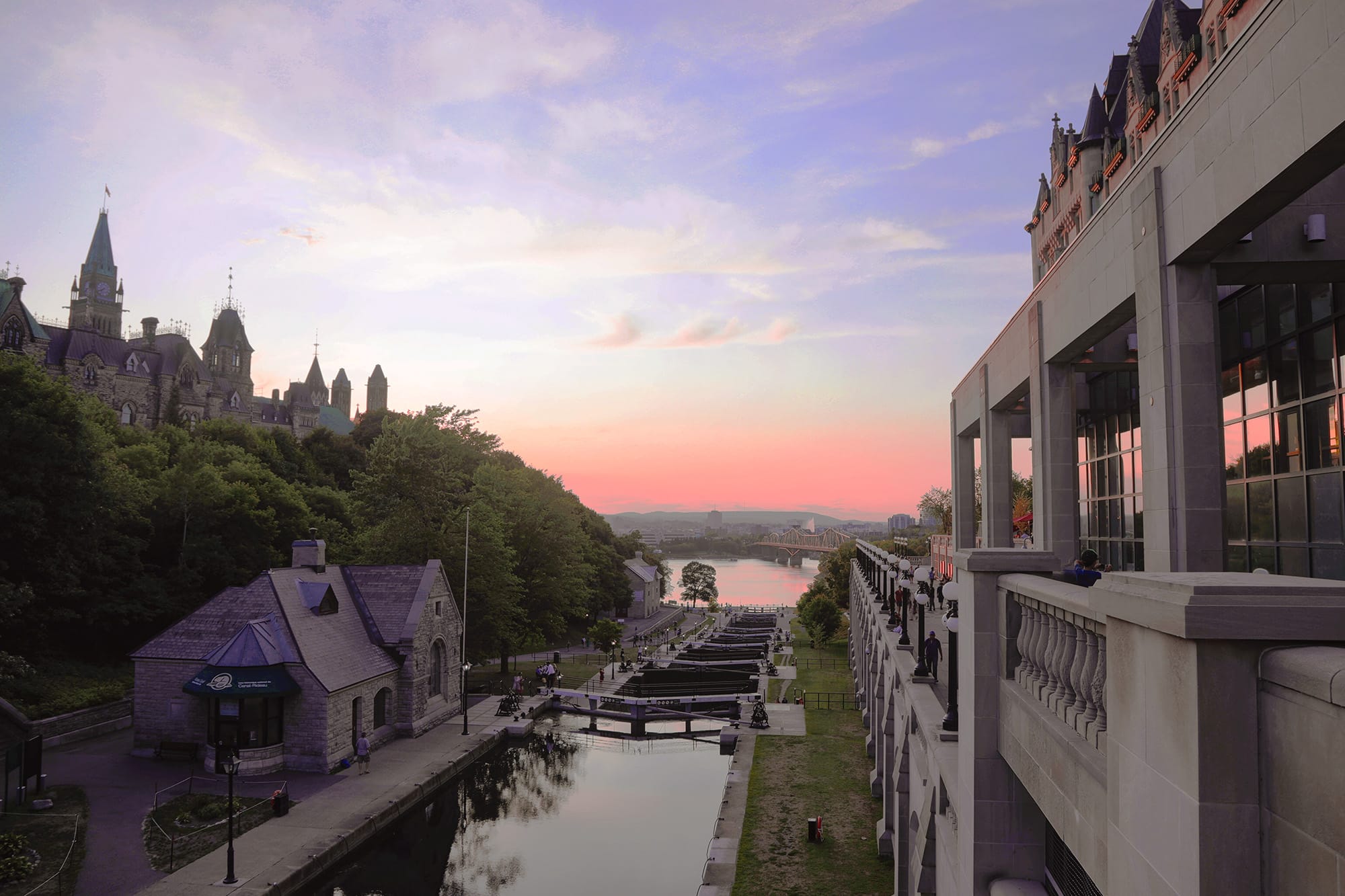
The Ottawa Film Office has big plans to develop the city into a sustainable, world-class production hub, and they have been very successful over the years. Ottawa had record-breaking live-action film and TV production, with $62 million in local economic activity, and a 25% increase in productions during summer 2025.
From Alex Winter’s recent Adulthood, to the original Bon Cop, Bad Cop, The Sum of All Fears, Stacktv and Netflix’s Geek Girl TV series, and new Christmas movies every year, Ottawa has made a name for itself as a unique city for productions.
The hit series Heated Rivalry is even tapping Ottawa on screen: Shane Hollander, played by Hudson Williams, is canonically from the city, and season two will feature Ottawa locations.
Canada’s film and television sector generated $10.2 billion in production volume, according to the Canadian Media Producers Association, and contributed nearly $12 billion to the GDP in the 2024/25 fiscal year. While future Canadian productions could shift to Ottawa, there’s also room for the industry to grow from abroad.
A production hub that feels like home
OFO Film Commissionner Sandrine Pechels de Saint Sardos and Tsenu Zelleke, Communications & Administration Coordinator, have a vision for the future of production in the capital region, and in particular, how infrastructure, international collaboration, and a refreshing quality of life gives the city an edge over other production cities.
“Ottawa offers some of the best locations and services for productions in the country,” Pechels de Saint Sardos said. Their vision for the future starts with three of their core pillars: discoverability, attraction, and amplification.
Rolling out the red carpet with familiarization tours is one of the ways that the city is introducing the region to new teams, and helping bring more productions to the city, and there’s a lot to show off. Earlier this year Pechels de Saint Sardos introduced 50 producers from Australia, Spain, Mexico, the US, UK, and Ireland to the region, showcasing star-worthy locations that productions can use and capture.
Attraction also means showing people the kind of life that they could have in Ottawa, too.
“For filmmakers from Toronto or Vancouver, the quality of life is not there anymore, or it’s very expensive,” Pechels de Saint Sardos said. “They are looking at different cities and see that they can have a life, they can have a family life even, and still do what they love in the film and TV industry”.
Pechels de Saint Sardos also pointed to co-production opportunities as a key for the future. “Canada has 62 treaties with international countries and we need to activate them. Lots of local producers don’t know about it or they don’t have [enough] opportunities to meet those international producers.”
And almost as important, Ottawa feels different than a lot of big cities.
“Ottawa has a reputation of being kind,” she said. “We cherish that reputation, and we want to make sure that we are respectful and transparent, and then we work towards the same goal with our municipal forces, but also with the public.”
Building for the future of Ottawa on screen
A critical component of the OFO’s growth strategy is the development of a state-of-the-art sound stage equipped with a volume wall. Those types of LED display walls have become a centre-piece in production facilities around the world, and they open up the opportunity for year-round work.
“It’s essential that we have that space because when you have a long or difficult winter, we’re losing revenues where we could have production on a stage from December to March,” Pechels de Saint Sardos said.
Christmas movie productions provide work for one-off productions, but “if you want to move to Ottawa, you want to have stability,” and that sound stage “is the key for the success of the film industry here.”
Ottawa’s competitive edge over major hubs like Toronto and Los Angeles also comes down to the numbers, and financial incentives.
“Because we are outside the Greater Toronto Area, we get 10% on top of the 35% across all labour expenses,” she noted. “At the end of the day, even when you do your financial structure on a show in Los Angeles, you’re going to see that working in Ottawa is just much less expensive than Los Angeles or Atlanta.”
A diverse, sustainable workforce
Tsenu Zelleke joined the OFO from the Canadian Media Producers Association, and he brings a national policy perspective to Ottawa’s local growth. Together, and working with the Black Screen Office, they’re emphasizing that industry growth has to be inclusive and focused on long-term career trajectories.
“Back to the discoverability aspect of our mission, we want to make sure that there’s a career trajectory,” Zelleke said. “Once you’re in the industry, we have to talk about the barriers.”
Working with partners in the industry means that they can help open up doors and connect people. “Having those conversations again,” Zelleke said, “and the ability to network with those that are already in high positions, and the executive level. How are we able to build a community, and how can we help each other?” Those are questions that have to be answered through work with partners throughout the industry.
Sandrine added that workforce development also includes unconventional pipelines, such as helping military veterans transition into film crew roles. The office also hosts an annual career fair, which last year saw 1,500 registrants and 18 exhibitors ranging from animation studios to legal affairs.
Success stories for Ottawa and its filmmakers
As the city continues to build its reputation through high-profile projects, the OFO is focused on the next five years. Success, according to Pechels de Saint Sardos and Zelleke, looks like a thriving hub of local creators who are recognized internationally, something that they have already started to see.
“One thing I’ve seen is that there are local productions that are getting a lot of traction internationally, are filmed here with local crews, in French and English,” Zelleke said. “There’s a hub of creatives here–producers and creators–that are taking risks, finding the budget, politicking through the work and delivering quality content.”
“To work in Ottawa, in my hometown, where I’ve been for a long time, and really apply what I’ve learned here has been incredible, whether it’s with established filmmakers or up-and-coming and emerging filmmakers,” he said.
“And making sure that the community here in Ottawa is strong and and ready for the eventual success that the industry will have as it grows is also essential.”
Photo by: W. Andrew Powell/The GATE.
