
Nyle DiMarco and Davis Guggenheim’s documentary Deaf President Now! only unfolds over the course of a single, intense week in the spring of 1988, but the reverberations of the events depicted stretch decades in either direction of history. A look at students at one of the world’s most unique universities standing up for the quality and equity of their education, Deaf President Now! is an important reminder that no one has to accept someone else’s idea of what’s best for them, especially if that idea of “the best” holds you back in the process. It’s an inspiring, critical, and sometimes intriguingly contentious look back at a movement that informed the history of hearing impaired persons forever.
Gallaudet University in Washington D.C. is the premier school for deaf and hearing impaired learners in the world, but for over a hundred years it wasn’t run by someone the student body could relate to. In 1988, Gallaudet looked to be on the verge of an exciting breakthrough, with two candidates in the running to become the school’s first ever deaf president in the institutions then 124 year history. But the board – made up almost exclusively of hearing people, led by wealthy, problematic philanthropist and chairwoman Jane Bassett Spilman – went with a third option: Elisabeth Zinser, a hearing person who couldn’t even sign and whose background was exclusively medical, not educational. Infuriated by decades of approaches to teaching deaf people with the “so the deaf may speak” philosophy and begging for equality, the student body mounted a week long protest and campus blockade that brought their concerns to the forefront of the public consciousness.
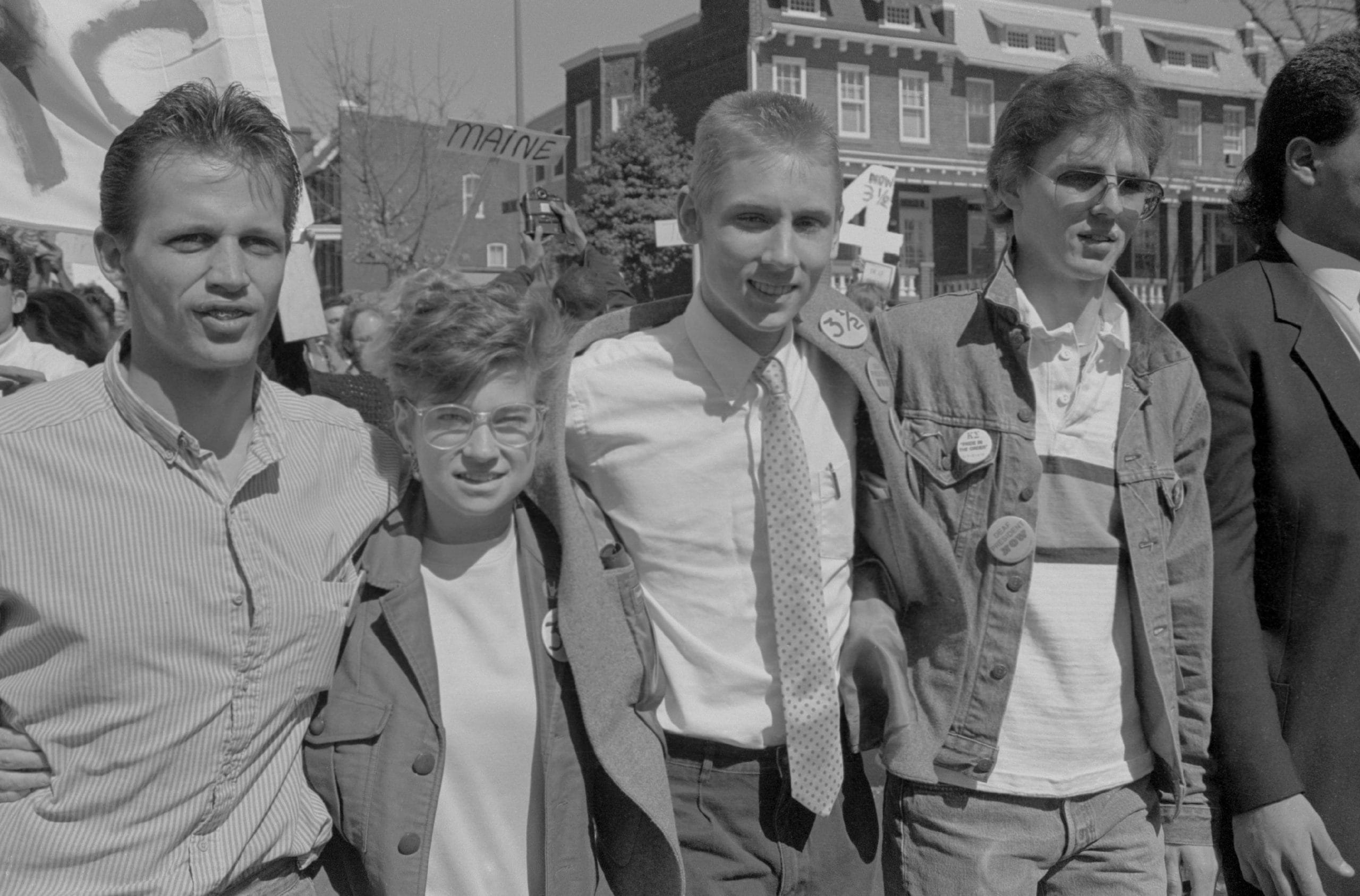
DiMarco (who has been blossoming as a filmmaker and author as of late after first making a name for themselves as the first deaf winner of America’s Next Top Model) and veteran director Guggenheim (Still: A Michael J. Fox Movie, An Inconvenient Truth) find an emotional connection to the struggle for the future of Gallaudet by looking at the protests through the conflicting personalities of four students who helped lead the movement. Firebrand speaker and activist Jerry Covell – the son of a brilliant data technician who was forced to work in his company’s basement because of his impairment – is a born leader who speaks his mind at every turn, no matter how confrontational he might come across. The real public face of the movement (and Jerry’s low-key frenemy) is recently elected student body president Greg Hilbok, a knowledgeable, well spoken person who might not have the chops to fight back if cornered in an argument. Bridgetta Bourne-Firl puts her background as a cheerleader to good use as the de facto head of crowd control and engagement. Bridgetta works closely with spokesperson Tim Rarus, the most politically savvy member of the core four leaders.
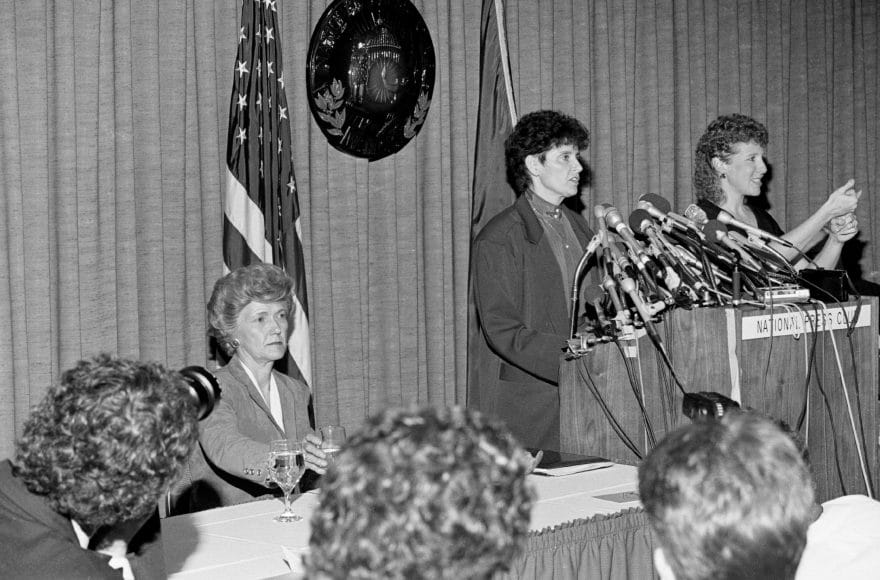
It doesn’t spoil much to say that eventually, Gallaudet proves to be on the right side of history in the end, but Deaf President Now! illustrates that equality and inclusion are worth fighting for and should be protected. While Gallaudet provided students with a place where they could become scholars and leaders without abandoning their identities for over a century, there was very little listening to the people who helped sustain that legacy of learning. It doesn’t take a lot of editorial trickery to portray Spilman and Zinser as villains, with the former, in particular, often sporting a knowing, supercilious smirk whenever confronted by throngs of angry students; the archetype for a rich white woman with an obvious superiority complex. Hiding behind an enormous amount of wealth and a veneer of “good intentions” that money can help buy to bolster someone’s image, Spilman always looks like someone who pities the students, not someone who sees them as valuable member of a community and society at large, at one point slipping up and saying that she thinks deaf people can’t cut it in a hearing world, a statement that only served to reinforce the movement on campus, but one she says was a result of an interpreter throwing her under the bus.
This “history is defined by the hearing” mindset can be traced back to the numerous ways deaf and hearing impaired persons have been forced to adapt in bids to make the larger part of the populace comfortable. Going back to the days of Alexander Graham Bell – who infamously wanted to assimilate deaf people into the hearing world through schools of his own and rigorous scientific testing – there has been a cruelty to how these people have been treated. They are often forced to lip read and speak a language they can’t hear to converse. The sign language they use to speak is often deprived in many situations, leaving them frozen out of important conversations that could impact their well being. And even at a school specifically for the hearing impaired, the students are denied a seat at the most meaningful decision making table. It’s not just a fight for equality, but a striking back against open repression.
That thread makes Deaf President Now! inspiring and rousing, but the real dramatic and social weight of DiMarco and Guggenheim’s film comes from examining the subtle, but important ideological differences between the leaders of the movement. Through sit down interviews with Covell (who’s just as animated and outspoken as ever), Hilbok, Bourne, and Rarus, DiMarco and Guggenheim look at a team united by a common goal, but with differing opinions on how that should be achieved. The contentious relationship between Covell and Hilbok drives a lot of the film’s discussion as to whether or not large scale protests should be driven by emotionally driven confrontation or quieter, more politically savvy means. The film rightfully suggests that the answer lies – naturally – somewhere between those two extremes, but even decades after the events in March of 1988, both parties can agree to certain successes, but still disagree about their effectiveness and the ultimate victory claimed by the students,
The assured pacing of Deaf President Now! also works to paint a complete picture of the Gallaudet protests. Even though the events depicted only span about a week and some change, things are depicted as being slow to start, gradually gaining momentum over time. Even with some asides needed to provide necessary historical and social context, DiMarco and Guggenheim move things along like slowly adding fuel to a fire before it explodes in a single, game changing moment of public acknowledgment that arrives when it seems like hope is waning. It’s a moment that finds someone crucially mistaking disability for weakness and paying for it dearly. It might’ve been a case of someone simply waiting for their shot or a much needed outburst of catharsis, but every moment both in history and the documentary is building towards that explosion. While it didn’t end the battle for the students of Gallaudet, it proved they were going to win the war.
Deaf President Now! streams on Apple TV+ starting on Friday, May 16, 2025. It was screened as part of the 2025 Hot Docs Canadian International Documentary Festival.
