

The 70s action classic Three the Hard Way exists at an intersection of cinema that’s rarely talked about: the point where the blaxploitation craze and the rise of the politically minded paranoia thrillers meet. Boasting an all star trio of black action movie icons and a storyline that blends high concept silliness with pervasive everyday fears and struggles, Three the Hard Way is a film that’s both highly entertaining and, with the benefit of hindsight, uniquely prescient in ways that make it stand favourably alongside the likes of Coppola’s The Conversation, Pakula’s All the President’s Men, and Pollack’s Three Days of the Condor. It’s status as a crowd pleaser is assured, but beneath all that style, slickness, and funk lies a smart movie worthy of deeper critical reassessment.
One day out of the blue, L.A. record producer and successful entrepreneur Jimmy Lait (Jim Brown) is thrust into an unusual crisis. An old friend (Junero Jennings) has popped up out of the blue, on death’s door, and begging for help. He tells Lait that he has escaped from a medical testing facility where a group of white supremacists have figured out a way to inject a lethal poison into the American water supply that will only endanger black people. After some initial healthy skepticism, Lait discovers that his friend was telling the truth about everything, with the bad guys killing the injured man while in hospital and kidnapping his wife, Wendy (Sheila Frazier). Lait sets out on a mission to get her back, stopping in Chicago to link up with old friend turned PR guru Jagger Daniels (Fred “The Hammer” Williamson) to get more information and beat some suckers up who try to get in their way. Then, the duo make their way to New York and reconnect with community activist and taekwondo instructor Mister Keyes (Jim Kelly), who spends most of his time taking out crooked, racist cops. They concoct a plan to split up and take down evil aristocrat Monroe Feather (Jay Robinson) and his Neo-Nazi minions in the three different cities chosen for test runs with the poison: Washington D.C., Detroit, and Lait’s own hometown of Los Angeles.
The script from television veterans Eric Bercovici and Jerry Ludwig stretches credibility, and it’s passable for this sort of thing, but Three the Hard Way is more of a vehicle for a trio of stars working at the height of their cinematic power and a filmmaker who can see through the genre silliness to deliver more thoughtful material aimed at black audiences. For decades, Three the Hard Way has maintained its strong status as a cult film and genre staple thanks to its cast, but the action sequences, stunt work, and knowing humour all fortify its reputation as a classic. There’s some outstanding stunt driving, a climactic battle at a reservoir that’s genuinely thrilling, and a memorable, throwaway subplot involving a trio of “scantily” clad female enforcers that has become the stuff of legend. And now that it has been restored to its original theatrical cut length and in 4K by Warner Archive, some sequences – including Keyes fighting a horde of cops on what looks like the windiest day in history – have never looked or played better on a small or large screen.
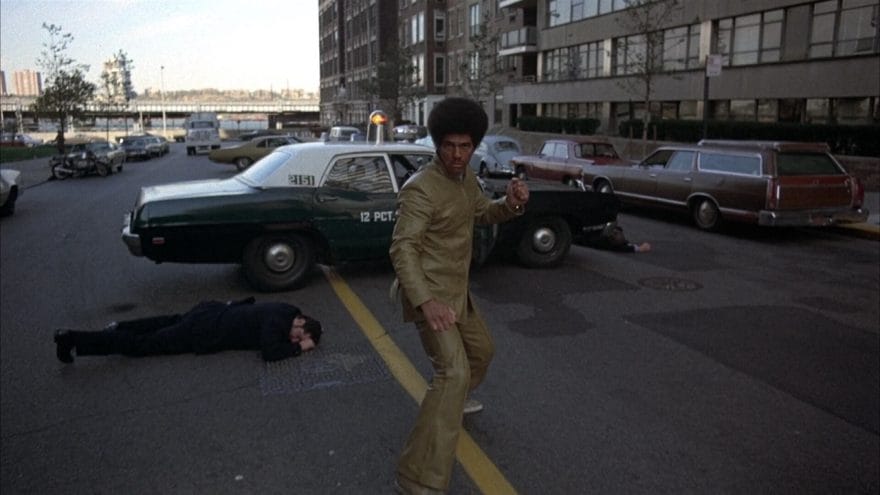
If all one wants is beat-‘em-up action, Three the Hard Way has them covered. But the input of director Gordon Parks Jr. helps to take B-movie material and imbue it with a healthy dose of social drama. Parks’ career was cut tragically short five years after Three the Hard Way, with the director dying in a helicopter crash in Kenya alongside three others while filming his latest project. Prior to crafting one of the greatest cinematic triple-teams of all time, however, Parks dropped the legendary drug trade drama Super Fly and the unjustly overlooked period western Thomasine & Bushrod. Just like Three the Hard Way, these films were crowd pleasers with stealth observations about the historic treatment of black people on screen and off. All three of Parks’ best efforts focus on strong, sometimes deeply flawed people carving out a place for themselves in the world by any means necessary, and standing up to those who get in their way.
While there’s plenty of joy in watching a trio of badasses comprised of one of the best athletes turned actors in cinematic history, Black Caesar, and the first major black martial arts superstar united for a common goal, it’s the cause itself that carries major resonance. (The trio would re-team for this film’s western era spiritual sequel Take a Hard Ride the following year and again in the Williamson directed One Down, To to Go in 1982 with Shaft actor Richard Roundtree added to the mix, both with lesser results.) Releasing at a time when racial tensions remained at a fever pitch in the aftermath of the 1960s civil rights movement, Three the Hard Way carries within its action oriented bones a bleak weightiness. When viewed through the lens of history, Three the Hard Way becomes a cautionary tale for the black community. The villain’s ghastly plan contains eerie echoes of the crack cocaine epidemic that was about to hit major cities, and overall Parks’ film speaks volumes to the ways that nurturing black communities – ones that create successful, “take no shit” personalities like the lead characters – are constantly endangered by racist or otherwise apathetic white mentalities.
Blaxploitation as a genre thrived on stories where strong willed brothers and sisters stuck it to “the man” or “whitey,” but few followed the template more successfully than Three the Hard Way. But outside of that genre, Parks’ film shows how the best films about supposedly crazed conspiracies are always rooted in genuine, widespread fears and suspicions that something isn’t right about the world around them. These narratives hit harder when delivered by under-represented peoples on screen because they often have the most to be worried about. It doesn’t matter that the science in Three the Hard Way sounds highly implausible because the repression and eradication of entire races of people has transpired across all of recorded history. The best films from this era of cinema often depicted people locked into eternal struggle, and Three the Hard Way is no exception.
Three the Hard Way is now available on Blu-Ray via Warner Archive.
