
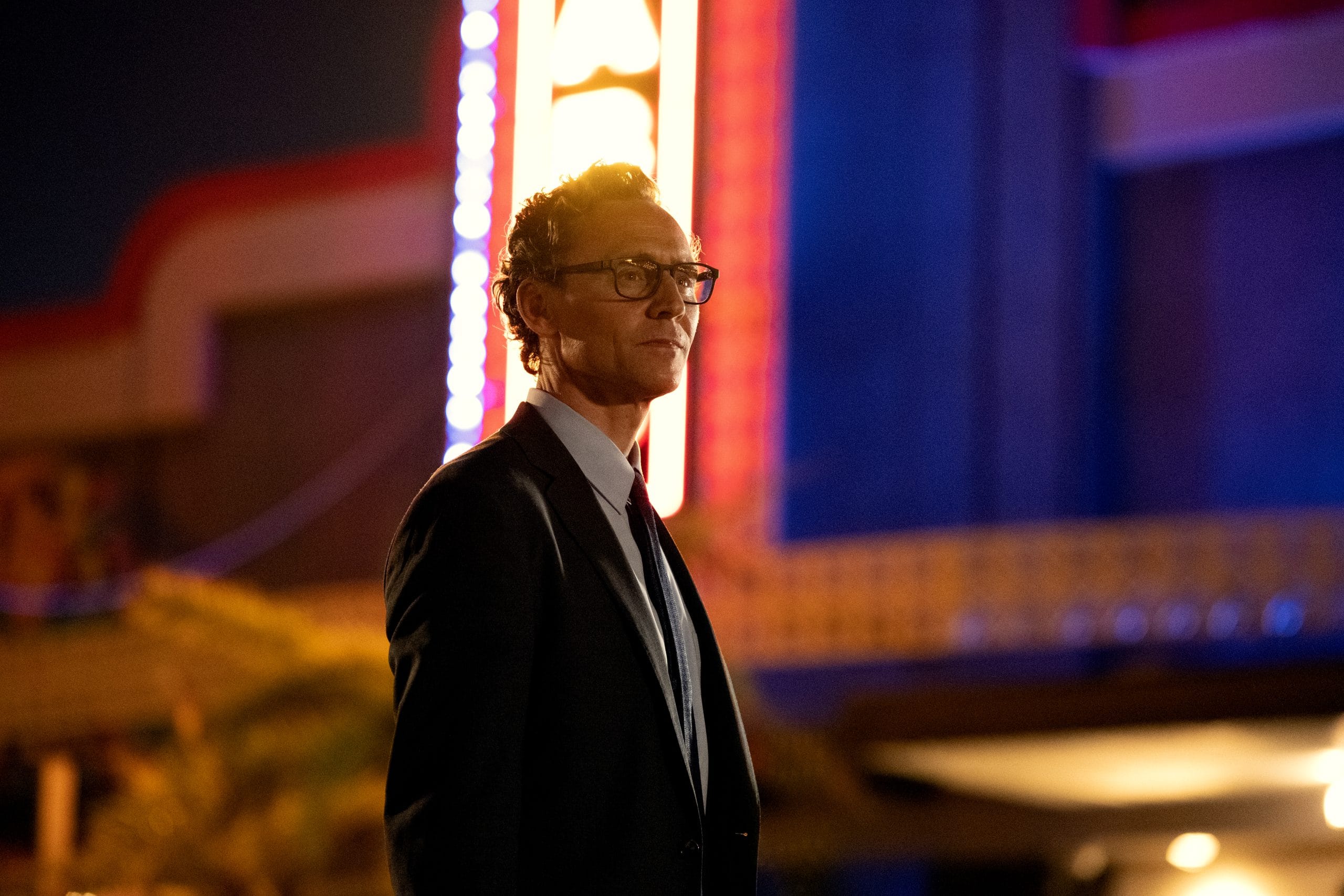
Writer-director Mike Flanagan’s The Life of Chuck is bound to be critically divisive, and the movie itself is okay with that. Self-aware of its own corniness and desire to be a Capra-eque life affirming motion picture for the ages, The Life of Chuck puts itself out into the world with heart firmly on sleeve and cares little about what it gets back, so long as the audience is willing to sit with it. The Life of Chuck would love it if you cried a ton or found yourself moved to make comparisons between it and your own life, but if you’re psychologically and physiologically averse to this sort of deliberately constructed treacle, that’s fine, too. The Life of Chuck is so genial and well meaning that Flanagan might even be waiting outside your theatre to apologize for it if you disliked it.
If that sounds snarky, that’s because – like many critics – I find it’s always hard to shake a general sense of cynicism when it comes to films that are meant to boost and uplift the human condition in such brazen ways. But unlike so many other “soaring” and “swelling” bits of “inspirational” or “reflective” cinema, The Life of Chuck is just so gosh darn honest and earnest that I was willing to go along with the tearjerking vibes that Flanagan delivers here, with the film standing as a testament to the writer-director’s abilities to blend dark themes and sentimentality. While not without some problems, especially in the film’s second half, The Life of Chuck weaves a sort of adult bedtime story for a world where cold, calculated complacency has hardened people. It’s schmaltzy, and in this case, I’m not mad about it.
This adaptation of a Stephen King short story is a bit hard to talk about without spoiling the impact of its non-linear narrative and numerous big reveals, which start early and carry on until the final stages. I’ve seen the film twice already, once when at the world premiere first screening of the film at TIFF back in September (where it picked up the coveted Audience Choice Award) and again a little over a week ago. The first time I saw The Life of Chuck, I had no idea what I was in for and was pleasantly surprised. The second, I picked up on things that I missed the first time out, but walked away with further certainty that talking about anything beyond the first couple of acts gives too much away.
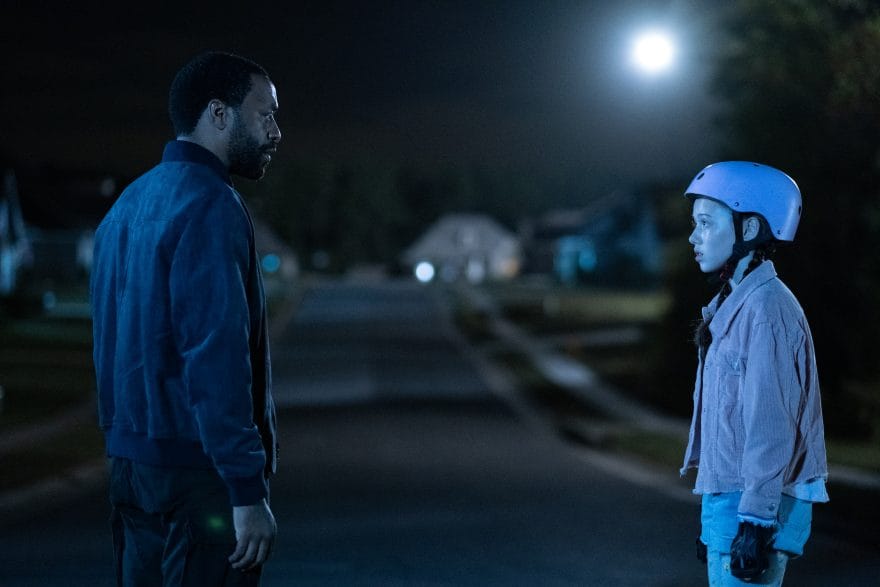
Flanagan starts The Life of Chuck off in a place that’s both globally apocalyptic and uniquely personal. Marty, a high school teacher (Chiwetel Ejiofor) and his ex-wife, Felicia (Karen Gillan), are struggling to cope in a world on the brink of collapse. Large scale natural disasters occur with startling regularity. The internet has gone down and doesn’t seem to be coming back. Suicides are up, depression is rampant, and some people just seem to disappear into the ether, never to be seen or heard from again. The only constant in the world seems to be the omnipresence of a man named Charles “Chuck” Krantz (Tom Hiddleston). Giant billboard, radio ads, skywriters, tv commercials, and pretty much every available surface is devoted to thanking Chuck for 37 great years of service. But nobody knows who Chuck is, why he’s important, and why his face is suddenly everywhere at the end of the world.
The viewer learns more about the mysterious Chuck from the film’s second chapter (a flashback of sorts) and onward from that point, properly introducing Hiddleston’s everyman via an elaborate dance sequence where the titular banker stops to engage with a street busker and a woman who’s experiencing the lowest day of her life. Flanagan uses every chapter after this to keep peeling back the layers of Chuck’s life, particularly his childhood (where the character is played by Jacob Tremblay, Benjamin Pajak, and Cody Flanagan at different ages) and relationships to his mom (Mia Sara) and grandfather (Mark Hamill).
Although it’s smartly edited and assembled, and narration from Nick Offerman helps to maintain some additional tonal continuity, the flighty nature of Flanagan’s narrative isn’t as tightly constructed as its emotional twists might suggest. The overall plot and reasoning of The Life of Chuck doesn’t hold up to close scrutiny. The bedtime story vibes given off by The Life of Chuck extends to a general sense that Flanagan (Oculus, Doctor Sleep, The Haunting of Bly Manor, The Fall of the House of Usher) might just be making all of this up as he goes along. The psychologically loaded ending of The Life of Chuck doesn’t fully square with the more fantastical start, even if it makes sense in a basic way. It’s hard to explain why The Life of Chuck doesn’t fully work as a story without spoiling it, but the bits early on with Ejiofor and Gillan are much more resonant than a film that shifts from a look at humanity on the brink to a much smaller movie about the nature of dying. (The easiest explanation as to why it doesn’t link together perfectly is both obvious and a cop out.)
At the outset, The Life of Chuck beautifully reflects modern fears of the moment. It feels like everything is going downhill quickly. The people whose job it is to care for our collective wellbeing are taxed to a breaking point. It’s a struggle to stay connected without being overwhelmed or bogged down by the weight of tragedy and uncertainty. In these spaces, cynicism takes root, but so too can love and friendship. As Marty and Felicia try to make sense out of sheer madness, they have moments of understanding with others who cross their paths, and for those brief flashes, things don’t feel so hopeless and crushing. It’s an instantly relatable sentiment that gets The Life of Chuck off to a promising start.
But with each progressing flip of the cards, The Life of Chuck pays off fewer dividends. It’s not that Flanagan’s narrative ceases to be heartwarming or playful, but rather that it becomes a much more standardized film than what’s suggested by its opening segment. Everything that looks into Chuck’s life is nice, and it does link up to the opening, but the conclusion and the steps leading up to it feel like a twist from a different story altogether. When Flanagan focuses on trying to make sense from the chaos of life, The Life of Chuck works. When it tries to talk about wrestling with mortality on a smaller scale, it stumbles, and some might be able to accuse it of crossing an emotional line into outright manipulation.
While I can look at The Life of Chuck and realize the things that don’t work about it, I also have to admit to being moved by a lot of what Flanagan and his cast conveys along the way. When taken as a whole, the flaws are apparent, but moment by moment, The Life of Chuck packs quite an emotional wallop. I was moved to thought, I was comforted, and at times it felt like some of the bigger philosophical questions I have about the world around me were being acknowledged and discussed in ways I had never seen before. There is a magic to The Life of Chuck, but all magic requires manipulation. I have no problem giving myself up to such whims, but only to a point, and I don’t think its one that Flanagan crosses. You might have a much different reaction depending on your tolerance levels. Even so, it’s the kind of film where I would love to see and hear people’s reactions to it, whether they love it, hate it, or fall somewhere in-between like I do. It’s a conversation starter and a party trick all in one. Again, I’m not mad about it.
The Life of Chuck opens in theatres across Canada, including at TIFF Lightbox in Toronto, on Friday, June 13, 2025.
