
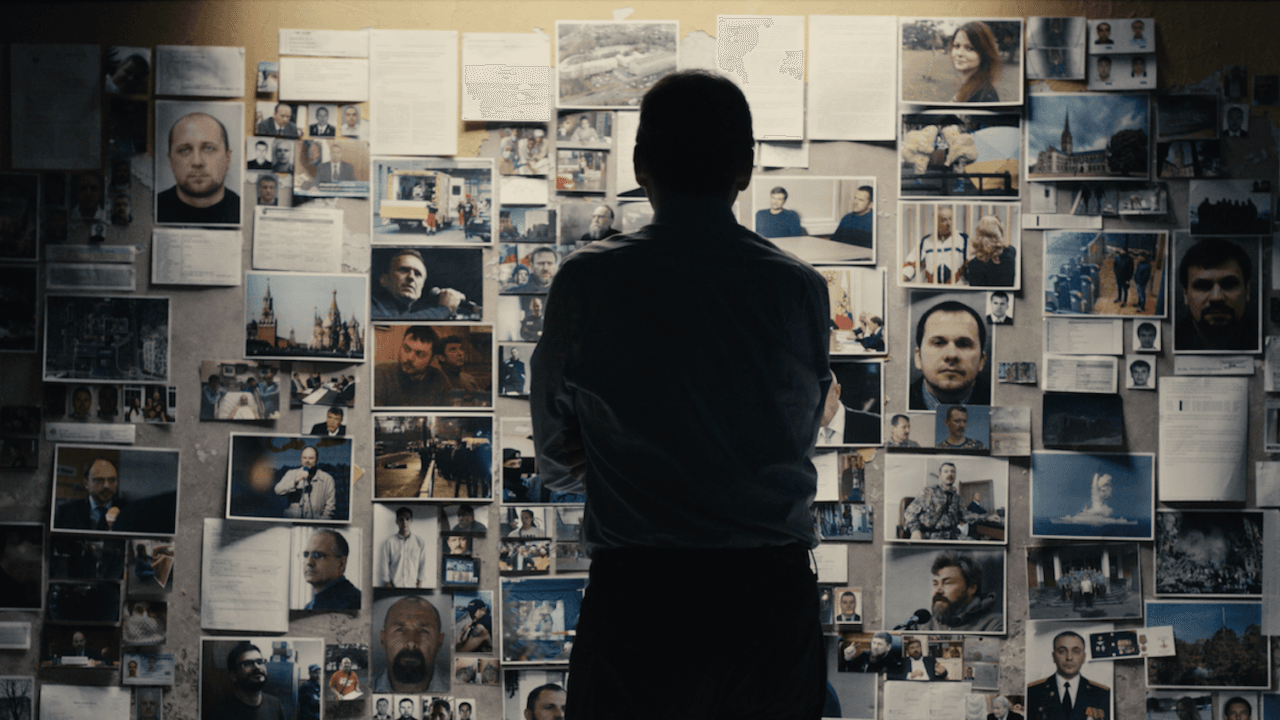
British filmmaker James Jones’ kinetic documentary Antidote is as close as one can get to the fire and ire of the Russian regime without getting burned. An intimate look at journalists and whistleblowers who’ve made enemies out of Vladimir Putin for daring to speak openly about his administration’s sometimes deadly and torturous targeting of political dissidents and rivals, Antidote is paced and visually styled like a thriller, but still structured like a newsmagazine. It’s a investigative human drama that puts the viewer into the shoes of people whose lives have been broken and damaged because they prove to be needles in the sides of one of the world’s most powerful and vindictive leaders. It’s not telling anyone already keenly aware of the Russian government’s might, reach, and tactics anything new, but Jones’ film succeeds in making viewers feel the toll and see the pressure they exert onto the lives of others.
Antidote opens in 2023, as former radio station manager turned investigative reporter Christo Grozev calls his father in Vienna from a hotel in New York City to say that he won’t be returning home. There has been a credible and imminent threat made against Grosev that would likely see him killed or abducted and disappeared to Moscow to face libel and treason charges should he set down anywhere in Europe. The Bulgarian born Grozev is one of the co-founders of investigative news outlet Bellingcat (which helped co-produce Antidote), and has made a career out of doggedly exposing the lengths the Russian government will take to silence anyone daring to speak out against them or expose the tactics they use to suppress those branded as traitors.
Jones then backs things up a bit to profile the ways Grozev has been trying to hold Putin accountable on a global stage. Always willing to follow the money and online breadcrumbs to whatever dark corner they might lead, Grozev self-funds many of his investigations, working outside the mainstream and with a carefully cultivated network of partners, informants, and sources. He was close to lawyer and opposition leader Alexei Navalny, and was in the process of advocating for a prisoner transfer between the United States and Russia to get him to safety. Jones follows more intently and closely along with Grozev’s efforts to help exfiltrate a source out of Russia, a biochemist turned whistleblower who used to help synthesize the kinds of poisons spies would use to assassinate targets all over the world. Grozev also maintains close contact with Evgenia Kara-Murza, the wife of imprisoned journalist Vladimir Kara-Murza, who has survived poisoning attempts on his life twice already and is facing a sentence of 25 years in a labour camp.
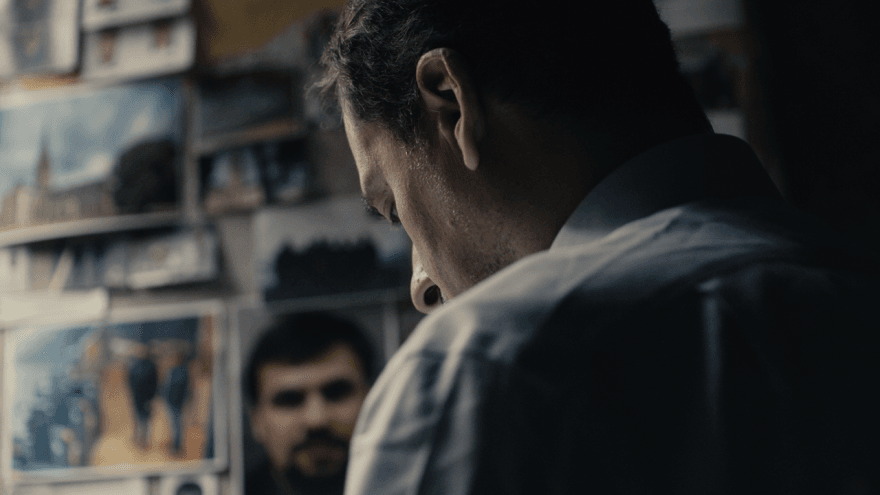
Through Grozev’s eyes, Jones is able to show the stressful nature of trying to stand up to one of the world’s most powerful leaders. As Grozev explains at various points throughout Antidote, there are unspoken levels to incurring Russian wrath and the degree to which they can make a person’s life a dangerous, paranoia laden hell. While Grozev knew he was internally branded as an enemy of the state, even the unflappable reporter gets scared when he learns that his name has been placed on a “death list,” something Putin’s government has been known to do, but is still a decision that isn’t taken lightly. The death of Navalny and the waning health of Kara-Murza make Grozev ever more vigilant, but also a lot more run down from the stress and weight of responsibility.
Antidote keeps up with Grozev as he hides out during his U.S. exile. He misses home, worries about his loved ones, and starts to subtly question if his life’s work is worth all this trouble. It’s not long before Jones (Chernobyl: The Lost Tapes, Wanted: The Escape of Carlos Ghosn) watches his exiled subject descend into skittish melancholy. Grozev knows it’s only a matter of time before the walls close in on him further and his loved ones are placed directly in harm’s way. What starts off as a documentary about the lengths Grozev and those like him will go to in a bid to expose Russia’s campaign of global intimidation shifts suddenly into an examination of how that country’s vindictive government can rip families and lives apart in an instant.
Jones remains as objective as possible, but shows that the threat faced by Grozev is a very real one, eventually finding a connection between the journalist’s current situation, a spy cell hiding out in the UK, and, quite surprisingly, ties to a figure who was responsible for one of the greatest financial frauds in European history. The journalistic side of Antidote isn’t anything documentary viewers likely haven’t seen before in terms of form and structure, but Jones’ ability to stay close to Grozev during such a trying time is revelatory and immediate. The danger faced is in the moment, not something being reflected upon with hindsight. Antidote hits upon a raw nerve with its look at the dangers faced by journalists who dare to poke the Russian bear.
Antidote screens at Hot Docs Ted Rogers Cinema on Friday, July 11 at 6:00 pm, Saturday, July 12th at 5:00 pm, and Saturday, July 19 at 5:30 pm.
