
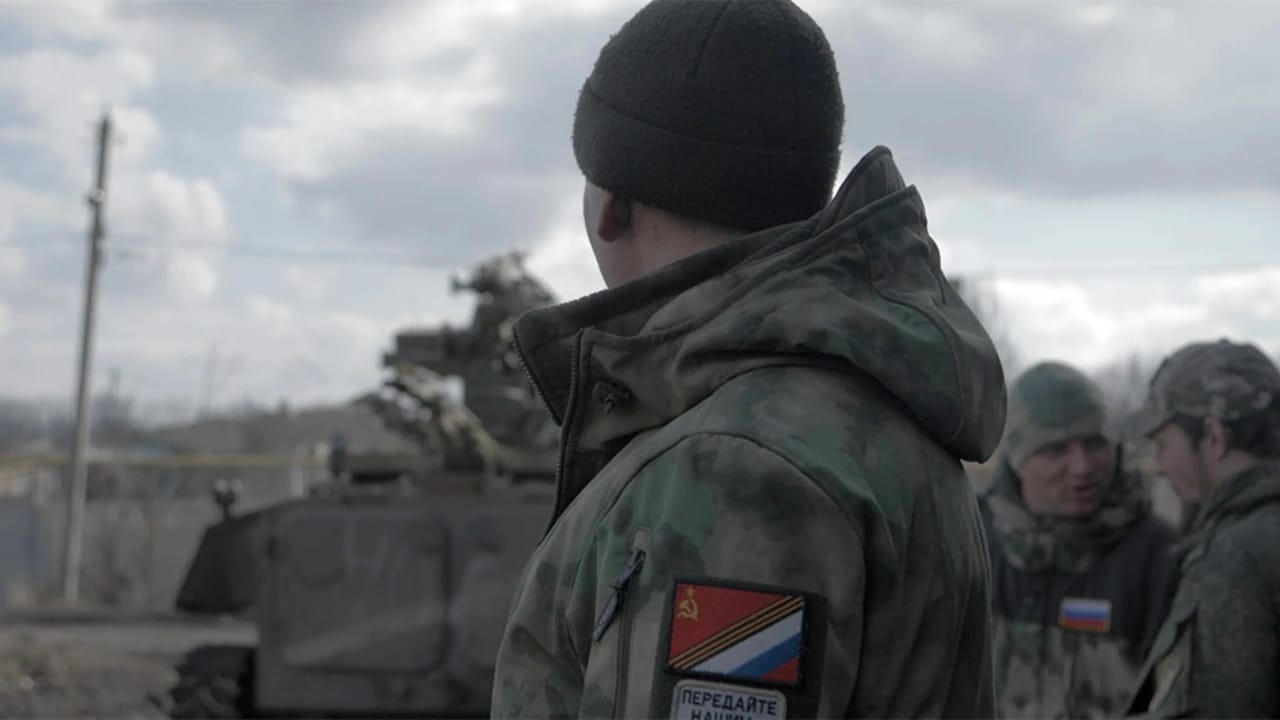
The controversial documentary Russians at War will understandably provoke mixed feelings in those who watch it. It certainly raised the ire of many who hadn’t yet viewed Anastasia Trofimova’s film, when protests and threats caused TIFF to cancel public screenings of Russians at War at last year’s festival. (It would be screened quietly the day after the proper festival ended, but the film also lost its distributor.) Embedding herself in a battalion of Russian soldiers and medics without authorization on the front lines of the war in Ukraine, Trofimova seeks to understand the “special military operation” (as Vladimir Putin calls it) from the perspective of the aggressors. The approach alone is enough to rankle the millions of people around the world who believe the fighting in Ukraine to be unjust and riddled with war crimes, but questions being asked when approaching Russians at War are different when it comes to a purely critical perspective on the film. And the answers are just as tricky.
Trofimova (a Russian-Canadian filmmaker) begins her journey with a chance encounter on a New Year’s Eve train ride in 2022. There she meets forty-nine year old Ilya, a Ukrainian fighting on the Russian side of the war as . That night – dressed as Santa Claus to help bring some holiday cheer – they strike up a conversation, and he invites her to take a look at the reality faced by Russian soldiers on the front lines; to tell a story that goes beyond what’s portrayed in the jingoistic news reports controlled by the state.
Trofimova joins her subjects in the “Lugansk People’s Republic” in the Eastern region of occupied Ukraine. Ilya’s battalion is awaiting some much needed replacements to fill out their ranks after heavy losses. Many of them remain on the frontlines long after their contracts have run out. A lot of them should be back home, often told to tough it out for little or no extra compensation. Quite often, they speak of limited resources, building resentment, and a frustration that they’ve seemingly been left to their own devices without anything resembling leadership. Some have been drafted, others volunteered. Some are there out of patriotism, some are there to make sure family members feel less alone, and others are there to avenge those who’ve already died in the war. Mostly, they just want to get paid.
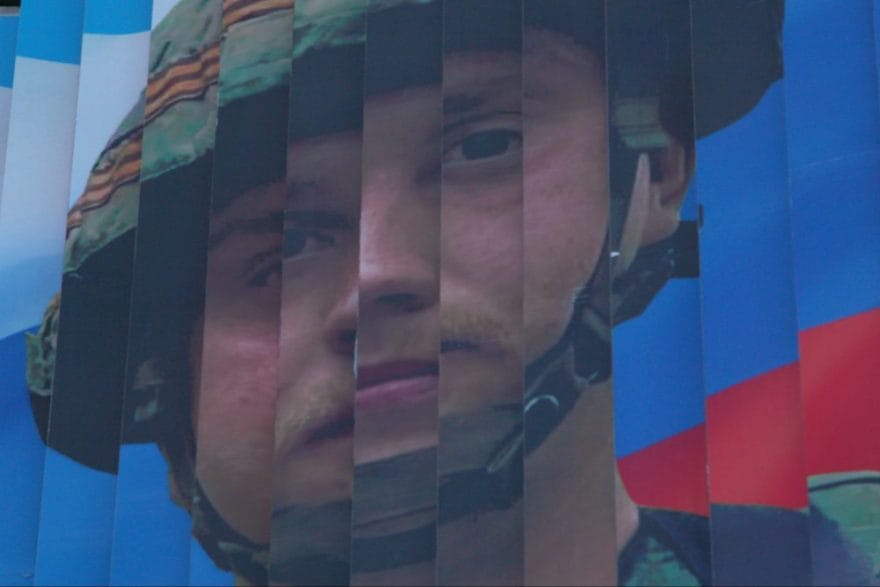
One thing isn’t up for debate when discussing the merits of Russians at War. Trofimova’s bravery is never in question. Working as her own cinematographer, the filmmaker gets as close to the deadly action as possible, without ever once flinching or looking away from the loss or life or mental toll taken on soldiers and medics in a war zone. On a primal level, Russians at War plays on a basic human belief that killing people is wrong no matter the context. The goal here isn’t to prove whether or not Putin’s invasion of Ukraine is just or unjust, but to garner sympathy for the people caught up in the literal crossfire by observing their struggles on a more granular level. It’s a much more balanced depiction of the war than what’s portrayed in Russian state media, if nothing else, and there is a degree of truthfulness in the depiction of the toll taken on these men and women. The images of dead bodies throughout Russians at War speak for themselves, offering their own silent opinions and regrets.
But while there’s truthfulness in Russians at War, there’s also an undeniable degree of bias and imbalance. The other side of the war is completely absent here, which means the only sympathy that can be generated by the documentary is on the Russian side of things. The overlong length of Russians at War marks a considered attempt to garner sympathy and empathy for these soldiers, something a lot of Ukrainians at this point are unlikely to give. Their actions, opinions (many of them quite insightful, others deeply problematic outside of the Russian cause), and situations can’t be divorced from the war itself. A scene where a Russian soldier says that he finds it impossible to believe that any war crimes have been committed is preposterous and short sighted, and many soldiers subscribe to the belief that Ukraine is a breeding ground for neo-Nazis. And even if she wanted to, Trofimova can’t refute anything being said by her subjects. The second she challenges them or questions their point of view is the moment she’s no longer allowed to film their activities. They’ll either clam up or kick her out. For the sake of preserving the film, and regardless of her own beliefs (which are largely kept out of sight and mind), Trofimova takes the easy road with Russians at War.
It’s an un-winnable situation for Trofimova that creates a film unlikely to fully please anybody. The hardest of Russian sympathizers will complain that these soldiers are ungrateful and resentful, and all critics of Putin’s war won’t be able to look past the narrow viewpoint. It’s a brave film, but also unchallenging to sit through, unable to convince people of anything one way or the other. Russians at War works best at examining existential questions about the value of human life, but not much else beyond some basic, verite, embedded journalism. The only question viewers can ask themselves while watching the film is whether or not they believe Russia is sending people to die in a futile war effort. The horrors of war aren’t shied away from, but so much else about this film backs away from deeper questions that are left on the table. It’s potent, but also empty; more of a conversation starter and lightning rod than a balanced depiction of the war in Ukraine.
Russians at War is now available to stream via the film’s website.
