
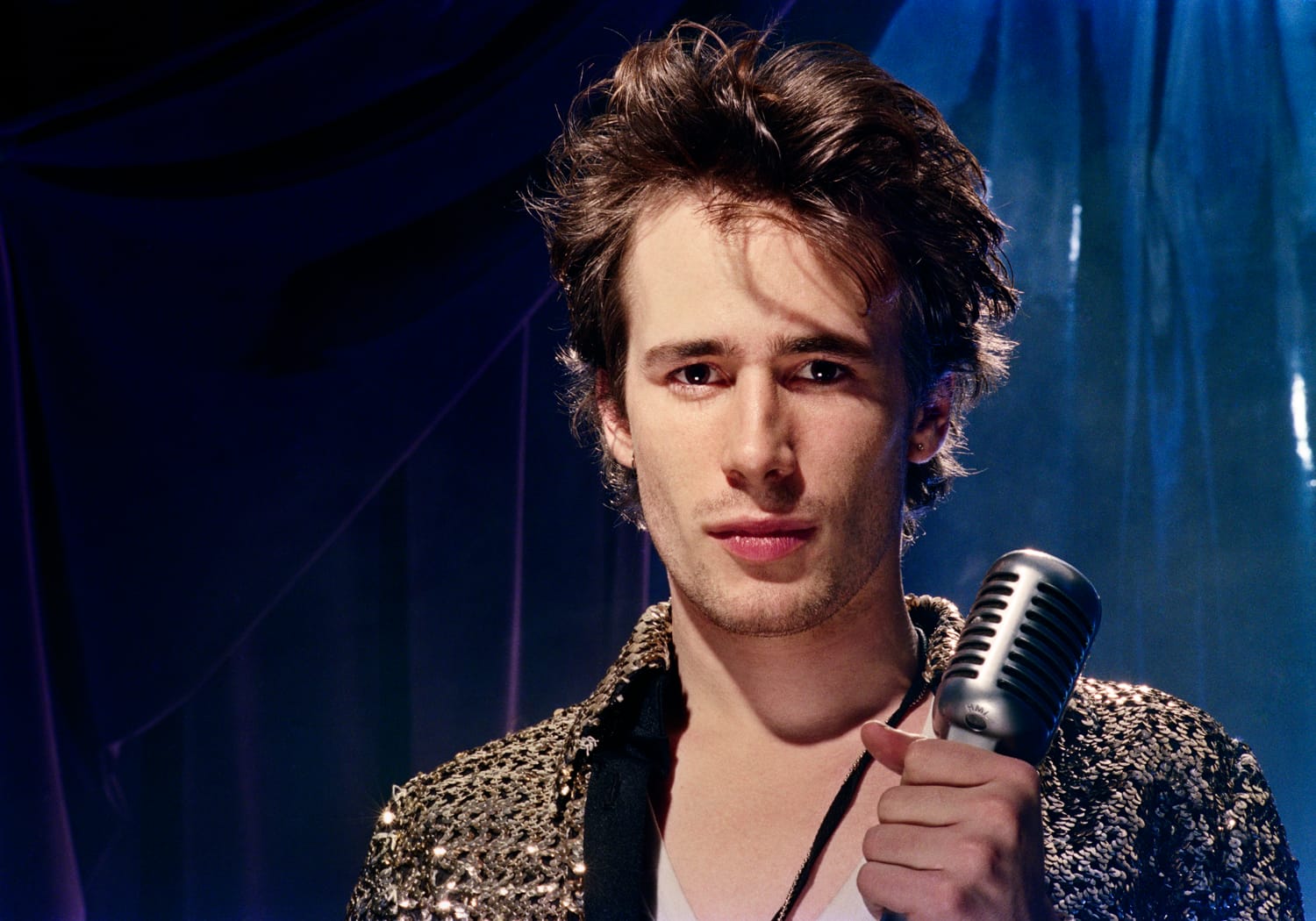
Amy Berg’s documentary It’s Never Over, Jeff Buckley tells the story of a music icon who burned brightly and briefly upon the stage. Although he only released a single full length album before passing away at the far too young age of thirty, Jeff Buckley left behind a musical legacy that has stood the test of time and outlived many of his contemporaries that had bigger hits. That LP – 1994’s Grace – has become a staple of numerous “Best Albums of All Time” lists; a work that showcased Buckley’s musical chops, thoughtful lyrics, and all of his wide, varied influences. With a career so short, it’s a bit harder for Berg (Deliver Us from Evil, West of Memphis) to play up to her subject’s legend, but It’s Never Over, Jeff Buckley certainly plays to his humanity.
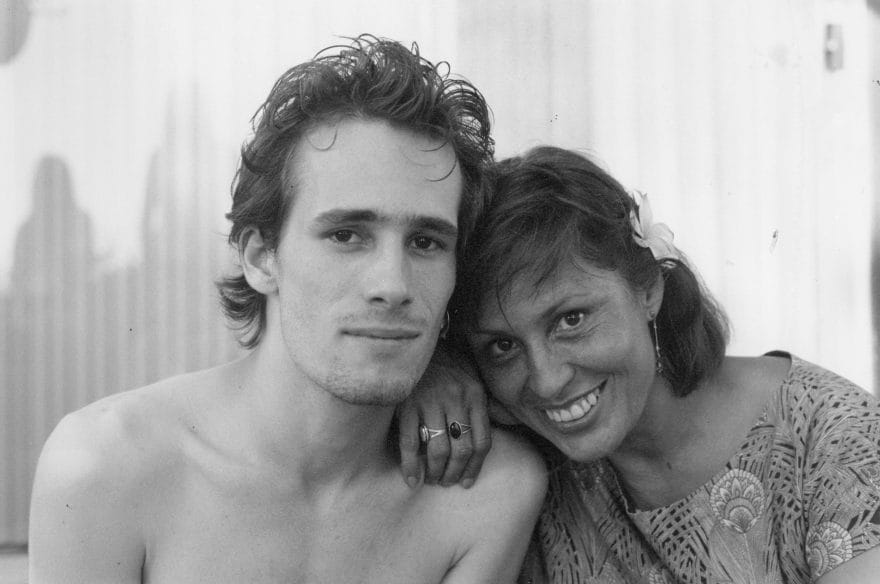
Born in California’s Orange County to a single, seventeen year old, first generation Panamanian immigrant mother, Buckley gravitated to music almost from birth, singing along to the radio before he could even fully vocalize. His estranged father was cult favourite counter-culture singer Tim Buckley, a man that Jeff only met and spoke with once before passing away at the even younger age of 28 from a heroin overdose. Although the shadow of his father would loom large over the young man’s career (almost always to his detriment and frustration), Jeff began cultivating a musical voice of his own. With a talent for uncanny mimicry and a frankly insane vocal range, Jeff Buckley’s legend began as a popular performer of spot on covers that would draw crowds at a cafe in New York’s East Village. As soon as Buckley began peppering more of his soulful, wrenching, and compelling original material into sets, that’s when major labels keen on signing the next big artist of the 90s came calling.
It’s Never Over, Jeff Buckley applies the standard biographical documentary approach to its subject’s life and struggles, but that works well here. Berg sits down with those who knew Buckley best – his mother, tour manager, bandmates, album producers, former partners, record execs, etc. – and establishes an oral history of his life and career. Buckley is heard via archival recordings that capture his wit, philosophy, and ultimately, towards the end, his exhaustion, anxiety, and burnout. In terms of style and assembly, the film is about what one would expect from a musician biopic, but Berg manages to include some stunning animation and avant-garde image manipulation to artfully bring songs and Buckley’s imagination to life on screen. The film is also lively and exceptionally edited, particularly a sequence depicting Buckley’s self-imposed challenge to finish his debut album by attempting to write a hundred songs in just five weeks.
Although he had an impish, playful personality towards his friends in happier times and a strong work ethic, there was always something destined to hold Buckley back, even before he became cognizant of his own mental health issues later in life. Although his album sold well overseas, in North America the rise of grunge in the 90s would result in Grace being more of a critical darling than a commercial one. (Although Buckley was an admitted fan of grunge, particularly Soundgarden, which resulted in a close kinship with their frontman Chris Cornell. Buckley’s influence can be heard all over Cornell’s underrated 1999 solo album Euphoria Mo(u)rning.) But despite not lighting the world on fire commercially, some of Buckley’s most idolized musicians heaped praise upon him. David Bowie once said Grace was the best album ever made. Led Zeppelin’s Robert Plant (one of Buckley’s most beloved acts) told him he had one of the greatest voices in history. While such praise would make some ecstatic, it freaked him out, only adding to Buckley’s woes and the pressures he would put on himself to produce a second album; one that would have to include tangible hits if he wanted to keep his record contract with Columbia.
Berg, an admitted fan of Buckley’s music, does well by her subject without sugarcoating some of the artist’s darker edges and flaws. It’s Never Over, Jeff Buckley is willing to have uncomfortable conversations about his restless anxiety and a tendency in his darker moments to come across a blunt or uncaring. The exhaustion felt by Buckley and his fellow band members following two straight years of relentless touring is vividly described and recounted through Berg’s interviews. Berg makes Buckley’s struggles with imposter syndrome, manic depression, and his perpetual fear of losing creative control into effortlessly relatable and humane topics of discussion, even for those who’ve never heard a note of Grace of his posthumously released material.
It’s Never Over, Jeff Buckley is a film of great pain, but also the joy of creating and refusing to be pigeonholed. With an eclectic musical taste of his own – ranging from Judy Garland to Bad Brains to Led Zeppelin to Nina Simone to Morrissey to Nusrat Fateh Ali Khan to MC5 to Edith Piaf – Buckley was able to share the things that excited him with an appreciative audience to continues to grow. Although he’s most widely known for his haunting, beloved cover of Leonard Cohen’s timeless “Hallelujah” (which finally became a number one hit in 2008, a full eleven years after his passing), Buckley’s music had something for everybody, which is ironic considering that the artist tried so hard to keep things close to his chest outside of the album. Berg finds a way to respect Buckley’s private nature, while also making a film that demystifies his image as the best musician to leave behind only a single proper album to remember them.
It’s Never Over, Jeff Buckley opens at TIFF Lightbox and Fox Theatre in Toronto, VIFF Centre in Vancouver, Cinecenta and Vic Theatre in Victoria, The Roxy in Saskatoon, ByTowne Theatre in Ottawa, and Cinema du Parc and Cinema Beaumont in Montreal on Friday, August 15, 2025. It screens at Hot Docs Ted Rogers Cinema in Toronto on August 15 (6:00pm) and August 16 (1:00pm). It opens at Westdale in Hamilton on August 17, The Screening Room in Kingston, Carbon Arc in Halifax, The Princess in Waterloo, and The Playhouse in Hamilton on August 22, and at The Bookshelf in Guelph on August 30.
