
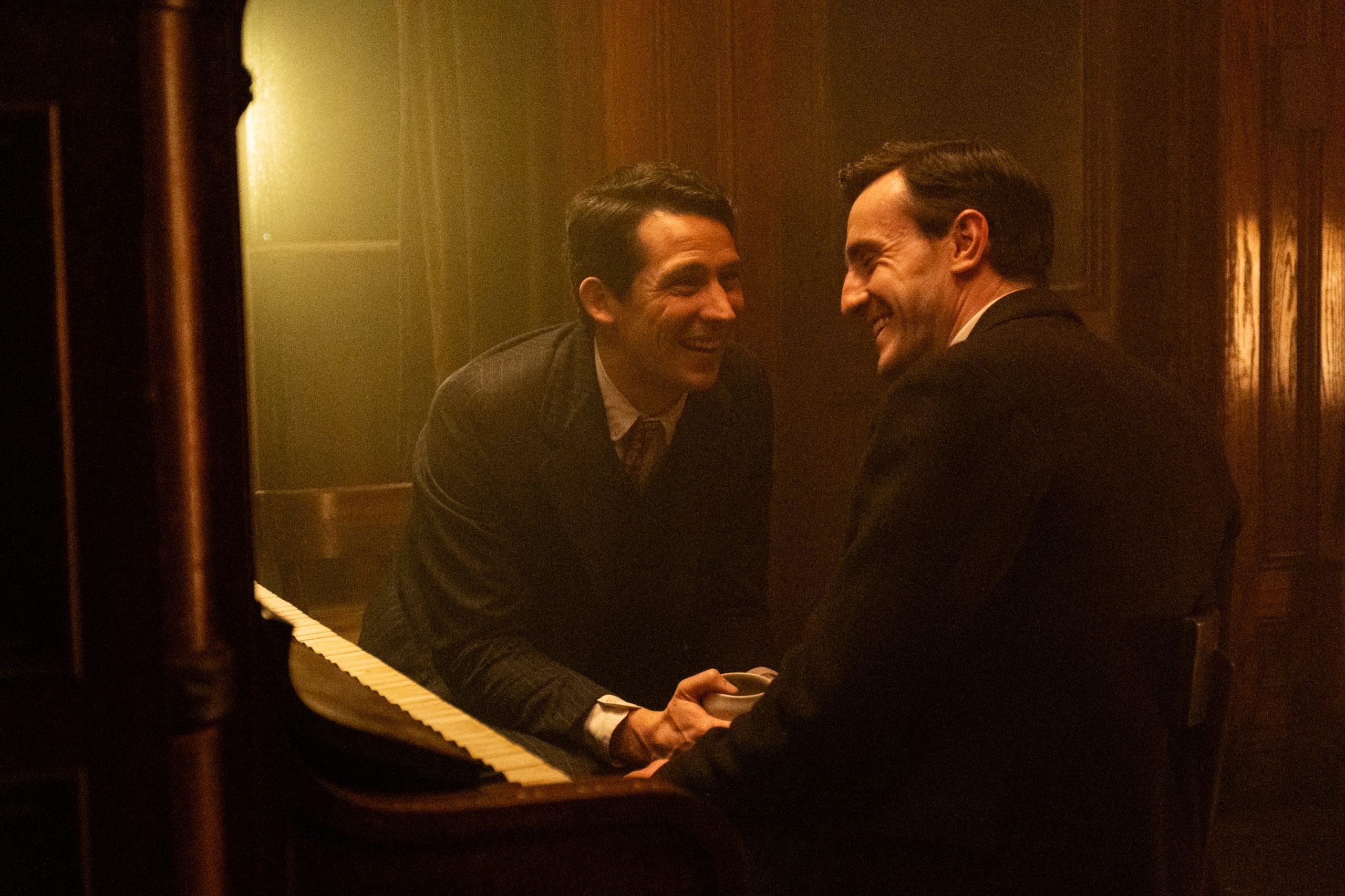
The History of Sound is a downbeat, period romance where its greatest asset is an overall sense of delicacy. A queer romance that spans the late 1910s and early 20s, The History of Sound utilizes subtlety over burning passion and keeps open displays of affection to a minimum, preferring character building and ambiance to melodrama. This puts it in stark contrast with this week’s other major release romance – the fence swinging, heteronormative A Big Bold Beautiful Journey – but both films excel at depicting love in unique, often unseen ways on screen. While The History of Sound might appear slight on a passing glance, this latest film from Oliver Hermanus (Living) benefits from the less is more philosophy.
Lionel (Paul Mescal) is a farm boy from rural Kentucky with a form of synesthesia and a knack for song, who travels northward to study music at the Boston Conservatory in 1917. There, he meets David (Josh O’Connor), a collector of songs with a photographic memory. Their common interests and attraction to one another is immediately apparent, but any long lasting relationship is cut short when classes are brought to an abrupt halt with America’s involvement in World War I. David is drafted into the Army, while Lionel reluctantly returns home to care for his mother (Molly Price). At the end of the war, David contacts Lionel, asking if he wouldn’t mind joining him for an academic song collecting and recording expedition through the backwoods of Maine. Lionel accepts the invitation to tag along, but while the two remain close, it’s clear that the war and differing circumstances have changed their relationship in ways David finds hard to articulate.
It’s appropriate that the folk songs David and Lionel are researching along their journey favour storytelling over spirituality, because that’s precisely the approach Hermanus and screenwriter Ben Shattuck are taking with their romance. The History of Sound isn’t a swooning kind of romance, and the forbidden nature of their love in that particular time period doesn’t loom to large over their lives. They meet, they come together, they’re torn apart, they come back together, and then they drift apart when the Maine trip reaches its conclusion, with both men eventually entering into closeted heteronormative relationships with women.
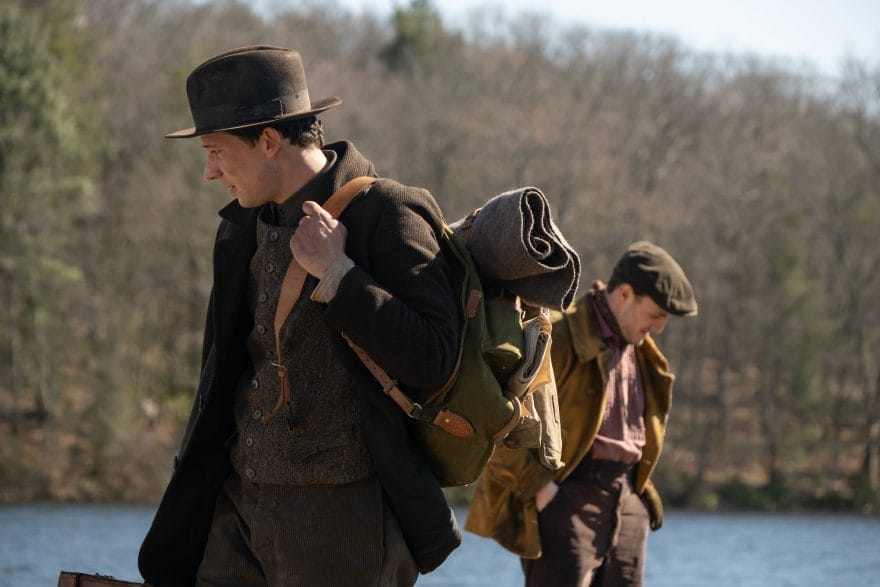
The love between these men is obvious, but The History of Sound isn’t keen on pressing the issue too hard, preferring that the viewer experiences every moment of the relationship alongside the characters instead of making them mere interlopers. It’s a deeper, subtler form of intimacy that few filmmakers attempt because of the feather touch approach needed to make it work. (If anything here stretches the boundaries of reality, it’s the laughable assertion that the duo’s camping trip takes place in Maine during the dead of winter. It seems pretty comfortable looking for a New England winter.)
The look of Hermanus’ film is as restrained as the characters, but in an interesting way that makes the palate almost monochromatic at times (the glowing orange embers of a flame, the oaky browns of the college campus and the suits worn by the students, the low-light mid-winter air of the Northeastern United States). The History of Sound relies heavily on the power of the music David and Lionel are researching and the chemistry between O’Connor and Mescal. The soulful soundtrack of folk standards is exceptionally presented, performed, and arranged, while both leads are comfortable with showing affection through basic physicality, meaningful pauses, and knowing glances. It often feels like The History of Sound is more focused on the work of these characters than their relationship, but the film and leads do a nice job of showing how one can’t be divorced from the other.
The inner lives of Lionel and David could be better expanded upon, as there are moments where Hermanus prefers to indulge in vibes rather than moving things along, but there are relatable truths in the lives of the protagonists. Like many veterans, David is loath to talk about his experiences in the war, and he has developed the ability to compartmentalize his feelings when presented with difficult situations. This leads to an interesting cog in the relationship when Lionel – plagued with his own grief around leaving his mother alone – finds it hard to turn away from a group of marginalized people who are about to be forcibly evicted from their ancestral lands by the government. Whether in good times or bad, Lionel and David don’t express themselves through grand speeches or showy sentiments. Their relationship is based on a more matter of fact kinship that isn’t always cinematic to behold, but is always down to earth and realistically portrayed.
The History of Sound might not be the romance some hope for it to be, especially during the admittedly overlong final third, but that doesn’t mean that Hermanus misses the intended mark. Not all romances need to be hot and heavy to have a greater meaning, and the bond shared between these two men is detailed and beguiling in its own unique way. It’s a constant smoulder rather than a slow burn, but that’s just how life is sometimes.
The History of Sound opens in Canadian theatres on Friday, September 19, 2025. It will be streaming on MUBI at a later date.
