
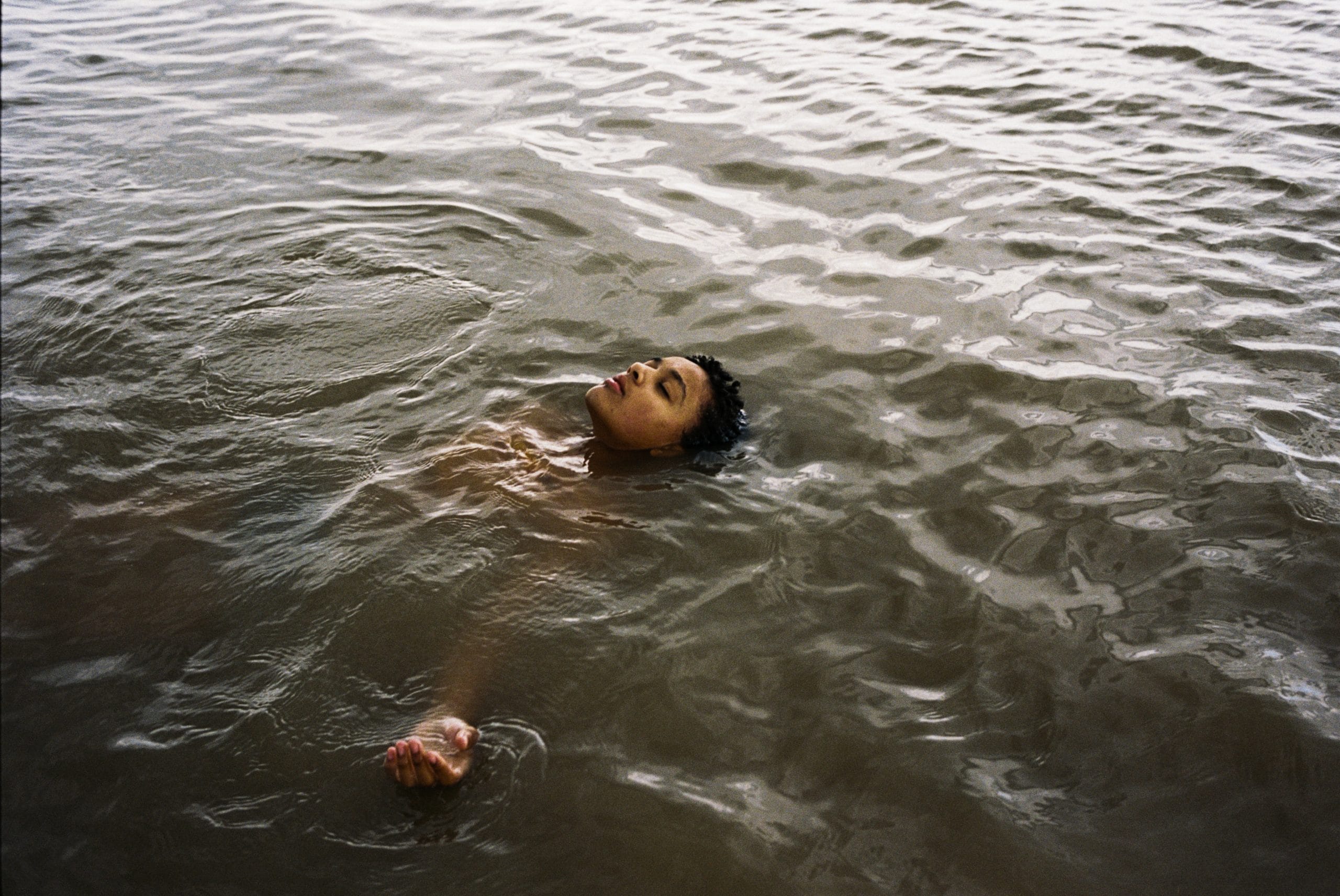
The gritty, but elegantly constructed and richly symbolic Bird looks at growing up in a way only writer-director Andrea Arnold could achieve. Existing in a place between the marginalized, mythical, and mystical, Bird is grounded firmly in real life issues, traumas, and struggles, while simultaneously finding small moments of joy, perseverance, and warmth in unlikely places. Bird finds Arnold (Cow, American Honey, Fish Tank) wanting to believe that there are things that exist beyond our own understanding that inform the way we experience life, even if we can’t quite see these moments as contributing to the sum of parts that make up our own personalities. It’s thematically dense, but narratively no grander than a simple coming of age story. Like all of Arnold’s films, Bird is starkly realistic, but unafraid of getting lost in the clouds for a bit.
12-year old Bailey (Nykiya Adams) lives with her young, devil-may-care father, Bug (Barry Keoghan), and equally chaotic brother, Hunter (Jason Buda) in a run-down apartment in Northern Kent. Bug cares deeply for Bailey, but he’s easily distracted by get rich quick schemes (his latest involving toad hallucinogens) and an impending marriage. Hunter is turning into a budding vigilante, running with a crew of like minded toughs to take out bad folks they deem worthy of punishment. Bailey’s other siblings live with her mother (Jasmine Jobson), who’s dating an absolute creep of a human being (James Nelson-Joyce). To cope, Bailey largely keeps to herself and finds moments of peace where she can. One day, she has an encounter with a shy, mysterious man (Franz Rogowski) who claims to be looking for his family. Although the man is hiding something, he shows Bailey kindness, and in turn she agrees to help him.
Bird quite naturally places Arnold alongside the likes of countryman Ken Loach in terms of their abilities to depict life at or below the poverty line, but also in line with fellow Brit Mike Leigh in terms of crafting abrasive, idiosyncratic characters worthy of love, respect, and empathy. Bug is a man-child who can’t stay focused on any one thing for too long, and his money making prospects are dubious, but he always makes sure that Bailey feels loved and supportive, even when they disagree. For his part, Keoghan – adorned with dozens and dozens of tattoos – always walks a carefully drawn line between borderline clownish and lovingly wholesome, making the viewer wish he was a better person, but also realizing he has the capacity to be a great dad. Rogowski’s sheepish drifter gives off creepy vibes throughout, but the actor’s face is so unique and his delivery so strong that one can easily see why Bailey would make fast friends with such a person.
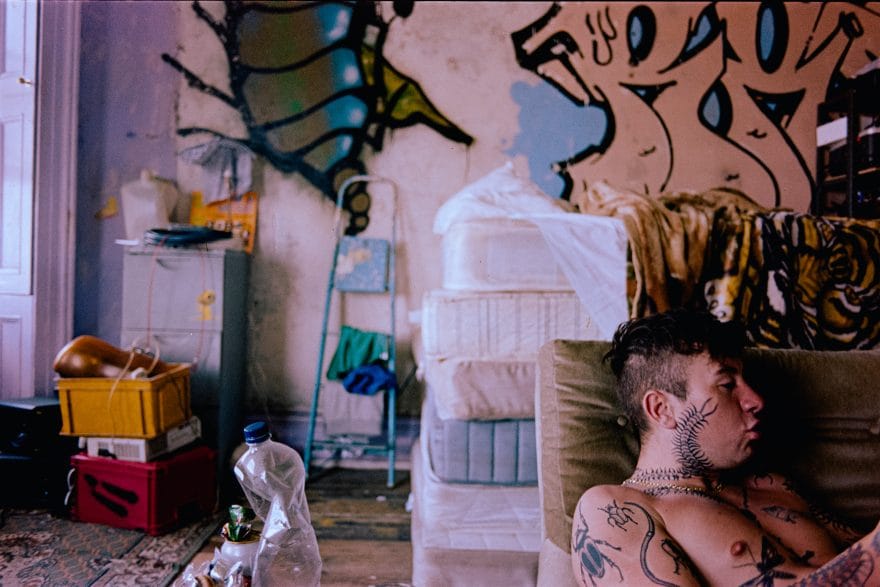
With Bird, Arnold creates a subtle commentary on the rarity of finding good male (or male identifying) role models in life, especially within economically and racially marginalized communities. Arnold embraces the imperfections of her characters, and analyzes how they imprint upon an impressionable young person like Bailey. Adams portrays Bailey naturally and unforced, without a hint of artifice or melodrama to be found. Master cinematographer Robbie Ryan (a perfect choice given his previous work with both Arnold and Loach) matches the filmmaker’s vision and Adams’ performance by uniquely capturing every image as if it were through the eyes of a budding teenager. Sometimes the camera moves at a full tilt pace and embracing uncertainty and chaos, while other times Ryan lingers in places, trying to find joy in unlikely places among all the sadness and frustration faced by the characters (graffiti walls, reflections in bus windows, calming waters).
Bird takes a full on turn towards magical realism in the latter stages of its exploration into the nature and formation of identity, but Arnold’s career up to this point has prepared the filmmaker to make such a pivot with a good amount of resonance. Arnold’s refusal to pass judgment on her characters means the viewer is constantly locked into the lives of Bailey, Bug, and Rogowski’s mystery man, and their issues are made understandable and relatable to the audience. Even when things look like they are taking a turn towards the strange, nothing feels out of place or unusual. In fact, it’s almost a relief.
Bird opens in select theatres, including TIFF Lightbox in Toronto, on Friday, November 8, 2024. It will be streaming on MUBI at a later date.
