

Let’s cut to the chase before getting into specifics: Hurry Up Tomorrow is awful. It’s awful in special, almost inconceivable ways. This companion piece to The Weeknd’s album of the same name is something historical, destined to go down in the debacle hall of fame. But before I get into why that is, I do have to give star/co-writer/co-producer/composer Abel Tesfaye and director Trey Edward Shults some credit. Hurry Up Tomorrow is definitely a work of honest art, painfully so. It is a work of such hubris and unfiltered thoughts that it has more appeal to the person who made it than anyone unfortunate enough to go see it. And within that, there is some nobility, even if the film itself has almost no real value beyond camp and cult appeal for those (like myself) with a soft spot for baffling train wrecks. Hurry Up Tomorrow isn’t so much a movie as it is a wealthy man’s unhinged diary entry interpreted into images by a sentient bag of cocaine.
The plot, what little of it there is, finds Tesfaye, as The Weeknd, at a personal low point. He keeps selling out arenas and living a lavish, rockstar lifestyle, but after a particularly nasty breakup with a lover (Riley Keough, only seen in pictures, and heard over the phone) his voice gives out. His doctor tells him that the problem is a mental one, not a physical one, and his manager/best friend, Lee (Barry Keoghan), tries to keep their world tour on schedule. Wrestling with some complicated feelings, the tour derails when The Weeknd has a nervous breakdown mid-song. Later that night, The Weeknd has a chance encounter with a mysterious young woman (Jenna Ortega). All we know about her is that she’s a fan, and she’s on the run from someone or something after burning down a derelict house in the middle of nowhere. They hang out all night, hook up, he seems to be healing, and then things take a dark turn for The Weeknd the next day.
Such a shame that something “untoward” happens, because to hear it from Tesfaye, Shults, and fellow co-writer Reza Fahim (who also worked with The Weeknd on the similarly disastrous and contemptible series The Idol) because he has real problems around people abandoning him. You see, it’s totally cool for him to have a one night stand, cut ties with someone, and have no feelings about it either way, but any woman who dares to break up with him is the bitch of all bitches; someone who doesn’t understand his greatness and star status, and that being with him is a gift. But he also hates fame! But he loves being adored! He loves women, but he also hates all of them and everything they bring upon him! But without them he wouldn’t have inspiration for all of his songs! What’s a rich and talented person who fucks a lot to do?
Tesfaye’s views are frighteningly awful. “I hate you, but please don’t leave. Wait? Why are you leaving? You absolute bitch. I FUCKING HATE YOU. BEING WITH ME IS THE BEST THING THAT WILL EVER HAPPEN TO YOU! No, no, I’m sorry, I’m sorry. You see, I have abandonment issues that I don’t want to get into, but I will tell you a bunch of other stuff because I want to seem really sensitive and deep and make you want to sleep with me. But in the morning please get the fuck out and don’t call me ever again, because I don’t know what the fuck you think THIS is.” That tirade pretty much sums up the entirety of Tesfaye’s views on women in this film. To say that Hurry Up Tomorrow has dodgy attitudes towards women, especially when it takes a turn into thriller territory in the final act, is an understatement. It’s also disgusting, and Ortega’s unironically awful and overly childlike performance as the woman who tries to turn the tables on Tesfaye (by way of an overlong scene that’s part Misery, part American Psycho, and all unintentionally hilarious) doesn’t help matters any. (For his part, Keoghan comes out relatively unscathed because he’s been handed a part that he has done before in other movies and could sleepwalk though this thing without anyone noticing.)
Hurry Up Tomorrow is the work of talented people far too high off their own supply to function as normal human beings. Not since Prince’s risible, self-directed follow up to Purple Rain, Under the Cherry Moon, has a musician’s vanity project gone so far out of its way to make its star look like a God among mortals, even with the large amount of self-loathing and deprecation. Every aggressively thumping, relentlessly spinning moment of Hurry Up Tomorrow is part hero worship made by the “hero” themself, part militaristic assault on the senses, and part therapy session where the viewer has to decipher this man’s pathetic babbling and self-pity while paying the patient for the “privilege” of doing so. If Hurry Up Tomorrow is as personal as it claims to be, this proves beyond any shadow of a doubt that Tesfaye’s mind isn’t a place one wants to spend a lot of time. All of Tesfaye’s attempts to sound deep and thoughtful ring hollow and trite, delivered in ways where it’s clear that the creative voice driving this leaky cruise ship believes they are the only person who has ever felt this way in history. (He also really, really wishes y’all made “Gasoline” a bigger hit. That point is VERY clear by the end.)
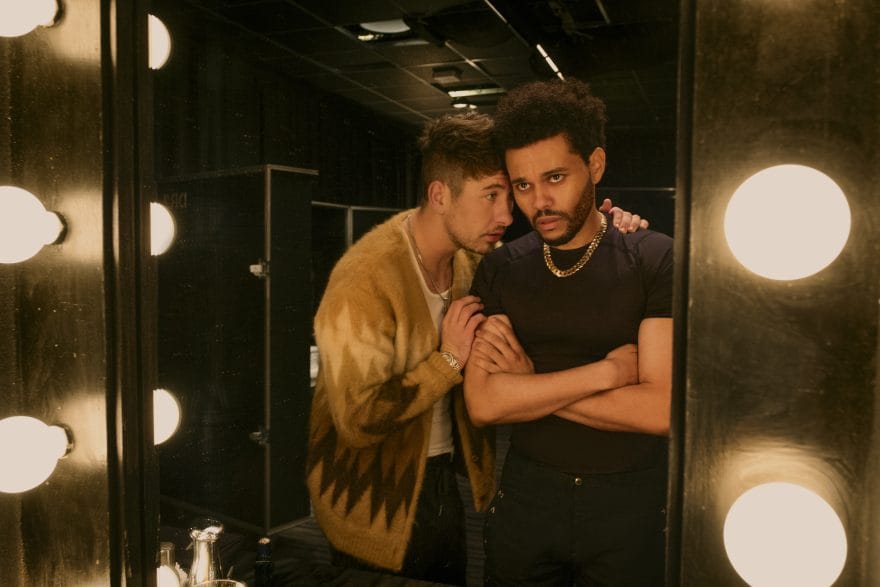
Hurry Up Tomorrow is a movie that doesn’t know the meaning of the word “no” because no one involved with this ego trip ever said there were any bad ideas. That extends to the style that Shults (Waves, It Comes at Night) brings to Tesfaye’s thematic vision. Lots of swooping into place. Lots of extreme close ups. Lots of movement even when it isn’t necessary. And tons and tons of spinning as if the viewer is strapped to a vomitron at the carnival. It’s a film that should be sponsored by anti-nausea medications with free samples handed out at the door. It’s such overkill that Gaspar Noé would tell Shults to calm the fuck down. While copious amounts of cocaine, weed, and lean are consumed throughout Hurry Up Tomorrow, I wouldn’t suggest anyone go into this thing intoxicated. Unlike going to a concert stoned, this is a vibe killer from the jump.
Adding to the curiosity is the fact that Hurry Up Tomorrow is a tie in with The Weeknd’s new album that doesn’t feature a ton of music at all. Weirdly, the songs that make the biggest impressions and have bearings on the “plot” are from his back catalogue. Anyone expecting an interpretation of the album of the same name are in for a bit of a surprise at how little of it makes it into the film, outside of prominent use of the Justice assisted, Michael Jackson sampling “Wake Me Up.” There’s plenty of room for the score from Tesfaye and collaborator Daniel Lopatin (also known as Oneohtrix Point Never), but not much for the film’s namesake. It shouldn’t be considered a musical in the traditional sense, and in fairness to Tesfaye, even the singer-songwriter admits that the film was conceived before the completion of the album, but that somehow makes the movie all the more pointless. At the “fan event” screening I attended, the film opened with a music video that seems to prepare the viewer for the fact that this doesn’t have much connection at all. It got some hearty chuckles when the video ended and people suddenly realized the movie hadn’t started yet. The movie that followed got even more chuckles, but it wasn’t the fault of the music. The score on its own is quite haunting and effective. That’s the film’s saving grace next to Shults’ overkill in the visual and audio stimulus department.
That could be a deliberate choice to not focus on the new material, though. As much as Tesfaye loves himself and the creature comforts that being The Weeknd brings him, it’s clear that he’s getting creatively burnt out and is desperate for a change of pace. He’s said on several occasions that this album, film, and touring cycle could be the last thing he does as The Weeknd and before moving onto new things. That’s admirable, but given the sheer ugliness and pretension of his recent on screen output – both this and The Idol – he might want to consider another pivot. Or at least maybe a therapy session and some camomile tea. That would be a start. But then again, if this is a calculated attempt to nuke his own career and fame, he might’ve succeeded. Foisting something this inexplicable on paying audiences is a good way to make people dislike you on a grand scale.
I watched Hurry Up Tomorrow dumbfounded from start to finish, in absolute awe of its audacity, noting ludicrous scene after ludicrous scene forever in my memory with disgust and no small amount of amusement for paying witness to one of the worst movies in the history of the medium. Yes, I severely disliked what I saw, but Shults and Tesfaye go all gas and no brakes throughout, so in spite of every criticism I could levy against the picture, I would never say it goes soft. There’s the old saying that the most boring thing you can do is to listen to someone else’s dream, but Hurry Up Tomorrow shatters that notion by suggesting the worst thing is being forced to listen to someone talking about the worst hangover they ever suffered. It’s a woe-is-me tale told by someone who wants sympathy, but refuses to open up, like the viewer is caught in a toxic relationship with the film’s star.
Hurry Up Tomorrow opens in theatres everywhere on Friday, May 16, 2025.
