
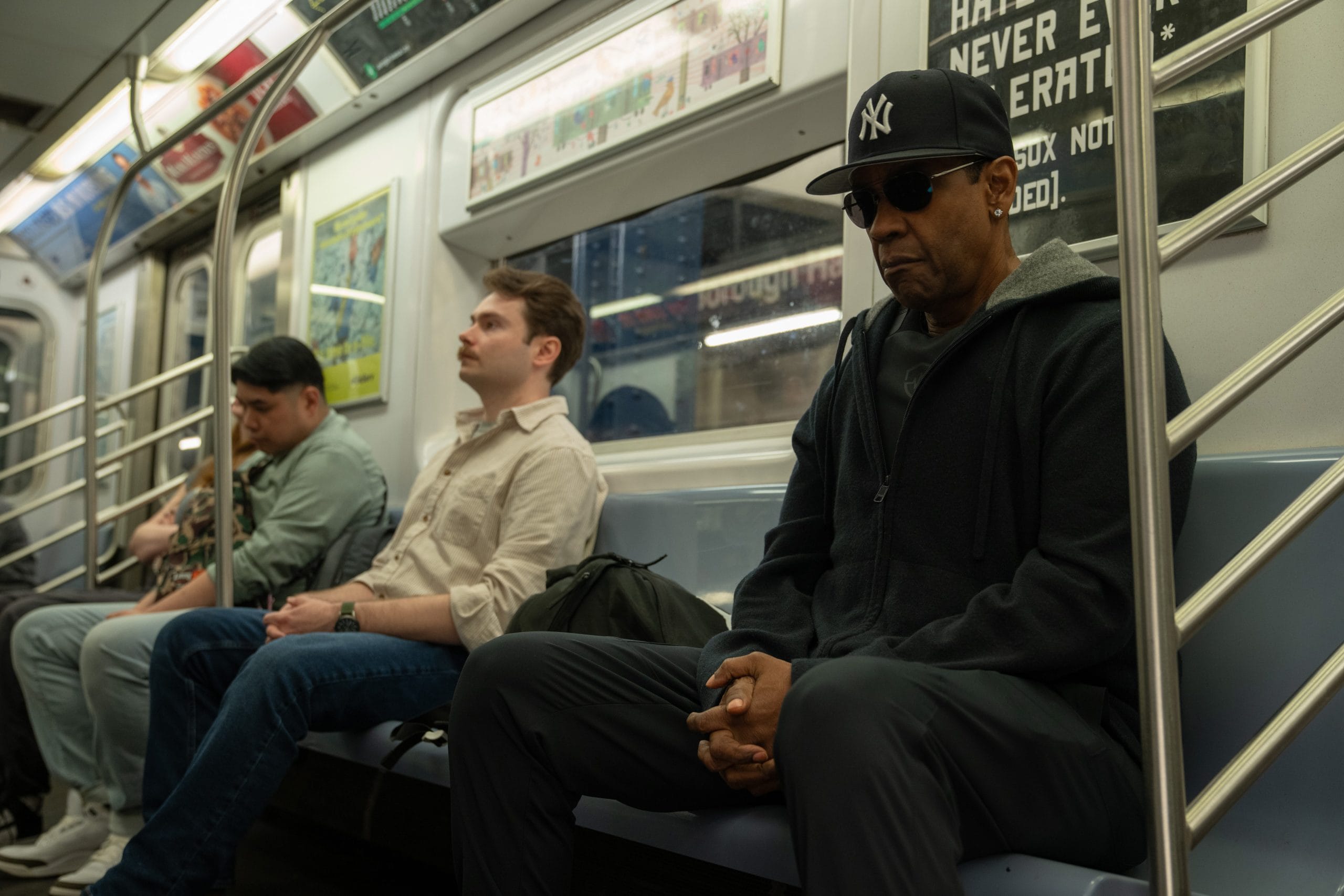
Highest 2 Lowest, renowned director Spike Lee’s latest team-up with frequent collaborator Denzel Washington, finds the filmmaker firmly in rousing crowd pleaser territory with expectedly strong results. A kinetic, morally rich thriller, Highest 2 Lowest remakes Akira Kurosawa’s landmark noir High and Low (and to a greater extent Ed McBain’s paperback potboiler King’s Ransom, the work that inspired Kurosawa’s film) into a modern day parable about cancel culture, social influence, and the recording industry. Such material sounds like hitting an easy free throw in an empty arena for someone the calibre of Lee, but Highest 2 Lowest still ranks up there with Inside Man, He Got Game, and Son of Sam to be one of the filmmaker’s most stylishly captivating and irreverent career outliers.
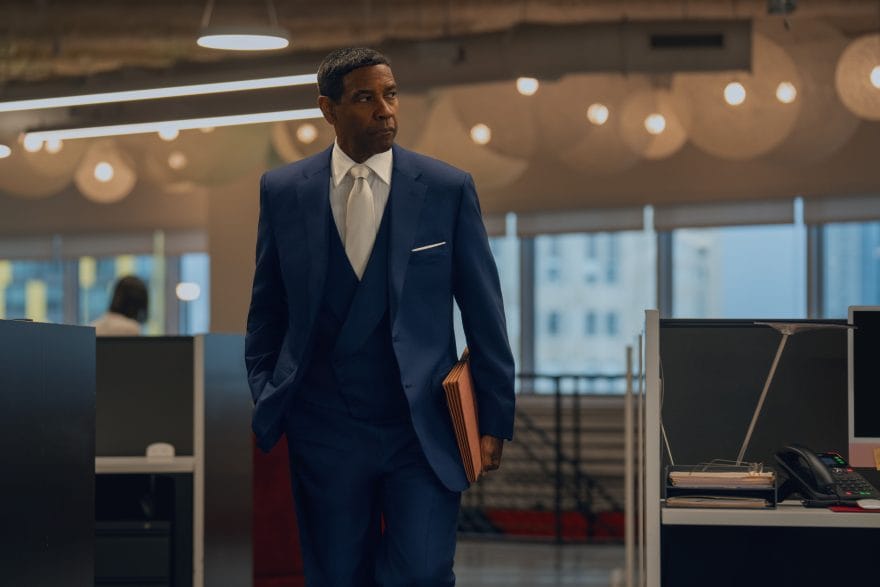
Veteran record producer (venerated for having “the best ears in the business”) and industry mogul David King (Washington) is preparing for a big power play. The company he helped found – Stackin’ Hits Records – is on the verge of being sold off to a bigger private equity company. Fearing that the sale will damage the integrity of the music he helped to create, King is trying to hustle a deal that would find him buying up a controlling stake in Stackin’ Hits so he can put the brakes on everything when it comes time for the board to vote. He heavily leverages his own assets to fund the sale, something that leaves his wife (Ilfenesh Hadera) and business partners on edge. Just as things seem to be going his way, David’s teenage son, Trey (Aubrey Joseph), and the kid’s best friend, Kyle (Elijah Wright), are kidnapped from their basketball camp. The tough talking abductor demands $17.5 million in Swiss Francs for the return of the kids, putting David between a rock and a hard place financially.
I want to talk about the plot mechanics of Highest 2 Lowest more, but I’ll stop there, as the first big twist in the film – one that vastly changes the dynamic and trajectory of King’s plight – happens relatively early on. A wedge is driven between David and his closest friend and personal driver, Paul (Jeffrey Wright), the father of the other kidnapped boy. The question begins to arise as to whether or not paying the money to the kidnapper would be a wise move with the merger on the horizon. David could chose to not pay up, but that would make him look like an uncaring cad in the eyes of the public, making the label he would be taking full ownership of and the artists under their banner virtually worthless. If David does pay, he not only loses the money and the company, but will become legally liable for misuse of funds intended to be used on the buyout. In the current economy where attention is some of the greatest capital (one of the film’s primary themes), and money is the root of all problems for these people, it’s unsure if either situation is tenable or winnable for King. In this film, no good (or bad) deed will go unpunished. Everything has consequence.
Morally, Highest 2 Lowest always makes it clear that the only responsible answer is to pay the money and let God sort out the rest, but watching actors like Washington, Wright, and Hadera digging deep into the material provided by screenwriter Alan Fox is compelling. No one is better at conveying confidence – justified or misplaced – than Washington, and his turn here as the cockiest of lame ducks trying to claw their way back to the top is consistently compelling. King is a smooth operator with plenty of tricks up his sleeve, and while Washington can play cool in his sleep, the actor is able to show hints of vulnerability shining through the character’s no-nonsense facade. He has a wonderful rapport with Hadera, and the husband and wife relationship has a naturalistic shorthand that breathes authenticity into the heightened crime thriller atmosphere. As the equally worried father and friend, Wright’s parolee is a nuanced depiction of someone struggling to not revert back to old ways, while constantly showing that the wheels in his brain are always spinning with scenarios, both good and bad. They give Lee a solid base upon which the director can then mount a slick, bumping, and pumping thriller set amid the stifling New York City summertime heat.
One of Lee’s greatest and most curiously unremarked upon talents is his ability to be a masterful entertainer when called upon. Lee’s ability to pull off the numerous twists and pivots in Highest 2 Lowest is flawless, and there’s enough energy on display to power a good portion of the city he lovingly calls home. Set to a relentless, fence swinging (and musically swinging) score from Howard Drossin, and shot with a glossy, vibrantly colourful polish by Matthew Libatique, Highest 2 Lowest captures the dark, wealthy, and everyday corners of New York with gusto.
With the proper heightened vibes in place, Lee frees himself up to ensure Highest 2 Lowest zips along with pressure cooker intensity. A major chase scene that zooms through the New York subways and streets during a Puerto Rican heritage festival is not only the best action sequence Lee has ever mounted, but it also serves as a loving tribute to Latin music icon Eddie Palmieri, who sadly passed away just last week (on the same day I happened to watch the film). As the film heads into its final act and the mysterious kidnapper is identified, Lee switches things up again and mounts an intense riff on an almost Batman versus The Joker story, building not only to more solid action, but an expertly performed and written tête-à-tête between King and his antagonizer; two people who have more in common than they’d each like to admit.
In a few moments where the score overpowers the image, Highest 2 Lowest can feel like it’s all a bit much, but that sense of enormity is more endearing than annoying. The moral and ethical conflicts are topical and realistically grafted onto a popcorn movie framework. And I can certainly forgive a few moments where Lee goes comedically out of his way to shit all over the Boston Celtics and Red Sox like the true New Yorker he is because Highest 2 Lowest is all in good fun; another love letter to his hometown and another shot at showing what he can do as a pure entertainer. Perhaps most importantly, I didn’t think of the Kurosawa version of the same story once during the film’s running time. The inspiration is recognizable, but the approach is so different that Highest 2 Lowest stands on its own merits. I mean, if you come for the King, you best not miss, right?
Highest 2 Lowest opens at TIFF Lightbox in Toronto, Rio Theatre in Vancouver, and Cinema du Musée in Montreal on Friday, August 15, 2025. It will be available to stream on Apple TV+ starting Friday, September 5.
