
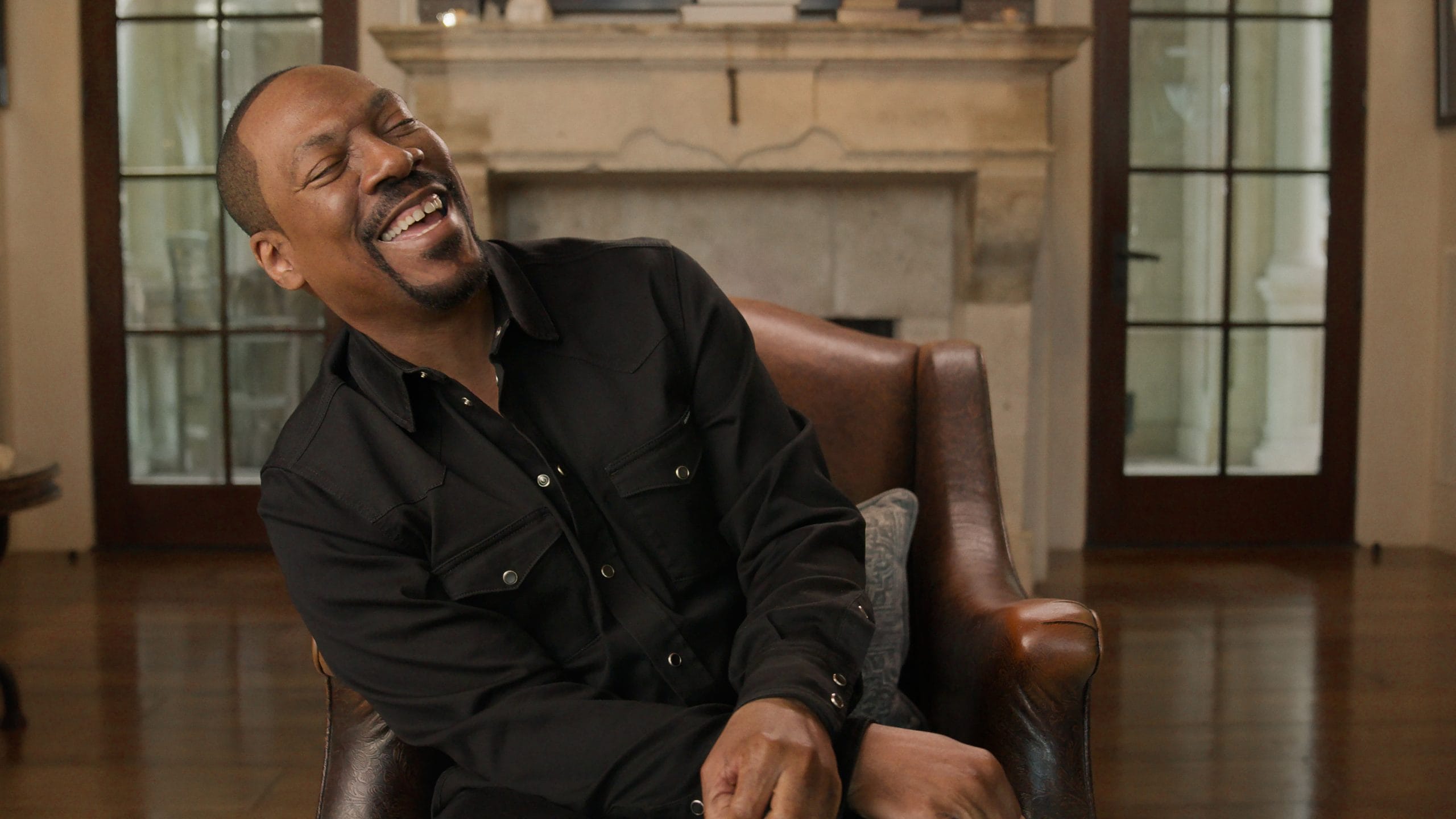
Being Eddie is both a demystifying and disappointing look at the life and career of actor Eddie Murphy. The kind of low aiming, authorized biographical documentary that aims low and hits its target, Being Eddie doesn’t have anything one would come close to calling controversial, eye opening, or revelatory, offering up loving hero worship at every turn and never treading into territory that Murphy would deem to be off limits. It’s casual and relaxed, which is nice as a vibe, but Being Eddie also never gives the viewer anything they couldn’t already figure out on their own.
A self-professed product of watching a lot of television as a kid on Long Island, Murphy began taking to the stand-up stage in earnest during his teenage years, eventually becoming the youngest ever performer to join the cast of Saturday Night Live in 1980. A major highlight for the show during what many deem to be its worst years, Murphy parlayed his heightened profile into big screen success, thanks to sleeper hits 48 Hrs. and Trading Places and the blockbuster performance of Beverly Hills Cop. Next to Sidney Poitier and Richard Pryor (whom Murphy was often fairly and unfairly compared to/pitted against), he became the most high profile black actor of the era, and inarguably a more profitable box office draw than both of them put together. Although he’s weathered a fair share of flops, duds, and debacles over his nearly fifty year career, Murphy remains a strong presence, delivering occasional hits and turning in performances capable of drumming up award season buzz (despite never winning an Oscar).
Director Angus Wall (a two-time Oscar winning editor for David Fincher’s The Girl with the Dragon Tattoo and The Social Network) has a laid back, easygoing rapport with Murphy, interviewing him at his home. The conversation Murphy has with the Wall is genial, self-effacing, and as honest as the film’s subject is willing to be. Being Eddie pads out their conversation with clips from various Murphy projects and interviews with contemporaries and past collaborators (Chris Rock, Tracy Morgan, Kevin Hart, Jamie Foxx, Tracee Ellis Ross, Jeffrey Katzenberg, Jerry Bruckheimer, Jerry Seinfeld) who have nothing but the nicest things to say about him. To hear about Murphy’s success from the source and his biggest defenders is to hear a version of Eddie’s story that plays the legend and not the human being.
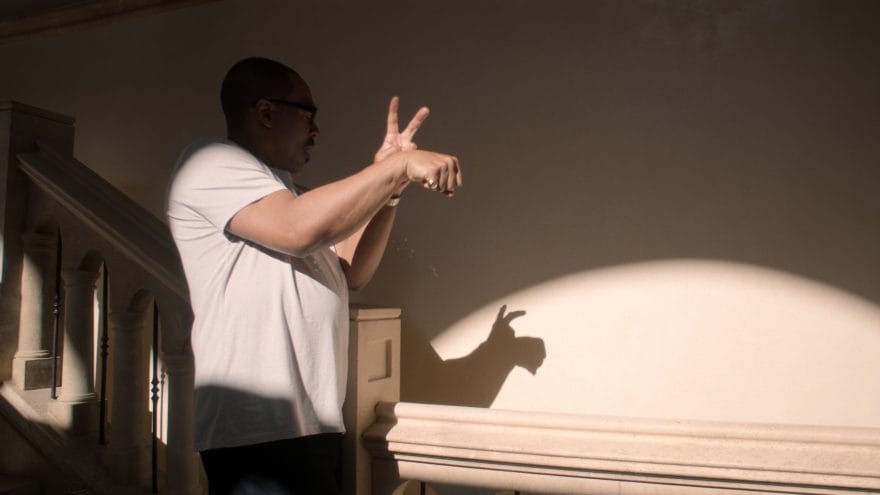
After a brief discussion of his childhood and the death of his father at a young age, Murphy doesn’t discuss any of his private life. Nothing about his past relationships is broached, and all that comes up about his kids is that he loves them dearly. After acknowledging an understandable amount of nervousness in his SNL and Beverly Hills Cop era, Being Eddie paints its subject as someone who made mistakes but never struggled again in their life. Don’t expect any sort of discussion about how poorly his stand-up act has aged over the past few decades or the problematic nature of a lot of his material. That’s not up for discussion at all, something that’s underlined when Murphy tries to walk viewers through a potential new bit he dreamed up that involves a Bill Cosby puppet.
Weirdly, the only kind of genuine personality and fire shown by Murphy in Being Eddie comes when he halfway admits that The Nutty Professor was made as a middle finger to SNL and David Spade after they made a joke made about Vampire in Brooklyn flopping. That might sound petty, but it’s also relatable and uniquely human, offering the kind of unfiltered insight the rest of Wall’s documentary lacks. It also plays well into some great behind the scenes footage of Murphy’s eventual return to SNL as a host in 2019.
Murphy somewhat excuses his effusive nature by admitting that he’s largely an introvert; someone who’s never seen as the life of any party, doesn’t drink or do drugs, and who never smoked a joint until he was thirty. He thinks a lot about comedy and his characters, whether he’s playing a lead or every character a viewer sees on screen in a given scene. While Murphy has more or less walked away from the kind of raunchy stand-up acts that elevated him to rock star status, he still thinks up new material on a regular basis, even if it doesn’t lead anywhere. He talks about his pop culture guilty pleasures (comparing Ridiculousness to Jodorowsky) and acknowledges that he’s made some stinkers (without ever going into too great of detail about any of them).
As a largely anecdotal clip show of Murphy’s career, Being Eddie succeeds at playing the mythos and larger than life aura of its subject. But it doesn’t take much digging outside Wall’s margins to discover the kinds of rougher edges that make him a captivating person. The tone of Being Eddie is “some things happened in my life and I’m grateful for almost all of it,” which is fine, but a bit dull unless all you want to hear about are the hits and high points. Although Murphy invites the viewer into his home for a walk down memory lane, the walls are still up and visible throughout Being Eddie. I’m not saying Murphy owes his audience anything. No performer owes viewers anything. But I am saying that going through the motions in such a precise and polite manner doesn’t make for the most compelling profile.
Being Eddie streams on Netflix starting Wednesday, November 12, 2025.
