
Some movies show viewers how art makes it possible to survive under harsh, hopeless conditions. Director Greg Kwedar’s Sing Sing takes that notion one step further and illustrates how art can help people suffering through hardship retain the very essence of being a human being. Based in part on true experiences, rich with meaning, and avoiding many of the cliches found in the inspirational prison movie handbook, Sing Sing – destined to be one of the finest films of this or any other year – tells the unique story of a dramatic arts program for prisoners that helps to find hope in a place where many only see despair, fear, and regret.
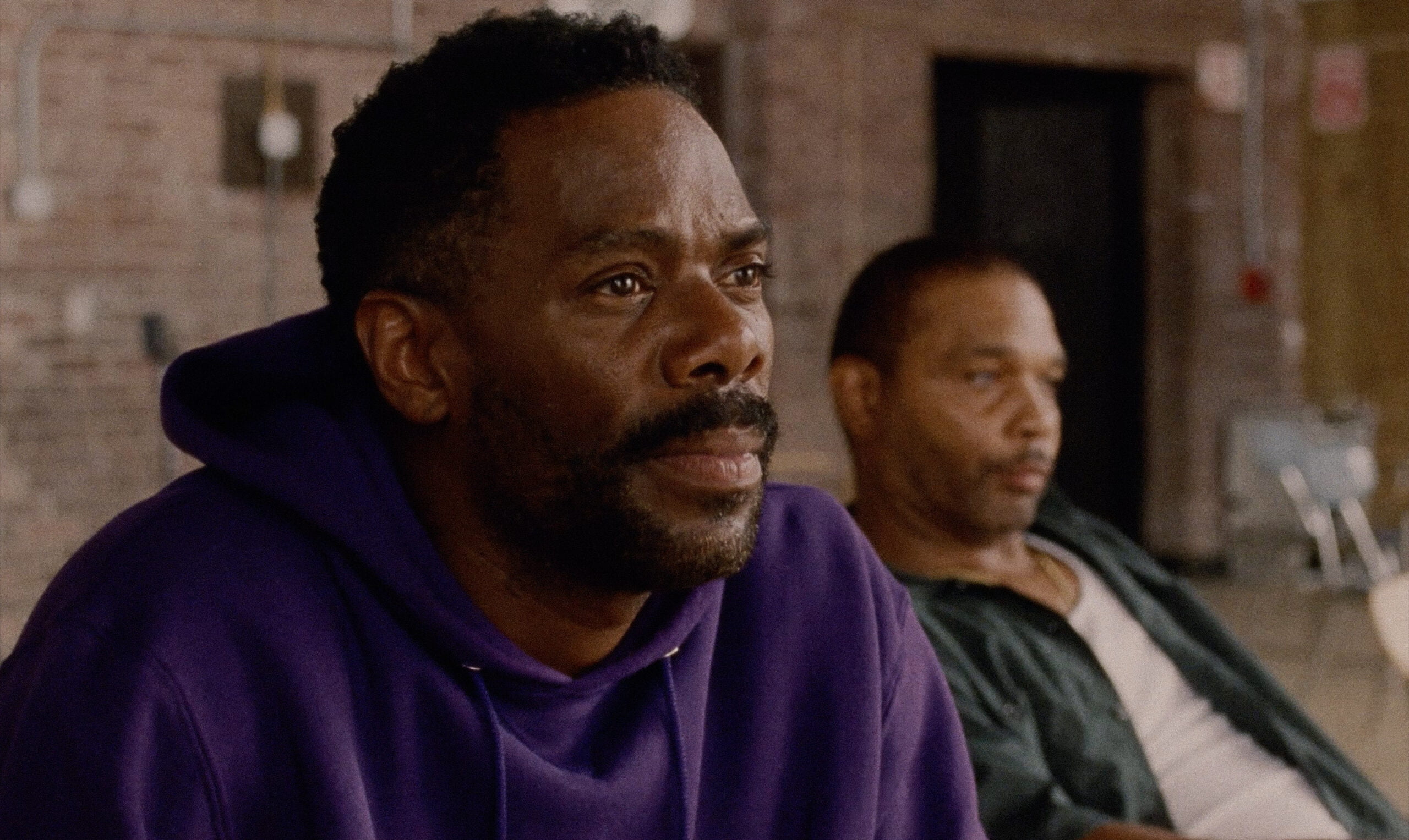
John “Divine G” Whitfield (Colman Domingo), an artist and actor incarcerated at the infamous Sing Sing correctional facility for a crime they didn’t commit, spends a lot of the free time he doesn’t use up on studying for his appeals (and helping others with their’s) working with the Rehabilitation Through the Arts program. There, people come together to collaborate on plays that allow them to forget where they are and be someone else for a bit. While looking for new recruits to join their troupe of players, Divine G advocates for the inclusion of Clarence “Divine Eye” Maclin (played by the real life Maclin), a hardened man who might be more trouble to the relatively peaceful and calm workshop than some think he might be worth. When Divine Eye suggests they try a pastiche comedy instead of the usual drama (and over one of Divine G’s own works), not only does the new member show his worth and vulnerability, but Divine G learns just as much from his mentee about life as he’s able to teach him about navigating the legal system.
Kwedar’s work is simple and straightforward, but also as hard to explain as the comedy the RTA players are attempting to mount. The material is a bit of a pastiche in and of itself, taking inspiration from the input of both Maclin and the real life Divine G, an article by John H. Richardson, and material created for the stage by RTA advisor Brent Buell (who shows up in a small cameo, but is played on screen by Oscar nominee Paul Raci). Employing a raw, verite style that emphasizes the mundanity of prison life instead of the usual dangers, which couples nicely with a decision to shoot on film, Kwedar (Jockey, Transpecos) accomplishes a perfect reflection of what RTA stands for. More than a movie, this is about creating spaces not only for fantasy, self-reflection, and improvement of skills, but also a safe place where people who have been told that vulnerability can get you in trouble are allowed to breathe a sigh of relief.
Fostering a place where someone can let their guard down in prison is no easy feat, but Kwedar and his collaborators show how that can be possible, even if the process is complex and takes a lot of time and care. The majority of the cast members in Sing Sing are formerly incarcerated persons who have familiarity with the RTA program, a decision that allows Kwedar’s direction to flow with a further sense of authenticity. Domingo might be the star – and we’ll get to his tremendous work in a moment – but it’s Maclin and his fellow RTA colleagues who loom largest and brightest, guiding the material every step of the way and ensuring there are no false notes. Sing Sing is packed with mannerisms, tics, and fine details about prison life that would feel false and hackneyed if an outsider were ever trying to implement them. It’s one thing to show what the difference is between a good letter from the parole board and a bad one, but it takes someone who lived through it to make that joy or pain come across as poignantly as it does here.
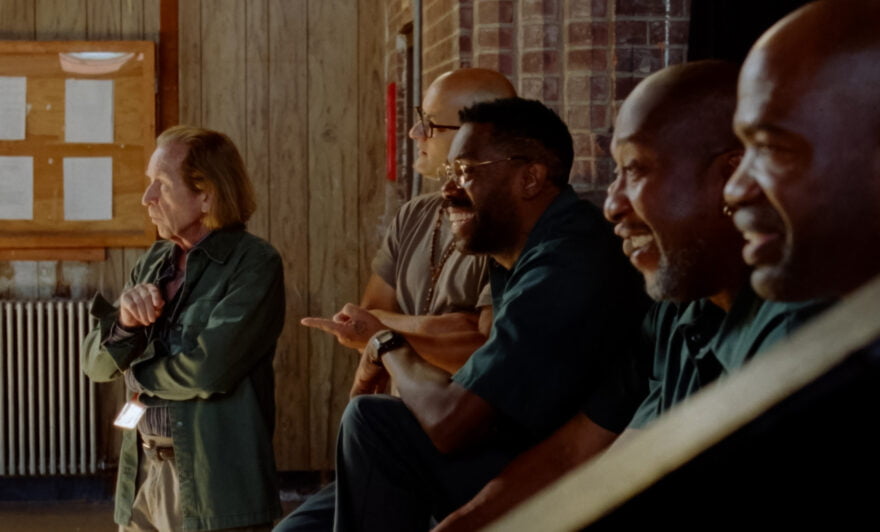
It’s also film about the nature of performing that features very little capital-A Acting. No one is here to show off. They are here to inform, move, explain, and yes, to entertain, others as well as themselves. On a very basic level, Sing Sing is part of the grand tradition of films about people wanting to put on a show, but this might be the first variation of that theme outside of the documentary world (and even that’s debatable) where no one is putting on airs. These performers know that their work isn’t just a respite from the drudgery of prison life. It’s also a chance for people who will likely never get a chance to relive the happiest moments of their lives to create new ones. Every performer, no matter how small the part, understands the weight their on screen counterparts feel and face. Not a single person is off key, but so what if they were? The point is to observe life and finding meaning in it through art.
For his part as Divine G’s on screen avatar, Domingo – a strong candidate for the title of finest working actor at the moment – deserves even more praise to propel his career. Sing Sing requires Domingo not only to learn how to play a person that’s essentially looking over his shoulder the entire time, but he also has to embody an entire way of living while also showcasing a style of acting that won’t make him stand out more than any of his fellow cast mates. It’s a performance that leaves me in awe thinking about how many different levels need to be considered before embarking on such a journey. Actors can do all the research in the world about how to play something, and they can also embed themselves in a specific culture to learn more about it, but Domingo transcends any sort of performative trickery and disappears into the role completely. The work and thought that goes into such a performance proves to be more than just dramatic effort in Domingo’s hands. The viewer will truly believe they are eavesdropping on the most intimate moments of a person’s life while watching along, and Domingo’s performance is a massive part of that.
If there are any drawbacks to be found in Sing Sing, it’s that some of the events that transpire feel a bit more convenient and conventionally dramatized than the bulk of the film’s more stringently realistic elements. Even so, these moments – which are for the sake of entertainment and emotional response – are things that really happen in a place such as Sing Sing, so it’s hard to question their inclusion. Even when it’s courting something a bit more conventional, Kwedar’s film never stops feeling bold in its sense of vibrancy and spirit of experimentation. Some films chockablock with visual effects and elaborate set pieces will leave viewers questioning how the filmmakers pulled off such feats. Sing Sing is also that kind of film, but it never needs to shout to leave the viewer with a sense of wonder.
Sing Sing opens in select Canadian cities – including at TIFF Lightbox in Toronto – on Friday, August 2, 2024.
