

It’s easy to approach so-called “legacy sequels” with a degree of callous scepticism these days, but Tim Burton’s raucous and highly enjoyable Beetlejuice Beetlejuice assuages all fears that this is one decades in the making follow-up that can’t match the hype. With Burton tapping into the darkly comedic. gonzo weirdness and visual intensity that marked his early career as a filmmaker and a cast of new and familiar faces that are fully embracing the madcap silliness on display, Beetlejuice Beetlejuice satisfyingly continues a story without coasting on its previous crowd pleasing laurels. It’s the best, most fun, and exceptionally composed non-animated film Burton has made since Big Fish over twenty years ago.
Psychic mediator Lydia Deetz (Winona Ryder) has built a successful career out of her ability to see ghosts by hosting a popular paranormal investigation series, produced in part by her new beau and manager, Rory (Justin Theroux). But things haven’t been easy for Lydia, who lost her previous husband in a boating accident and has just learned about the death of her grandfather. Lydia’s socially conscious, non-believer daughter, Astrid (Jenna Ortega), hates her mother’s guts, and visual artist stepmother Delia (Catherine O’Hara) is as high maintenance and eccentric as ever. To top it all off, Lydia is once again haunted by visions of world infamous bio-exorcist Beetlejuice (Michael Keaton), the demon who once tried to wed her in a bid to cross over from the afterlife and into the world of the living. A return to the sleepy town of Winter River for gramp’s funeral will put all of these characters on a collision course once again, with Lydia and her pale faced, tackily dressed tormenter striking up a necessary alliance to protect Astrid from danger and to keep Beetlejuice’s literally soul sucking ex-wife (Monica Bellucci) from wreaking havoc.
Some say you can never go home again, but that’s precisely what Burton and company have done with Beetlejuice Beetlejuice, a film that while admittedly overstuffed with plot still manages to cram a lot into a blisteringly paced, short amount of time. The overall material (provided by veteran screenwriters Alfred Gough and Miles Millar, who most recently collaborated with Burton on Netflix’s Wednesday, starring Ortega) isn’t as fresh as the 1988 film, but the spirits are willing and the energy level is high. In an era where so many sequels – both bad and good – have an air of contractual obligation to them, it’s refreshing to see one where everyone in front of and behind the camera looks like they’re having genuine fun being there. Beetlejuice Beetlejuice feels like a reunion party that isn’t afraid to try new things and invite everyone into the fold.
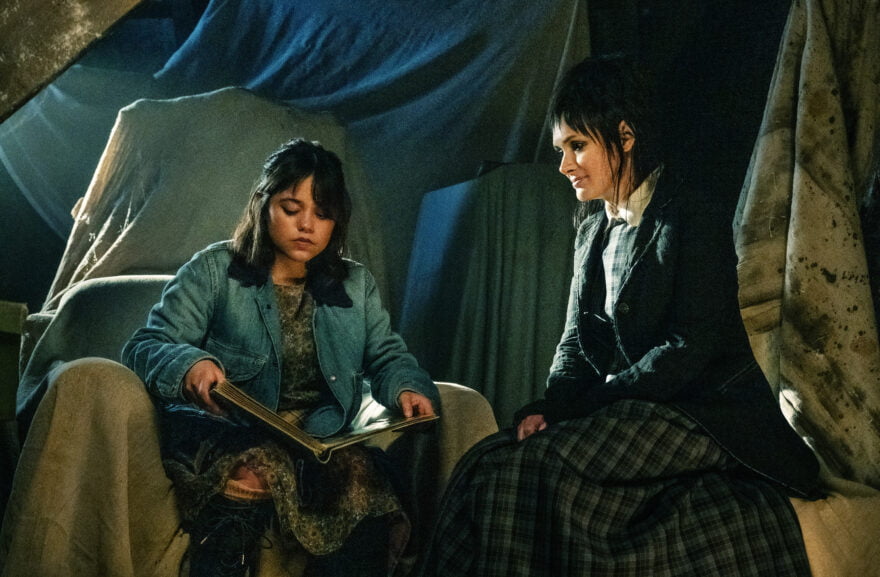
The off kilter sets, gothic architecture, outlandish make-up, opulent costumes, and stop motion animation effects that helped bring the original film to life are back on full display here, accented wonderfully by the contributions of Keneth Branagh’s frequent cinematographer Harris Zambarloukos, who ensures all of Burton’s imagery pops with artistic purpose, no matter how seemingly mundane. The world of the living is surprisingly gorgeous, and the world of the dead is playfully deranged. And in the years since the first film, Burton is able to get away with a lot more on screen, leading to some truly grotesque, but hilarious set pieces that never would’ve flown in a mass marketed movie almost forty years earlier. Beetlejuice Beetlejuice is both actively darker (and boasting a lot more references to Mario Bava and Italian neo-realist cinema than one might expect), but just as pleasing and engaging without being too morose or off-putting.
Keaton, Ryder, and O’Hara haven’t lost a step with their characters, with all of them slipping back into Burton’s world like hardly a day has passed; something truly exceptional given the amount of time between collaborations. Keaton taps into his comedic roots again, and the idea of Beetlejuice being so successful that he has upgraded to a call centre (run by an army of people with shrunken heads, including the kindly and loyal Bob, possibly the film’s most endearing character) is a great bit that gives the actor a lot to work with. Ortega carves her own path with an original character that feels a part of this world, but not a carbon copy of who Ryder was in the first film. Few actors are better at portraying arrogant insincerity than Theroux, Burn Gorman is a bizarre delight as a loquacious priest, and Willem Dafoe gets a memorably silly supporting role as a deceased, overzealous action movie star who now functions as a police detective of the underworld. Bellucci’s villain is fun, if a bit under-utilized, and while Arthur Conti has great chemistry with Ortega as Astrid’s new townie crush, their relationship is the extra straw that almost breaks the narrative by adding too much baggage. It still works, though, and the payoff for both of these characters is inspired.
Stylistically and comedically Beetlejuice Beetlejuice is all aces, even if thematically the story is trying to lean into an odd cross between anti-woke sentiments and treating generational traumas with a degree of seriousness and compassion. But it all flies by so quickly and pleasingly that any complaints don’t have time to fully register. It’s here for a good time, not a long time, and there are few adages more appropriate for a character like Beetlejuice than that. When it comes to this kind of pure, entertainment driven spectacle, you gotta give the people what they want, and with Beetlejuice Beetlejuice I’m sure the audience will get what they are coming for and then some.
Beetlejuice Beetlejuice opens in theatres everywhere on Friday, September 6, 2024.
