
Writer-director Kate Beecroft’s debut feature East of Wall is another strong entry into the ever expanding canon of modern naturalism. Blending non-actors playing off their real life personas and placing them amid a fictionalized story they can fit into like a pair of broken in chaps, East of Wall has a lived in sense of authenticity that makes for a satisfying drama. Much like the similar hybrid tone struck by Chloé Zhao’s The Rider, Beecroft’s film takes place in a modern vision of the American prairies where opportunities are scarce and land is barely tamed, but people become very good at what they do; in this case training horses that were destined for kill pens and taking in wayward teenagers who face similarly bleak life paths.
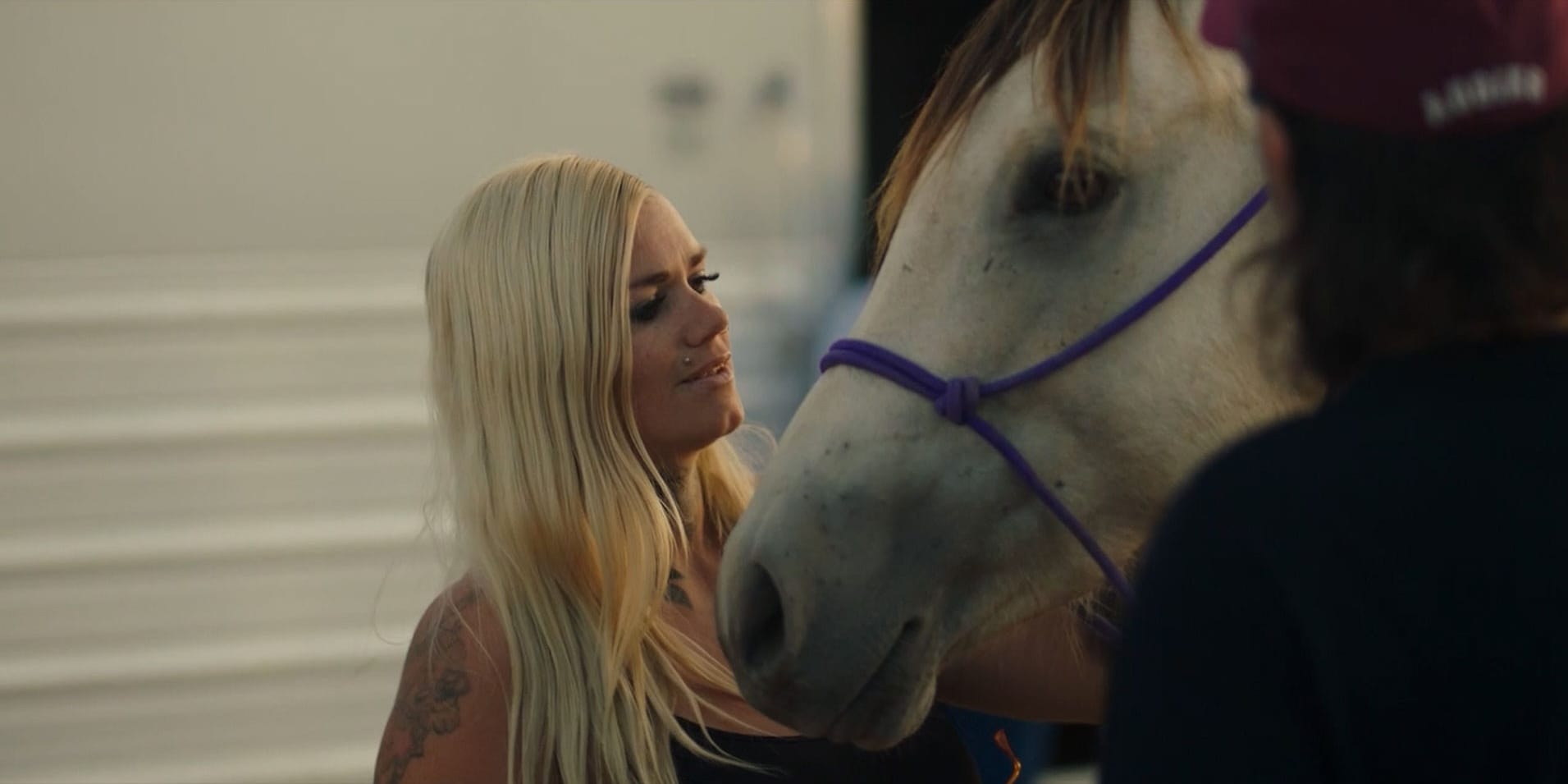
Tabatha Zimiga, playing a version of herself, owns and operates a 3,000 acre ranch in the Badlands of South Dakota. A widower who inherited the ranch from her late partner, Tabatha has taken it upon herself to care for an assortment of young people from unstable backgrounds; some of whom are runaways, others castaways, and many who just want to escape from their fraught homes for a little while. That’s in addition to Tabatha’s hard drinking mother (Jennifer Ehle), and three biological kids, eldest son Skylar (played by family friend Wyatt Manfield), three year old Stetson, and middle daughter Porshia, a popular and well liked TikTok creator who has a bright future in rodeo riding.
The horses they bring to auction aren’t fetching the kind of money Tabatha needs to keep all of these mouths fed and the business afloat anymore, despite the family and teens adding some much needed theatricality and panache to their sales pitches. A financial lifeline arrives in the form of Roy (Scoot McNairy), a wealthy rancher who sees value in Tabatha and Porshia’s skills. Conflict arises once it becomes apparent that Roy wants to run things like a profitable business, and not like the refuge and familial atmosphere that Tabatha takes great pains in cultivating. Porshia also has to decide if she wants to keep up with her riding career or the more lucrative job of travelling with Roy to sell horses.
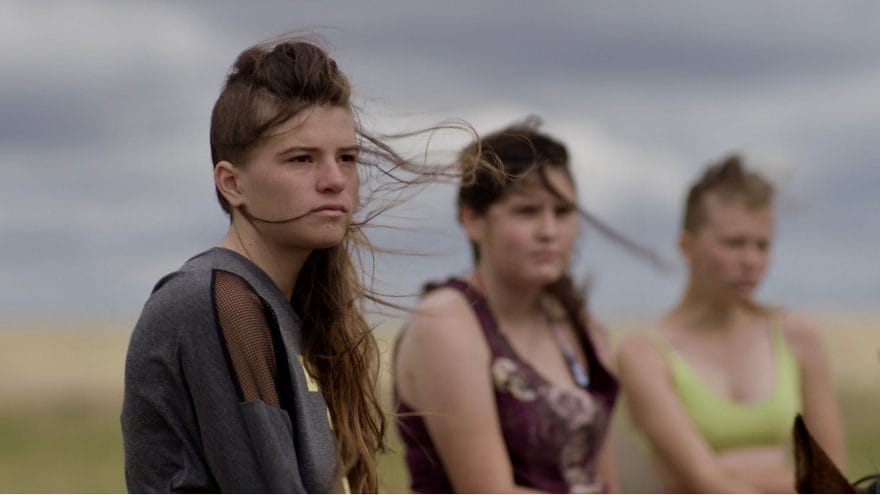
Filled with sharp, sweeping views of endless skylines and natural wonders, and edited in a snappy fashion that befits many of the film’s younger characters and their cinematic influences, East of Wall keeps it real, but not in the gritty faux-documentary one might expect from a movie that blends non-actors (including all other teens on the ranch) with professionals amid a tightly constructed story. Beecroft’s vision for East of Wall is focused squarely on personality, both of its characters and the land itself. Beecroft has stated that she sort of stumbled into the idea for her story after getting lost on a road trip and coming upon Tabatha’s ranch, where the filmmaker was asked by what was about to become her movie’s main character if she wanted to see “some real cowgirl shit.” The overwhelming and pleasant vibe of East of Wall captures that vibe perfectly. The film looks and functions like the viewer has stumbled upon a fascinating world they never knew existed and spending more time than they expected there.
While established character actors McNairy and Ehle are able to seamlessly integrate themselves into the Zimigas’ world, it’s the film’s stars that provide East of Wall with so much of its personality and atmosphere. Tabatha – sporting a haircut that’s half-buzzed to the scalp and half flowing blonde locks (referred to as a “warrior buzz,” something sported by Porshia and other teens on the ranch who earn their stripes) – is a loving and caring person who uses generosity to mask the fact that she’s broken inside. Once a noted rider herself, Tabatha hasn’t literally gotten back up on the horse in a long time, something Porshia openly resents. Tabitha has a commanding presence and soul to spare, but also a great deal of obvious vulnerability amid her tough demeanour. For her part, Porshia brings a lot of fire and wit as a young woman and budding perfectionist unsure about what direction to follow in the future. The familial clashes and business squabbles in East of Wall always sound authentic because the leads know their characters inside and out already. Off screen, the leads probably know each other’s next moves very well, and Beecroft’s observant script reflects that dynamic.
East of Wall also intriguingly makes influencer culture into something uniquely cinematic, and this is the first time such an approach has genuinely worked to a film’s benefit. Beecroft meets the film’s younger stars on their own terms and speaks their language, detailing the work they put into their content from the very start of the film and never speaking down to a component of the job these teens are passionate about. Set to a wide ranging soundtrack that includes everything from metal and hip-hop to pop and country, Beecroft ensures that every scene has a hook that brings the audience directly into Porshia and Tabitha’s world.
Although viewers might just be passing through East of Wall en route to showier destinations (which, in real life, probably means they’re en route to Mount Rushmore), it’s a place well worth stopping in and staying for awhile. There’s drama and hardship, but also unending beauty and a true sense of community that makes one want to stay. You can feel and hear truck tires and horse hooves cutting through quiet and taste the peach moonshine. You might not want to saddle up yourself, but you also don’t want to avert your gaze.
East of Wall opens in Canadian theatres, including at TIFF Lightbox in Toronto, on Friday, August 15, 2025.
