

Guillermo del Toro’s Frankenstein is a landmark career achievement. I don’t mean that in the sense that it’s the best film in del Toro’s impressive catalogue, but in the sense that it feels like his entire career has been building towards this passion project. His take on Mary Shelly’s seminal novel includes is packed to bursting with notions, visual motifs, and craftsmanship that has been seen in many of del Toro’s previous works, only this time elevated to his grandest scales yet. It’s not a full reimagining of what Frankenstein represents, and one half of this overly lengthy film works better than the other, but the depth of passion on display and del Toro’s love for the material make for captivating viewing.
After a visually splendid and action heavy wrap-around prelude set in 1857 in the furthest reaches of the North, writer-director del Toro sets about recounting the early years of scientist Victor Frankenstein, played as a young man by Christian Convery. Growing up alongside preferred son, William (Rafe Harwood as a child), Victor was treated harshly by his domineering, dour physician father, Leopold (a frightening Charles Dance), a man who’s willing to beat correct answers into his eldest with a switch. It’s during this childhood and with the memory of his mother firmly in mind that Victor becomes obsessed with conquering death.
Frankenstein has always been viewed as a story about lost, abandoned, and abused children, with the monster (played here by Jacob Elordi) acting as a potent metaphor. del Toro’s take, one that he has repeatedly stated as deeply personal to him, takes great pains to make sure that comes across here. As the adult Victor (played by Oscar Isaac) becomes more of a zealot in his belief and self-importance, the scared, abused child within him always comes to the forefront. He wanted love for a great part of his life, and now his twisted mentality only craves respect and admiration. When his controversial experiments are finally funded by the wealthy uncle (Christoph Waltz) of his brother’s fiancee (Mia Goth), Victor becomes so obsessed with achieving his goals that he never bothers to think about next steps if he should prove successful. As the kids say, he wants to prove the haters wrong, but honestly, as anyone familiar with the story knows, those naysayers will prove to be right. Great call from the haters.
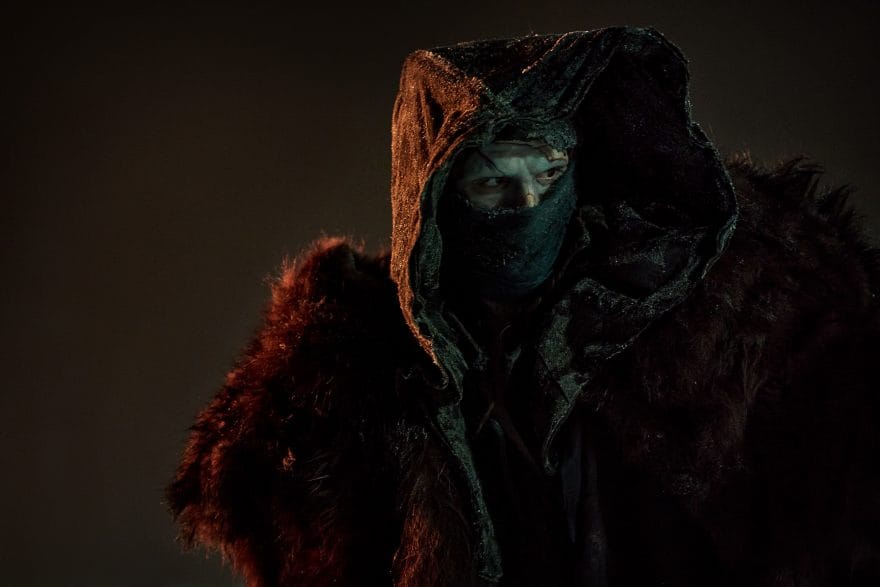
In addition to developing a crush on his brother’s woman, Frankenstein will eventually turn into his father, turning on his creation for not learning to be human at a rate fast enough to satisfy him. This is all a bit on the nose, but everything up to this point showcases del Toro at his best. The design of Frankenstein pulls heavily from del Toro’s earlier works, most notably Cronos, which shares a lot of common DNA with this classic horror tale. From the squirm inducing make-up and visual effects to the opulent production design to Elordi’s impressive physicality and Prometihian appearance as the monster, Frankenstein shows a lot of forethought and reasoning from del Toro. This is a work where the creator has thought long and hard about how their film should look and function, and while there isn’t a ton of originality on display (and Isaac’s odd accent choice is a distraction), there’s a wealth of heart and soul.
That heart and soul should come through more in the film’s latter stages, where, as many versed with the source and previous adaptations know, the perspective shifts from Victor’s viewpoint to that of his abandoned creation. But try as he might to make something compelling from the creature’s relationship to a charitable blind man (a wonderful David Bradley) who’s willing to teach this being with love, kindness, and patience, this portion of the story shows less investment than the portion controlled by Victor. del Toro’s script is doing its best to examine what defines humanity and how people are products of their environments, but in terms of pacing, dramatic weight, and visual opulence, Frankenstein slows way down just as it should be saying something more profound. It’s not badly handled, and del Toro still knows how to elevate traditional B-movie elements, but this section of Frankenstein makes everything that came before it seem more indulgent.
In spite of the familiarity and indulgences, though, Frankenstein is captivating and refreshing. Sometimes all a film needs to succeed, especially one where the source material has been adapted as much as Shelley’s has, is a filmmaker willing to lay their soul bare and speak to the things that move them. That’s what del Toro is doing with Frankenstein, and while like many personal projects there are plenty of rougher edges on display, that enthusiasm and care for craft shines through. Fans of the source, previous adaptations, and del Toro’s overall career are in for a treat with this.
Frankenstein is now playing in select theatres, including at TIFF Lightbox in Toronto and VIFF Centre in Vancouver in 35mm and in select IMAX locations. It will be available to stream on Netflix starting November 7, 2025. This film was screened as part of the 2025 Toronto International Film Festival.
