
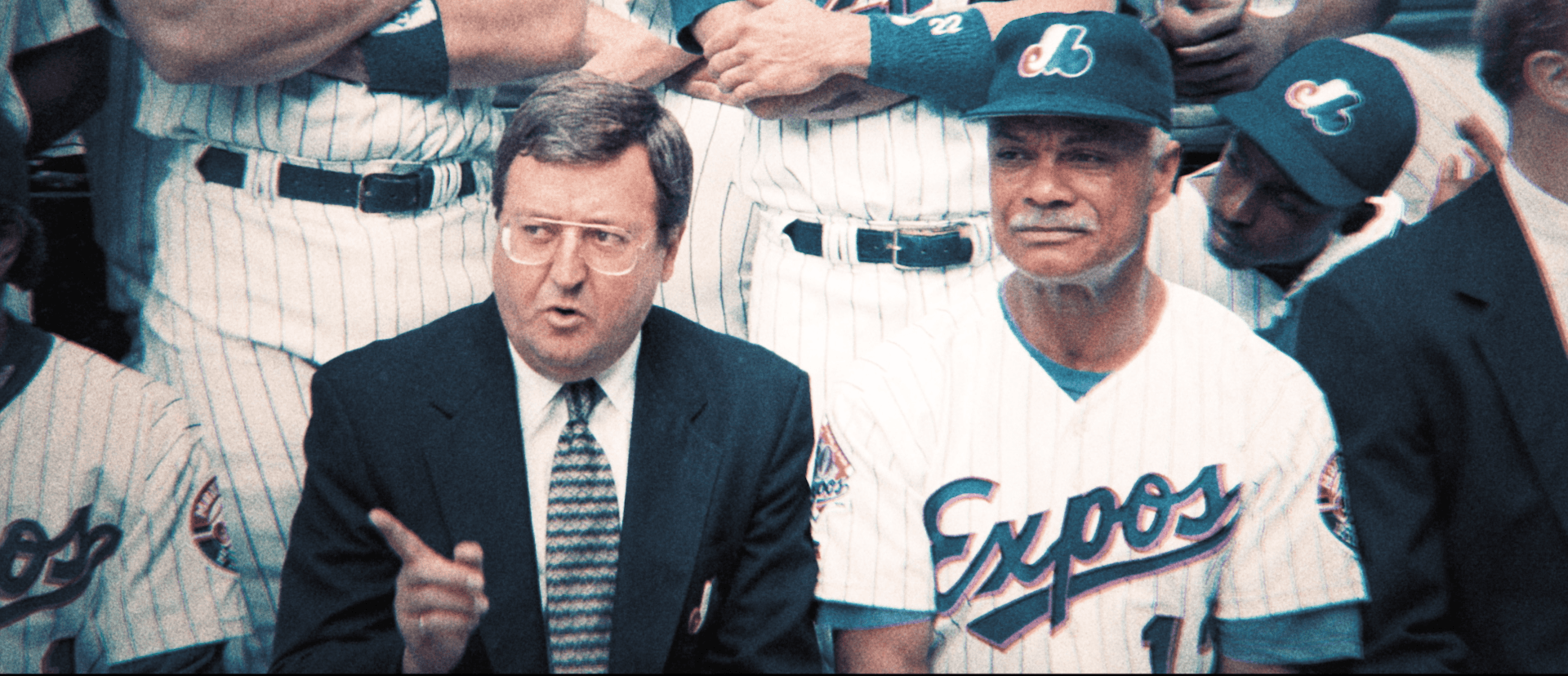
As the old adage goes, success has many fathers, but failure has only one. Jean-François Poisson’s entertaining and exhaustively researched documentary Who Killed the Montreal Expos? examines the fallacy of that argument by taking a deep dive into a situation where there’s plenty of blame to go around. At a time when Canada’s lone Major League Baseball franchise is about to enter into the 2025 World Series, there’s no better moment to look back on the hurt feelings left in the wake of the country’s only other professional team in that sport taking off for America following a slew of financial debacles.
The Montreal Expos predated the current AL champs the Toronto Blue Jays in MLB by almost a decade, entering the league in 1968. It was the first team in the league outside of the United States, and Montreal’s history as a baseball loving city (one where many black players came to ply their trade during segregation) is legendary. At its highest points, the Expos were usually in the mix to make the postseason, but never quite followed through on expectations. Things started to slide when the Canadian dollar took a major hit in the 1980s, as all of the players and staff were being paid in USD, essentially taxing the Expos at every turn. They played out of a crumbling stadium that desperately needed to be replaced, but when the team needed governmental support the most in the 90s, Quebec premiere Lucien Bouchard refused to allocate any public funds to give the Expos a new home, making them the only team in the league not to get any financial help from a local municipality. (To be fair to Bouchard, the province was in the midst of an unprecedented financial crisis.)
These setbacks were major turning points for the team, which would unceremoniously move to Washington D.C. to become the Washington Nationals at the end of the 2004 season. But as with any stinging situation that changes the cultural identity of a major city, people will always try to trace the source of the rot back to a single person. Who Killed the Montreal Expos? looks at a lot of the key players in such theories, all of whom give conflicting accounts of the situation, and they’re only willing to take partial responsibility for the roles they played in the club’s eventual decline and sale. In addition to feeling constrained by Canadian economics and sometimes just plain awful luck, each owner of the Montreal Expos played a role in ensuring the franchise’s long term viability was undermined at every turn.
Who Killed the Montreal Expos? doesn’t start at the tragic end of things, but rather goes back to the very beginning, with the team under the leadership of original owner Charles Bronfman, who had to give up the team because there was no way he could continue to cover the club’s losses. Without Bronfman, no single Canadian was able to step up to cover the costs, so from 1991-1999, the team was run by a consortium of Quebecois investors, led by Claude Brochu, who acted as the de facto overseer of day-to-day operations in the eyes of MLB. The plus side of Brochu’s time in charge was the Expos positively stacked 1994 roster, which rose to become the best team in baseball… until the devastating strike towards the tail end of that year killed the season dead. The big downside is that one year later, Brochu and company’s team conducted an ungodly fire sale of all its talent on the field and behind the scenes, tanking the team from first to worst.
Brochu insists his hands were tied and his ouster from management wasn’t justified, but he can take a small degree of solace in remembering that he wasn’t nearly as hated as the team’s next owner: American art dealer and mysterious angel investor Jeffrey Loria. Flanked by his cocky, wildly disliked stepson and right hand man David Samson (who gives an interview that’s both defensive in tone and brutally honest in content), Loria more or less counted on a new stadium deal going forward. When that didn’t happen and with his foot in the door of MLB, he simply gave up and went to take over the Florida Marlins, instead. With all other options for a buyer exhausted, the Montreal Expos became like wards of the state, owned and operated by the league itself, meaning it had 29 other bosses who didn’t care what happened to the team and what was in the best interests of the city.
Who Killed the Montreal Expos? takes the time not only to listen to all sides of the team’s disappearance from the league, but also in illustrating how the truth of the matter isn’t at all simple. Some of the figures profiled in Poisson’s stylish and entertaining oral history of the team’s struggles are clearly hated more than others by locals, former players, and members of the sports media, but all of the “suspects” shoulder part of the blame. In his chats with Poisson, Samson is self-aware enough to admit that he and Loria (who isn’t interviewed) were part of the problem, but insist that they inherited a lot of their baggage from the previous administration. Comparatively, Brochu – who arguably made bigger, more hurtful blunders following the team’s most successful season – acts sad about the whole thing and takes less responsibility. There’s plenty of buck passing to be found in Who Killed the Montreal Expos?, and the saddest part is that when Poisson puts everything together, all parties involved turn out to be right and wrong in equal measure.
The people of Montreal knew what they were losing well before it was gone in this situation. Former players Larry Walker, Pedro Martinez, and Vladimir Guerrero speak lovingly in newly conducted and archival interviews about their time in Montreal, as do beloved skipper Felipe Alou, bullpen coach Pierre Arsenault, and former Youppi portrayer Jean-Simon Bibou. Across the board, everyone seems to point to money being the biggest and most consistent problem for the team, with the people in upper management only compounding their problems through inaction or cost cutting measures that always made things worse.
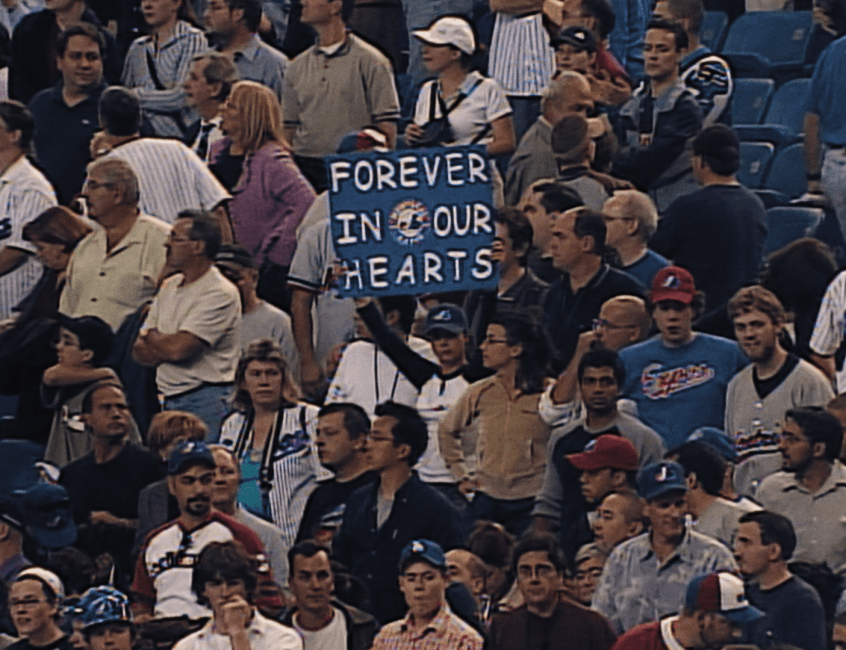
Over twenty years after their last game, people still remember and discuss the legacy of the Expos, hoping that the team can somehow rise from the ashes someday. (The fact that Who Killed the Montreal Expos? is produced in part by MLB suggests that even the league would like to see them back on the field.) As a documentary, Who Killed the Montreal Expos? looks at every possible thing that went wrong, and gives an almost hopeful roadmap and cautionary tale for the future of not just Canada’s other major team, but all franchises. An important part of the learning process is knowing what not to do, and Poisson’s film does an exceptional job of examining leadership failures.
Who Killed the Montreal Expos? is now available to stream on Netflix.
