
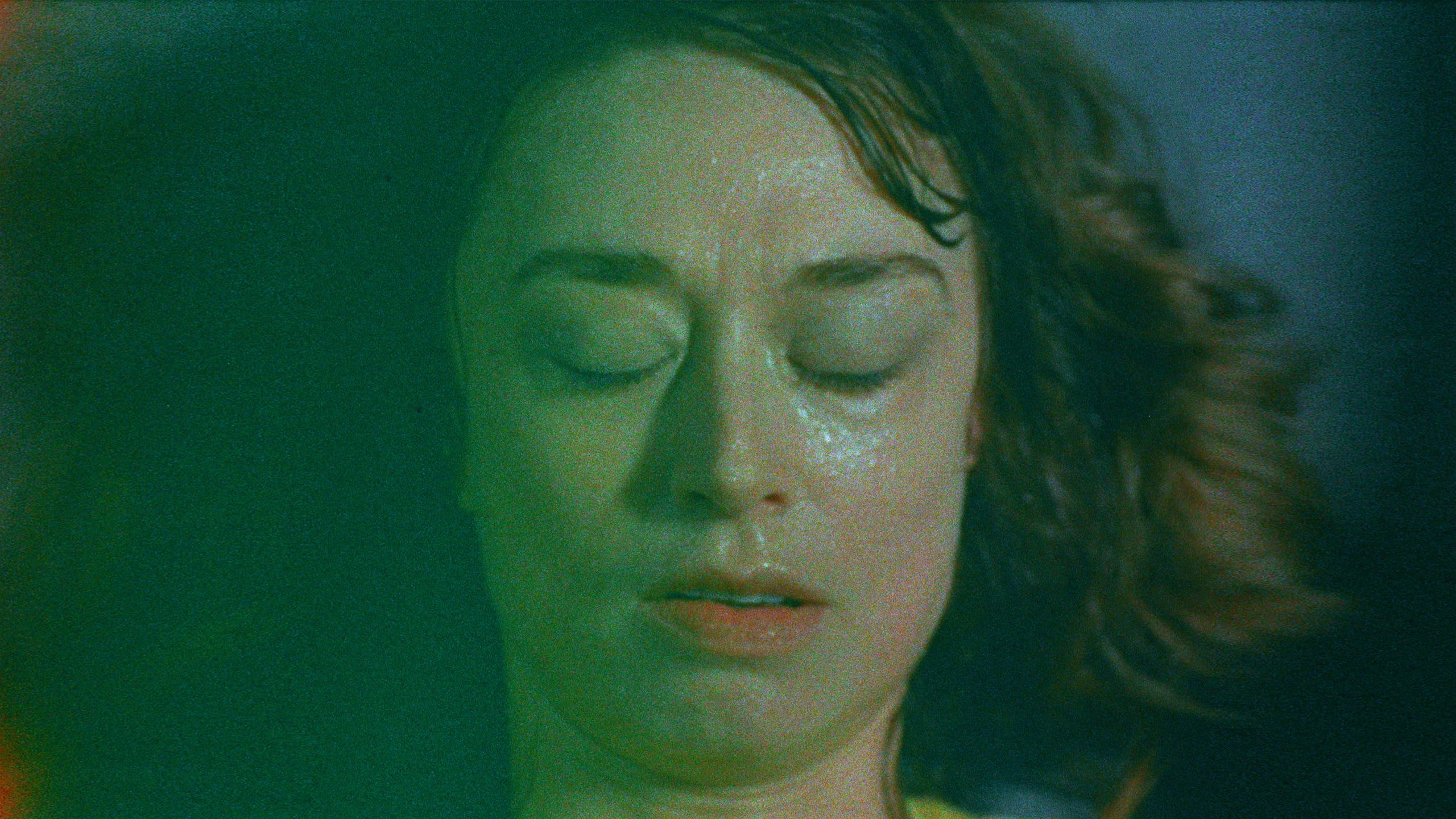
Canadian director, writer, and performer Kelly McCormack understands the feeling of wanting to disappear; not just into a role or a great script ripe for adaptation, but dropping out of society’s sight entirely. And she’s certainly not alone. In this day and age, I think every one of us has entertained thoughts of escaping to someplace quiet and unpopulated, or even a metropolis so large and bustling that you could just blend into the background without much notice or bother. It’s those often unspoken personal feelings that so many of us have that helps to propel her latest directorial effort, How Brief, a collaboration with star and screenwriter Tess Degenstein, which makes its world premiere at the 2026 Sundance Film Festival this week.
How Brief take inspiration from the lives of women who have chosen to remove themselves from struggle and less than ideal lives and forge their own path forward, primarily singer-songwriter Connie Converse. While not a biography of Converse in any way, McCormack and Degenstein (who plays Connie’s onscreen surrogate) envision a hypothetical dinner that the artist has with her loving brother (Gray Powell) and disapproving, very pregnant sister-in-law (Tatiana Maslany) one night in 1962.
Converse (real name Elizabeth Eaton Converse), who would be 101 years old today, was a budding singer-songwriter who unsuccessfully tried to make a name for herself since the 1950s. In 1974, without much warning or fanfare, she packed up her belongings from her house in Ann Arbor, Michigan, left a series goodbye notes for friends and family, and vanished without so much of a trace. There was nothing to suspect foul play or suicide. She simply left of her own free will. When her family hired a detective to try and discover her whereabouts, the investigator told them that Connie had every right as an adult to disappear, and if she didn’t want to be found, it was also her right to live an anonymous life. It wasn’t until 2009 when recordings of Connie’s, released under the album title How Sad, How Lovely, brought her music to a wider, appreciative audience.
McCormack, during a Zoom call conducted a few days before How Brief had its premiere at Sundance, talked about how the legend surrounding Converse’s life and disappearance would be used to form a wider look at other women who have felt similarly compelled to cut ties to a former life and live more anonymously.

“[Tess] was familiar with Connie Converse’s record, and I had heard [it] as well, this one haunting record that was so disarming and contemplative. It sounds something like a time capsule of the 1950s, in a way,” McCormack says about Converse. “There’s a little bit of this sweet Kitchen Sink sound to it. But then if you start listening to the lyrics, and if you start really sitting with it, there’s this kind of slightly off, troubled, and I would say feminist undertone in what she’s saying as a woman, and the things that she was saying at that time period. And I think that [what Tess] was doing, from what she’s told me, was a writing exercise, and she just let the music soak over her, and then this kind of last evening home before the protagonist disappears kind of came out of a really honest place from within the music.”
“I didn’t want to understand why a woman would disappear or theorize some kind of mystery. I was really much more propelled by the question, ‘why not?’ Why wouldn’t a woman want to disappear? The ineffable strangeness of the script and the story of Connie Converse’s music was really the kernel of the process, and something I wanted to maintain. We also wove in poetry of other women who have chosen to engineer their own disappearance. We didn’t have a moral responsibility to bring them back, because they chose to evade us. They chose to disappear. So what I wanted to capture was what it might feel like to choose oblivion over a life that is not built for women in any way. It’s not a biographical gesture towards what happened with Connie Converse and how she disappeared. ”
“In one of the letters Connie sent to her brother right before she disappeared, she says, ‘Let me be if I can. Let me not be if I can’t.’ And those words stuck with me throughout the whole process, because it is a right to want to choose oblivion, or want to reinvent, or disappear, or vanish.”
The notion of “choosing oblivion” is one that McCormack could personally relate to throughout the eight year process of bringing How Brief to the screen. In addition to acting in several high profile films (A Simple Favor, Sorry, Baby), series (A League of Their Own, Letterkenny), and writing and performing in an award winning Canadian film of her own (Sugar Daddy), McCormack was also continuing her schooling, and researching a dark topic that would weight on her as much as her workload.
“When I worked on this piece, I was coming off of the worst year of mental health of my life,” McCormack admits. “I had gone to Oxford to study sexual assaults for an entire year, and it was extremely intense, and it really cost me a lot to study what I was studying. I was doing a master’s dissertation on how men talk about rape when they’re alone with themselves, and homosocial behaviour, and the ‘boys club,’ and I just underestimated how much it would physically render on my body. And it’s not lost on me that that after eight years of us trying to develop this, right after my own urge to disappear and my own yearnings for oblivion and annihilation, I was able to finally make this film that we had been talking about for so long. There was both this lust for glory and a lust for oblivion.”
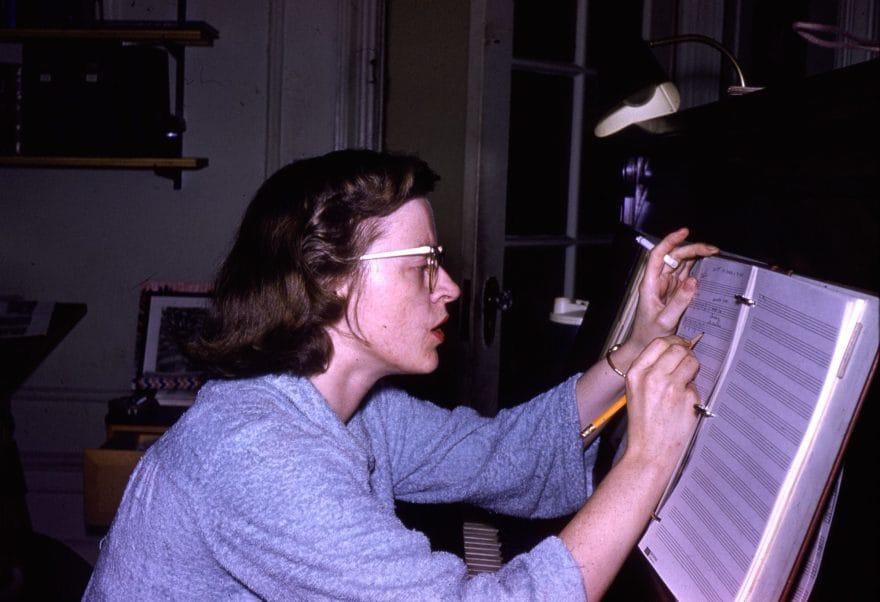
“I really wanted to make Connie’s choice to leave look beautiful, because, especially for women, choosing to abdicate from this world, choosing to distance yourself from all your responsibilities and pleasing people, and not becoming the thing that that for 10,000 years it’s been expected for you to become is this gorgeous act of self determination. And I’m not talking about suicide. I’m talking about the yearning to just, you know, walk into the forest and keep going. And that’s where a lot of the imagery comes in the film. I read the script, and it sat with me for a long time, and then I just started dreaming about it. And so some of the dream sequence stuff and the images of how she might fantastically or metaphysically dream about her own non-existence was very pleasing to me.”
“We don’t really know what happened to Connie, and we don’t know what happened to the other women that we weave the poetry in the film around. Perhaps they reinvented themselves. Perhaps they’re living a different life. And I just think, specifically for women, that’s the most radical act. I really wanted to paint this radicalness with colour, and glory, and radiance. But it did come at a time when I feel like I fully understood that feeling. It was very personal to me, and one of those moments where I thought the universe was just acting [like it had some sort of plan].”
“Everything derives from this feeling of, perhaps, knowing that it’s so natural for a woman to just want to go ‘poof, bye, bye.’ It’s a natural. When I was at a very young age, I was lucky enough to have an uncle who said to me, ‘Once you know it, it’s it’s natural to want to disappear at one point. This might be a referendum that you experience, and, just so you know, it’s completely natural when it happens.’ And it just happened to happen for me right before I made a movie about it. So luckily, I stuck around enough to make it. But it was, it was definitely a painful exorcism.”
The collaboration with Degenstein was something that felt unexpected at first, given that McCormack didn’t know the writer and star very well when she was approached with the idea of directing How Brief. But the two had a familiarity with each other’s work within the Toronto theatre scene that shaped both of their careers and visions as artists. It was that shared love of theatre and the history of the medium that made for a strong partnership between the two.
“We didn’t know each other very well at that point,” McCormack says about Degenstein approaching her about directing How Brief. “I had just seen her in a play called Trout Stanley in Toronto that she did with [director] Danny Paget. I was making theatre myself in Toronto at Storefront Theatre with the likes of [Kat] Sandler, Paget, and Tim Walker so we knew a lot of the same people, but we didn’t know each other that well. I remember watching her dance in that play and being like, ‘Oh, I really want to work with this artist.’ She’s such a noodle. She’s such a strange person.”
“And then she called me while I was at the gym, and she goes, ‘Kelly, I’ve written this film, this sort of strange little piece, and I kind of had this premonition you would direct it.’ And I remember at the time thinking, ‘why me? That’s so strange.’ Because during that period, I was conceiving myself more as just a screenwriter and an actor. And then I said yes, and I was able to marinate with it. I told Tess that I would do it, but I would also do it without compromise.”
“Tess took the the inspiration or the vibe or the music as a starting point, and then, from what she told me, with every scene, she kind of wanted to underline that something bad was going to happen. She comes from theatre. I come from theatre, and I love the way she writes. Like Eugene O’Neill or Tennessee Williams, there’s something kind of disturbed about the whole thing. And when I read the script, I was so troubled, and there was something off, and something I didn’t understand about it, and I wanted to maintain my lack of understanding to the very end of this process.”
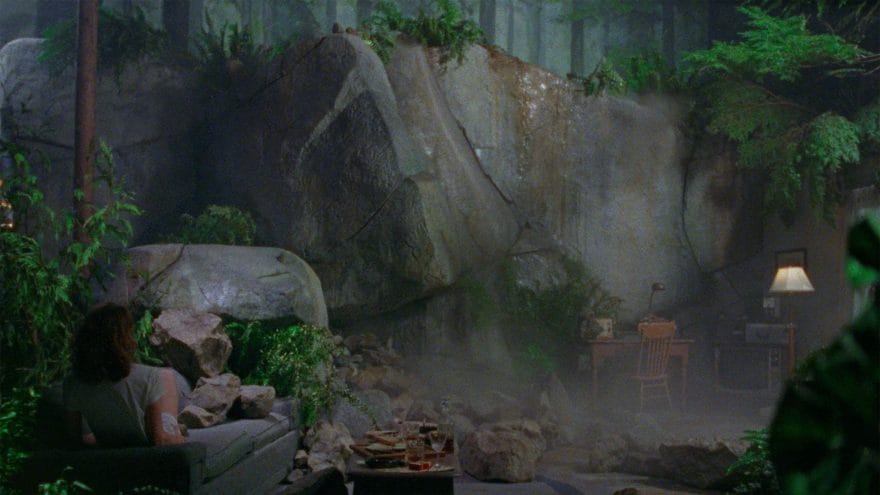
McCormack’s vision for How Brief would look was one that started to form while in post production for Sugar Baby, where she made the decision that this short would be wildly colourful, shot on film, and predominantly staged in long takes; a blending of Kelly and Tess’ stage roots with the kind of cinematic language that McCormack adores.
To hear McCormack talk about her love for melodrama on stage and screen is a delight. By her own admission she has seen Tracy Letts’ August Osage County on Broadway five times, the staging of which can be seen in echoes throughout How Brief. The dialogue is delivered in a fashion akin to Robert Altman and Clifford Odets. Her love for tactile design, blocking, shooting on film stock (which McCormack says she’ll stick to from here on out, if she can), and even the fabric choices of the costuming hearken back to her admiration for the likes of Powell, Pressburger, and Kurosawa. McCormack’s love for the material and themes is matched only by her unbridled passion for theatre and cinema in general.
“I was once told by the difference between a playwright like playwriting and screenwriting, is for a play, you have to understand that this is the most important three hours of these characters lives,” McCormack starts when talking about bridging the gap between the two mediums. “We’re not going to spend all this time and then just watch them eat a sandwich. For whatever reason, in these three hours, we’ve brought these characters into existence, and this is the crucible of their life. And so that melodrama, that intense exorcism, that excavation of self, that’s my pedigree, and that’s the kind of storytelling that I love.”
“You can’t just ask theatre actors perform it like a play and then film it. It just doesn’t work. But I did want long setups that could take up as much as our 16 millimetre mags would allow. There are a series of just long, long takes. I had blocked it, and painted out, and storyboarded every single physical movement that the actors were going to do throughout the scene, so that I could get everything if the camera is just slowly panning for for an entire seven minute take. I wanted to capture the feeling of when you go home for the holidays, and this strange thing happens to you, where it almost feels like the sum of every time you’ve been home is all collapsing in on each other”
“I play with the question of, ‘is this the last night that she comes home?’ Or is this a series of nights that she’s replaying in her mind as she lies in her bed in New York? Is she going through memories? Are we in her interiority? And you get that melodramatic feeling when you return to your childhood home and you might burst into tears or scream. Everything is so close to the skin. And although we don’t find out and I don’t reveal what’s happening, it’s clear that something big is happening, emotionally.”
How Brief is currently screening as part of Short Film Program 4 at the 2026 Sundance Film Festival.
