
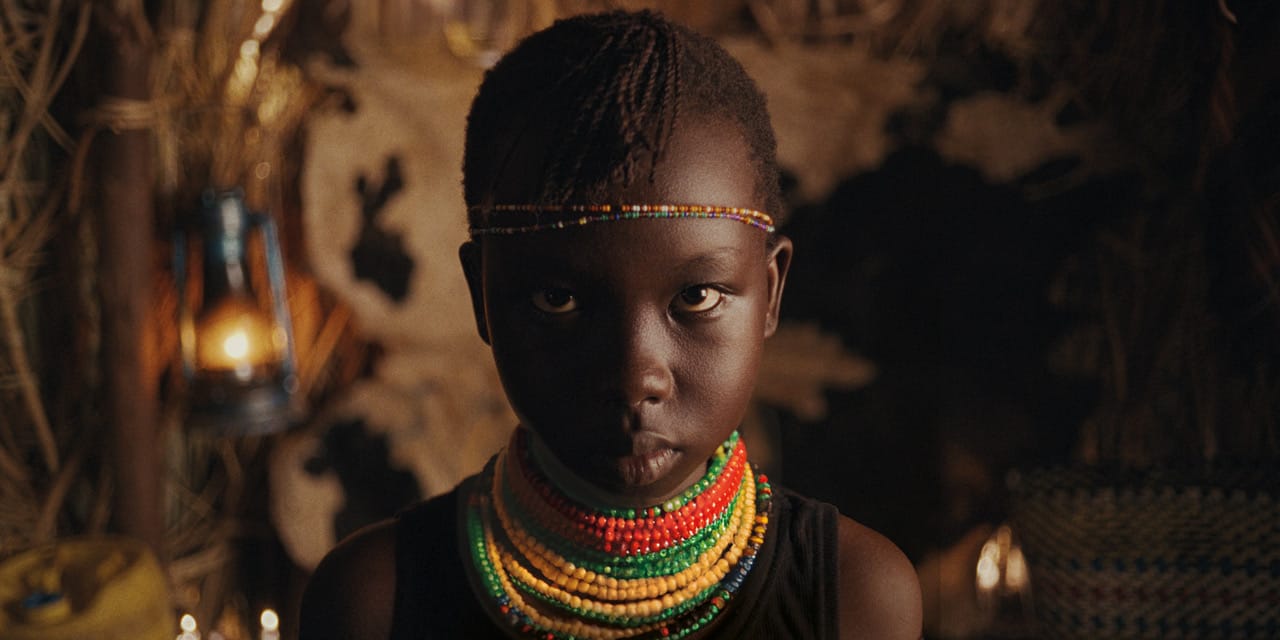
A well intentioned bit of cinematic advocacy with a strong message, the Kenyan film NAWI: Dear Future Me is basic and not much for subtlety, but effective in its ability to draw eyes to a serious subject. That subject is the illegal, but still practiced tradition of child marriage in the country (and around the world). It’s depressing to think that something like that still happens today, and that’s why it’s important to have films like NAWI: Dear Future Me around. It’s a clunky, but earnest work of labour and love that simplistically and effectively conveys a call to global action.
The script from writer Milcah Cherotich is the result of a national writing contest, and part of the funding for NAWI: Dear Future Me comes from NGOs that want to get more eyes and ears on the issue at hand, and to espouse the value of giving kids a good education. The story follows thirteen year old Nawi, played by Michelle Lemuya Ikeny, who lives in the northern village of Turkana with her extended family, including mother Rosemary (Michelle Tiren) and protective brother, Joel (Joel Liwan). A bright young woman, Nawi is on the verge of entering high school, and excited to hear the results of the standardized test she just took. Her hopes are to attend a prestigious high school in one of Kenya’s larger cities and to one day become a surgeon or a scientist. Nawi’s teacher, Madam Christine (Nyokabi Macharia), constantly encourages the girl to follow her dreams, suggesting that she keep all of her thoughts and plans for the future in a journal addressed to her future self, a plot point that accounts for the film’s narration. But around the same time Nawi discovers her high test scores, her traditionalist, hard line, and deeply in debt father, Eree (Benson Ochungo Obiero), has sold her off as a wife to a wealthy older man (Ben Teke) in exchange for livestock. On her wedding day, aided by a flash flood, Nawi is able to escape and go on the run.
The dialogue in NAWI: Dear Future Me is often stilted and over-explanatory, and with four directors credited in bringing the story to the screen (Toby and Kevin Schmutzler, Apuu Mouvine, and Vallentine Chelluget), it feels every bit like a film made by committee; a project that values hitting a number of talking points just as much as it does telling a cohesive narrative. While that can be irritating in some moments where those talking points aren’t being neatly integrated into the story, the result is still a film where the intention, passion, and advocacy are clear and forthright. If the goal of NAWI: Dear Future Me is to bring the issues on its mind to light, the mission is accomplished in suitably dramatic fashion.
Nawi’s overarching dream is to have a bigger voice in the world, but in a rural culture where female children are treated like currency and men take on numerous wives of various ages, there’s a lot of patriarchal traditions that need to be overcome. In the eyes of the men around Nawi, women should be seen and not heard, tend to their duties, and start having babies at a dangerously young age (so young that one in four won’t survive the rigours of childbirth). If something should happen to one of these wives, the likelihood of them receiving proper medical care in a hospital is next to zero, since their husbands are breaking federal laws. Even for some of the younger men in the village, like kind hearted and supportive Joel, it can be a hard life. Joel already gets beaten by Eree for any number of mistakes and misdeeds, but if he aides his sister in escaping, he won’t just be physically harmed. He’ll be banished. And while Nawi is successful in her goal to break away, circumstances and the unforeseen fallout from her actions make it hard for her to stay away from her old village.
The family dynamics in NAWI: Dear Future Me are fascinating and the film’s biggest asset. Each of the leads, particularly young Ikeny (a newcomer who movies with the presence of a seasoned professional), deliver strong, believable performances, moving beyond the dialogue they’re given to find heart and emotional truth in the difficult subject matter. The cinematography from Klaus Kneist and Mwende Renata also adds some sheen and style to the film, gorgeously capturing the natural beauty of Kenya’s cities and rural villages. And for all the points that need addressing, the film still moves at a determined, well measured pace.
NAWI: Dear Future Me has strong sensibilities, is on the right side of history, and the noblest of aims. It makes the most of what the filmmakers have at their disposal. But the simplistic nature of the story and dialogue (which includes references to hyperlocal programs that feel almost like well intentioned bits of product placement) hold the film back from reaching another level of cinematic greatness (which could be why it was both Kenya’s selection for Oscar contention this year and also why it didn’t make the final ballot). It functions primarily as a great means of raising funds for a good cause first and being a solid movie is secondary. It frequently feels like a presentation as much as it does a film. In spite of those misgivings, NAWI: Dear Future Me did educate me about a great deal of things I didn’t know and focuses a spotlight on traditions that need (but somehow refuse) to die; ones that could be robbing the world of some of our brightest budding young minds.
NAWI: Dear Future Me is now playing at Cineplex Yonge and Dundas in Toronto.
