
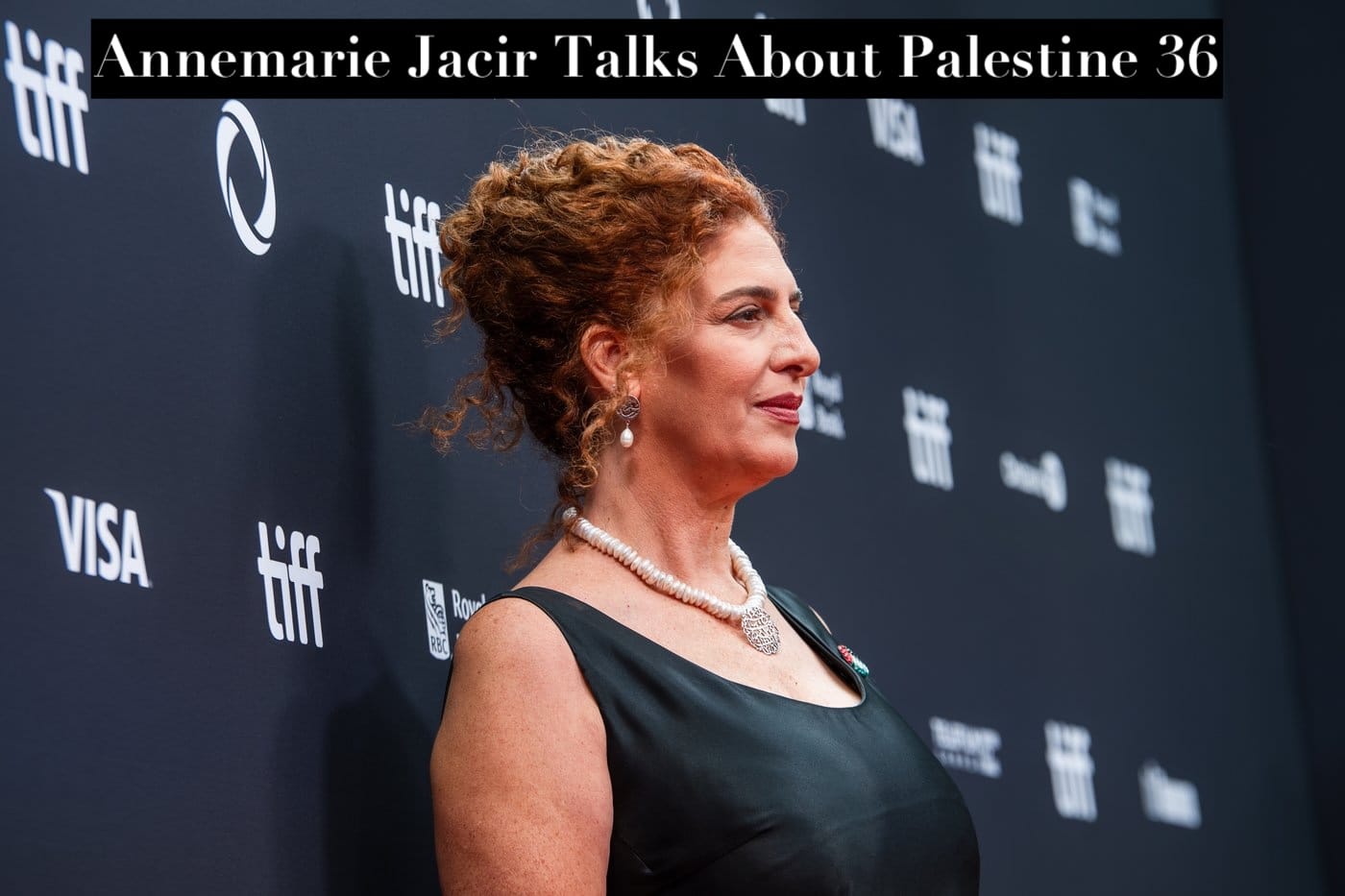
For her latest feature, Palestine 36 (now playing in select cities) writer-director Annemarie Jacir looked to the past in order to produce a film with the future very much at the front of her mind. The Palestinian filmmaker behind the likes of Wajib and Salt of This Sea explores a pivotal time in her homeland’s history, just as it experiences another pivotal and even more violently fraught present.
Palestine 36 is a sprawling historical epic that looks at conflicts between Palestinians and British colonizers in 1936, amid a flood of recently arrived Jewish refugees and the crown’s increasingly militaristic desire to keep control of the region. The Palestinian revolt against the British was largely led by farmers and labourers, setting off not only a revolution of sorts, but a class war within the same country, one largely divided along the lines of race as much as it is economics.
We were able to chat with Jacir from New York (via Zoom) during a recent promotional trip to talk about Palestine 36 (which made its premiere at the 2025 Toronto International Film Festival) and the difficulties of making a film about history amid a challenging present for Palestine.
In our interview, Jacir discusses the significance of the year 1936 in world history, the struggle to move the entire production from Palestine to Jordan in the wake of October 7, the weight the cast and crew felt being away from loved ones at a difficult time, why a Hollywood executive told her she could teach classes on budgeting, creating and casting the film’s complicated main character, divisions between urban and rural attitudes and opinions, and being part of a BBC/BFI funded film that’s critical of British imperialism.
Palestine 36 is now playing in select cities, including in Toronto at TIFF Lightbox and The Plaza Theatre in Calgary.
