

Kunsang Kyirong’s debut feature 100 Sunset is an elusive, entrancing film where mystery is woven into the fabric of the Tibetan immigrant experience in Canada. It’s not a mystery in the traditional sense where the viewer has to fully piece together what happened en route to a big reveal, but one where everything is made to feel somehow off or otherworldly. 100 Sunset is a film with its feet firmly on the ground and rooted in reality, but it somehow feels as if its characters are floating and wandering around, looking for a sense of meaning in their lives. There’s an otherness to Kyirong’s work that’s unshakable, and the film points to a major arrival in Canadian cinema.
The title refers to an apartment complex in Toronto’s Parkdale neighbourhood, located in a section of the city known as Little Tibet. Here lives Kunsel (Tenzia Kunsel), a seemingly bored and distant young woman who gets a rush out of stealing things from people’s unattended purses, coats, and bags. One of her most prized finds is a camcorder that becomes a viewfinder on the world, albeit at the expense of recording over an older gentleman’s memories of being back home in Tibet. She makes a minor living as a babysitter, but doesn’t have any real friends. Most of the people in her community are either very old or very young, which makes the arrival of new neighbour Passang (Sonam Choekyi) so exciting. Closer in age to Kunsel, Passang is married to a man about twenty years older than her and it isn’t an adoring partnership. Kunsel, who doesn’t talk very much, starts bonding with Passang on lengthy day trips outside of the neighbourhood.
Eventually, 100 Sunset will use this budding friendship, and possibly unspoken romantic attraction, as the jumping off point for a larger grift, one tied to Kunsel’s family, which is connected to a traditional, but somewhat convoluted system of money lending. But 100 Sunset isn’t a thriller or heist drama in any way, despite capturing the feeling of being trapped by circumstance with few options outside the neighbourhood. Kunsel watches and observes people in a state of flux everyday; wanting to maintain their Tibetan culture, but still confined to a set number of spaces where that can be celebrated and community can be cultivated. These are people who have an identity, but are distanced from the country that provided it; proud but insular, which understandably feeds into Kunsel and Passang’s feelings of restlessness.
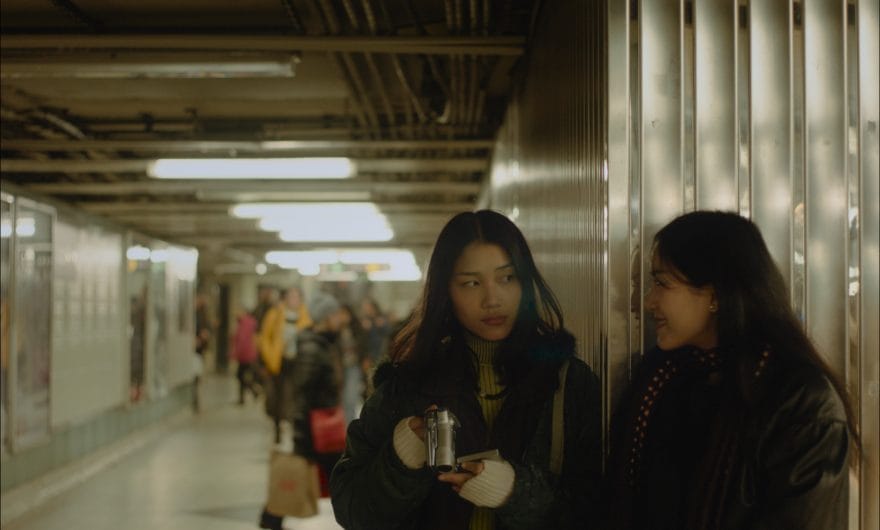
Kyirong has a great feel for the city of Toronto and how it must look from an outsider’s perspective. Through the gorgeous cinematography of Nikolay Michaylov (Measures for a Funeral, Matt and Mara), everyday buildings, subway stations, parks, and convenience stores take on an almost alien appearance. They seem normal to people who’ve lived in Toronto for a long time, but through Kunsel’s perspective (both via the camcorder and implied by the film), things are always somewhat off. There’s great use of both modern and low-fi digital filmmaking techniques throughout 100 Sunset that recalls the work of master cinematographer Christopher Doyle, finding natural beauty in sometimes unnatural spaces.
To add to the naturalism, Kyirong has cast non-professional actors in most of the key roles here, led confidently by Kunsel. 100 Sunset only shows events that Kunsel has witnessed, either directly or from afar with her new camera, meaning the perspective is deliberately narrow. The viewer only knows what she knows, and the film can’t/won’t speak for anyone else around her. She takes everything in, observes, and absorbs what she hears, almost like Clive Owen’s titular character in British filmmaker Mike Hodges’ Croupier, especially in scenes where Kunsel deals out chips to folks in a local gambling den. It’s not that Kunsel is underestimated by those around her, but rather that she’s barely noticed at all. By focusing on a character that kind of blends into the scenery around her, Kyirong is able to adopt a fresh and original perspective that nicely carries the elliptical story.
100 Sunset builds to a mysterious conclusion, one that doesn’t spell everything out for the viewer, nor does it need to; something that almost hits a reset button on the lives of the characters. Like life, when one chapter ends, a new one begins with echoes of the past looming large. People hang onto the things they remember most, but in many cases would be better served by trying to let things go as much as possible. The film ends at a crossroads, which might be unsatisfactory for some from a more traditional dramatic standpoint, but feels earned here because of Kyirong’s attention to fine detail. It’s a unique work and one that benefits from repeat viewing and reflection. I can’t wait to see what Kyirong does next.
100 Sunset screens at Revue Cinema in Toronto on May 1, 3, & 6, ByTowne Cinema in Ottawa on May 6, The Cinematheque in Vancouver on May 13, 15, & 28, and June 10 at Dave Barber Cinematheque in Winnipeg. It makes its U.S. premiere at the Museum of the Moving Image in New York City on Saturday, April 25.
