
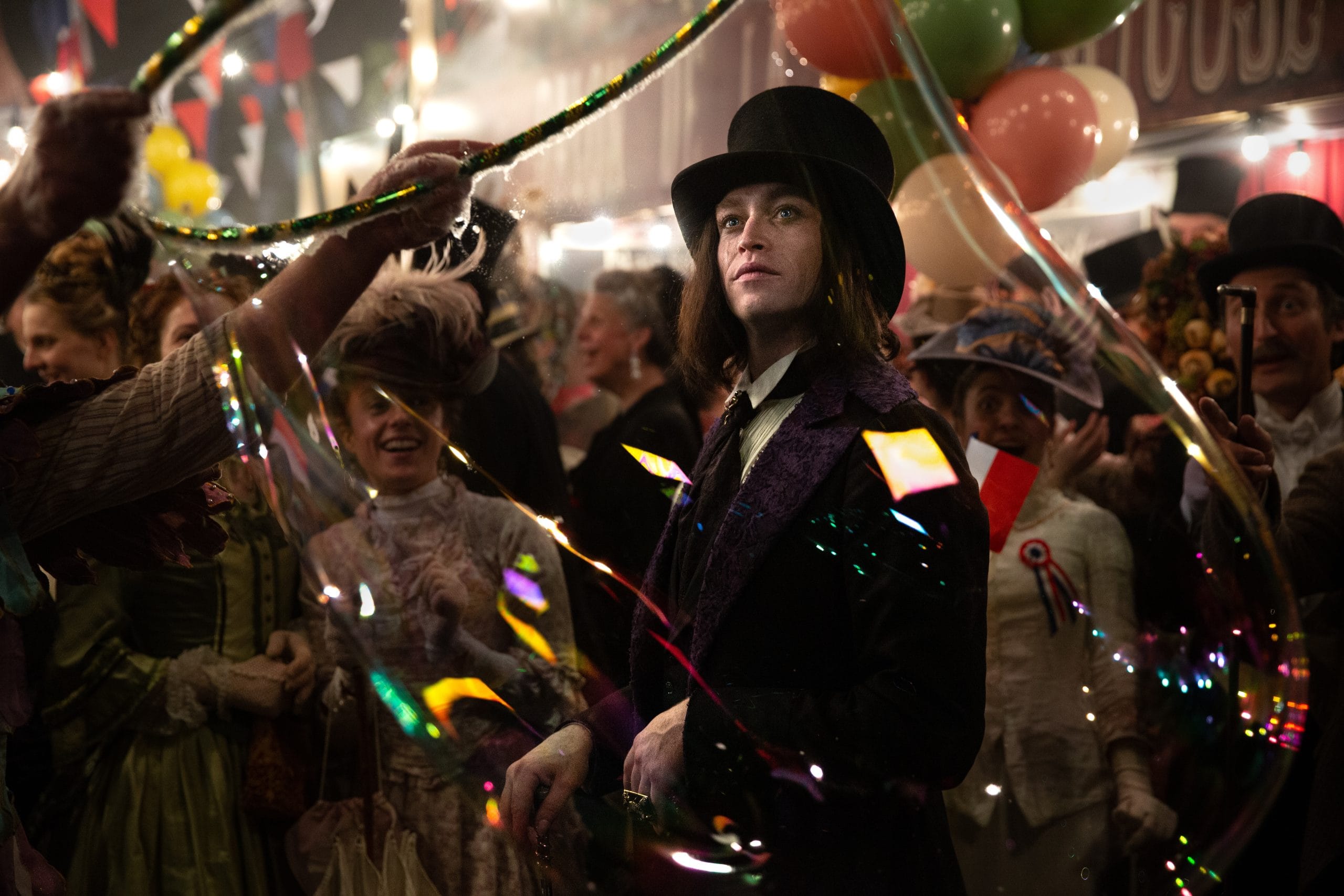
It’s not that difficult to make a Dracula movie. It’s exceptionally difficult to make a great one. The material contained within Bram Stoker’s legendary novel is both malleable and solid. The tortured romance at its heart, the epic scope, the historical significance, and overall eeriness of Stoker’s material provides a solid base for any filmmaker. But the more fantastical elements of the story and vampiric mythology are flexible, with so many things that audiences know about bloodsuckers actually coming from other interpretations of the character, not from Stoker’s source. You can be as faithful or revisionary as you want with Dracula and still come up with something captivating.
But that’s where ingenuity and craft come into play, and what brings us to the curious case of controversial French blockbuster filmmaker Luc Besson’s take on Dracula (which was released in his home country this past summer, but is only now making its way to the US and Canada). Across his career, Besson (Leon: The Professional, The Fifth Element) has proven to be adept at directing large scale action and spectacle, but as it turns out, gothic horror isn’t his strong suit. While Besson brings a lot of grandeur and style to Dracula, both for better and for worse, it’s the script, pacing, and sometimes childish choices that doom this enterprise. It’s not the least effective take on Stoker’s classic, and it certainly isn’t Besson’s worst film, but Dracula makes viewers wonder why anyone needed or wanted this thing to happen when there are so many better takes out there.
Writer-director Besson’s story direction will already be familiar to many, even with the creative liberties.15th Century Eastern European Prince Vlad II (Caleb Landry Jones, in his second collaboration with Besson) turns his back on God and enters into a dark bargain following the brutal death of his beloved Elisabeta (Zoë Bleu), becoming an immortal ghoul who only retains his youthful looks through the drinking of blood. Although he has essentially declared war on God in his mind, Count Dracula holds fast to the belief that Elisabeta was a pure soul who might be reincarnated at some point in the future. 400 years later, a decrepit and depressed Vlad learns via a misfortunate solicitor (Ewens Abid) of such a woman in Paris. Awaiting Vlad’s return to Paris are a determined priest (Christoph Waltz) and doctor (Guillaume de Tonquédec) who seek to put an end to his reign of terror, hoping to turn all of his freshly turned vampire victims back to their human form.
Eternal love, a scourge against God, pretty standard Dracula stuff. And for the first third or so, Besson keeps to a straightforward path. The set-up, which tends towards sympathy for the titular monster, is in line with genre expectations. There’s an operatic level of tragedy matched by Besson’s erratic visual stylings. (This man sure loves three-sixties, slow motion, cannons exploding, and highly textured overhead shots.) But not much about this Dracula is clicking beyond the basics. Outside of making a captured female vampire (Matilda de Angelis) camp things up and purr like a sex kitten when fed a few drops of blood, there’s not much of an authorial stamp on Besson’s film during the earlygoing. In terms of set design, costuming, make-up, cinematography, and scoring (courtesy of Danny Elfman, who continues the hot streak he has been on with this and Send Help), Dracula is polished, but in service of nothing special.
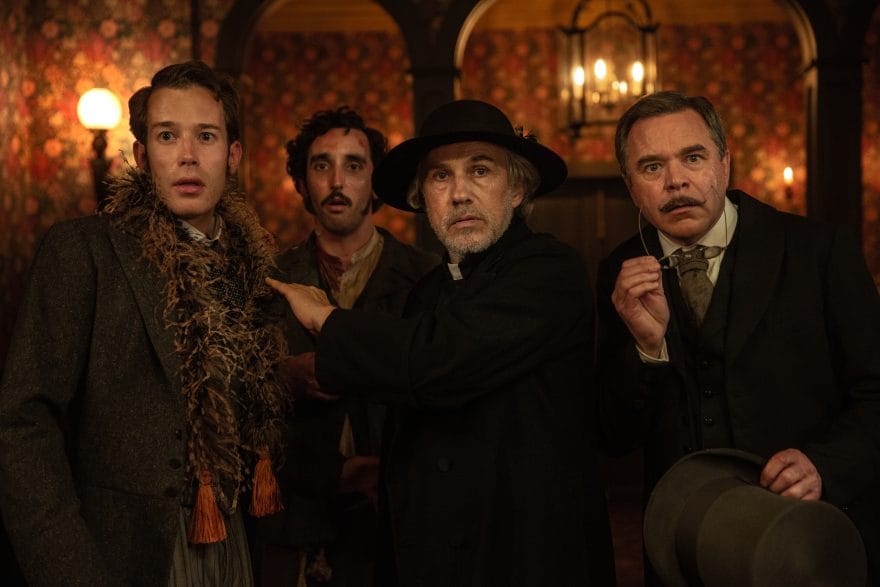
But around the time Besson arrives at the aging Vlad’s Romanian palace and he’s surrounded by impish, precocious CGI gargoyle helpers that function like the Minions, things start to go off the rails, and one wishes that the director didn’t finally pull out the stamp pad. It’s apparent that Besson’s visionary tendencies are better suited for campy science fiction than gothic horror. It’s clear that Besson vastly prefers the love story element to Dracula (with plenty of material to read into with regard to Besson’s personal life), but outside of some violent flourishes here and there, horror holds no interest for the filmmaker. He would much rather be doing a whimsical dark comedy than a tortured love story.
Besson can never find the dividing line between camp, romance, and terror, so the entirety of his Dracula feels off balance. While Jones and Waltz are capable of making a line of purposefully overwrought dialogue drip with some irony, most of Besson’s cheeky jokes land in oceans of flop sweat. The pacing and structure of Dracula is terrible, with flashbacks that only serve to restate things the viewer already knows and an internal logic that never fully takes root, leading to a few moments of confusion that the viewer has to acclimate to in order to plow forward. There are some set piece diversions that sound good on paper (Vlad travelling the world to concoct an irresistible perfume, or Drac seducing an entire nunnery), but in execution they are laughably silly, and these aren’t the moments when Besson would like the audience to be chortling. The things that should be captivating are dumb, and the bits that could use some updating are shockingly untouched.
As the film goes on, Besson half-heartedly tries to spice things up by employing some annoying, distracting stylistic flourishes to make Dracula a bit more in line with his other films. But stutter edits and a bizarrely shot and edited flashback sequence (which takes place only a week before the story is being shared, but is filmed in the kind of scratchy, jittery style that suggests it’s some ancient text. And also, why does THIS bit look like an illogical, modernist bit of hackwork while the rest of the movie doesn’t?) all feel out of place in this world. Try as he might, Besson’s film fails at being scary, sexy, romantic, or campy, which makes his auteurist leanings all the more baffling to behold. If anything, the film ends up coming across as more corny than campy or earnest, especially during the unintentionally hilarious final sequence.
But why try to put such a stamp on any of this when so much of Besson’s Dracula is derivative in the extreme? This Dracula isn’t just Besson’s revisionist take on the source novel, but on no less than half a dozen other adaptations and other movies thrown in for good measure. I’m sure that Besson’s cribbing from some of the greats is intentional homage, but part of me also believes that it’s because he has so little genuine investment beyond the bits and pieces that interest him. In that respect, Besson’s movie is a kindred spirit to Francis Ford Coppola’s Bram Stoker’s Dracula: a safe retreat to big budget studio filmmaking with familiar source material following a string of box office duds. The difference between those two projects, however, is that Coppola’s version was done with a lot of forethought, ingenuity, and vision. Besson’s is just some slapped together nonsense bereft of original ideas.
Dracula opens in North American theatres on Friday, February 6, 2026.
