
The DJI Osmo Pocket 4 looks very familiar, but the stabilized camera offers a big upgrade, packed with new features, hardware improvements, and jaw-dropping slow motion.
The Pocket 4 features a new 1-inch CMOS sensor that captures up to 4k/240fps with 2x lossless zoom and a solid digital zoom. With a dynamic range covering 14 stops, and offering a pro 10-bit D-Log colour profile, it’s versatile, and the camera also captures better details at night and in dimly lit spaces.
Alongside the improved joystick, dedicated zoom button, and a customizable button, the Pocket 4 also includes 107 GB of built-in storage, for those emergencies when a card fails, or you run out of card space.
Overall, the camera system is a step up from the Pocket 3, and it makes a serious case for upgrading. The camera makes it easy to capture in a wide range of situations, and it’s made for creators who need an every day, go-to device.
Read on for my full review, my tips on how to decide whether it’s a good fit for you, and what to expect. Watch the full video review above.
Pricing and combos
The DJI Osmo Pocket 4 retails for $649 Canadian, or $477 USD; and $829 Canadian or $609 USD for the Creator Combo. The DJI store also offers the Shoot More Combo with the battery handle included for $754 USD.
Design and build quality
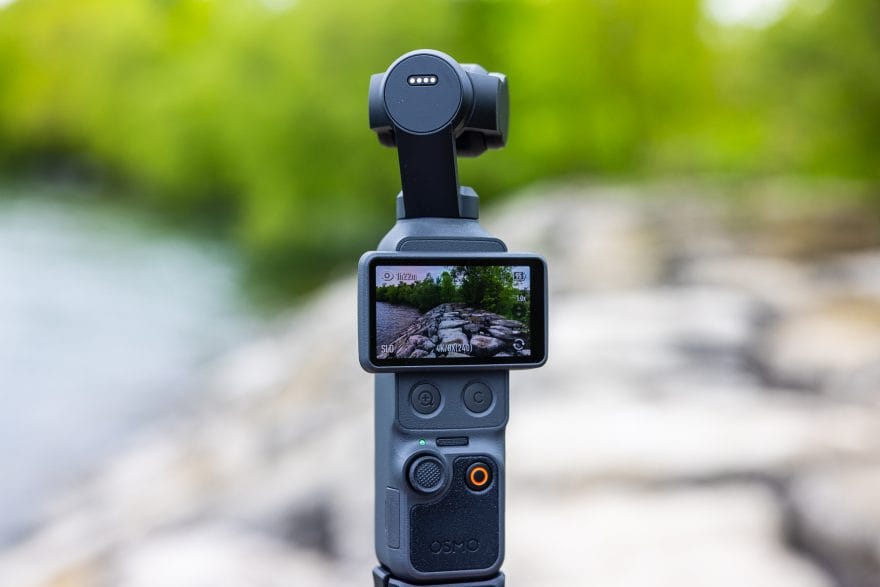
The Pocket 4 design is nearly identical to the Pocket 3, but the new Pocket weighs a little more, at 190.5 grams, over 179 grams for the previous model. Considering the longer battery life, and included storage space, DJI has done some impressive work to keep the overall size the same, and the weight similar.
Build quality is once again excellent, and it’s hard to imagine a better design for the camera, gimbal, and screen. The materials are sturdy, the texture is nice, it’s easy to grip, and the accessories fit together well.
As mentioned, DJI has improved the joystick, making it easier to control, and when capturing in landscape mode, located under the screen, there is a dedicate zoom button alongside a customizable button for anything you want to assign. This is a very nice touch, and the quick zoom in particular is incredibly useful.
While the previous camera came with a protective cover that was an excellent option on-the-go, DJI has opted this time for something a little smaller and lighter. The Osmo Pocket 4 comes with a gimbal clamp and a small carrying pouch. The clamp locks the gimbal in place, helping protect the camera, and the pouch otherwise keeps the screen and the body clean and safe.
The gimbal clamp magnetically attaches to the camera arm, immobilizing the gimbal and preventing the device from turning on when it’s attached. On the flip side though, the clamp doesn’t protect the device as well as the protective cover did for the Pocket 3. The pouch is a good, light option for carrying the Pocket 4 though, and there’s just enough space inside for a small accessory or two.
What’s inside the Creator Combo
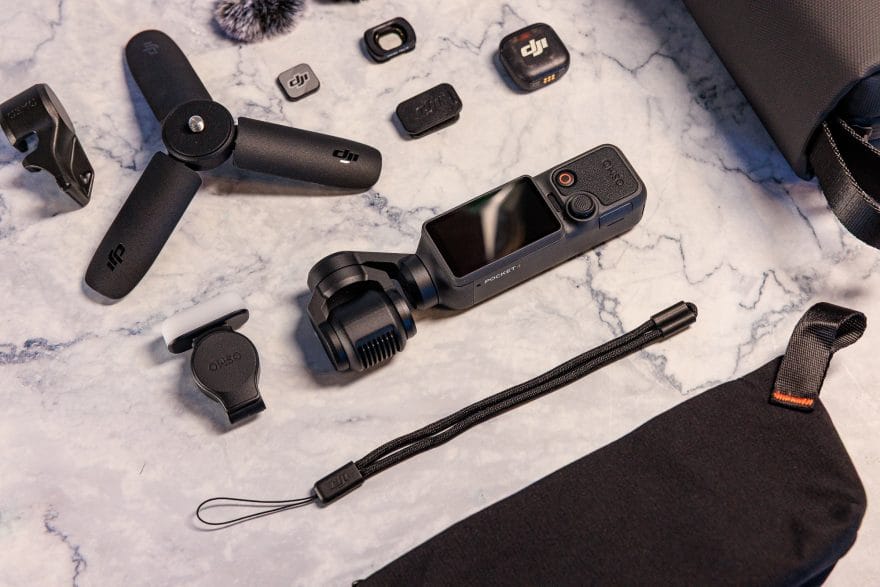
The Pocket 4 Creator Combo is also very similar to what came with the Pocket 3, with one main exception.
Previously, the Pocket 3 kit included a battery handle, but the new model includes the Osmo Pocket 4 fill light instead. The fill light attaches to the back of the gimbal and offers adjustable lighting for dark conditions, and for vloggers it’s definitely a nice added feature.
The light runs off of the camera battery, so it will reduce recording time, but it doesn’t use a lot of battery since it’s fairly small and light. As an estimate, I’d say it reduces battery life by less than 10% at most, and in dark conditions it adds a good amount of light for capturing up-close visuals, like food, people, or products.
Creators can still purchase an extra battery handle for the Pocket 4, but I will say that the battery life is very good, especially compared to the Pocket 3, so it depends on your needs. More on battery life below.
Inside the creator combo you’ll also get the 1/4″ thread handle, mini tripod, the carrying pouch and bag, wide-angle lens, and DJI Mic 3 transmitter with USB-C cables for charging the camera and the mic. Once again for vloggers, the DJI Mic is a valuable extra.
If you absolutely need a combo with the battery handle included and don’t mind paying a little more, the Shoot More or Vlog More kits include the battery handle.
Battery life and charging
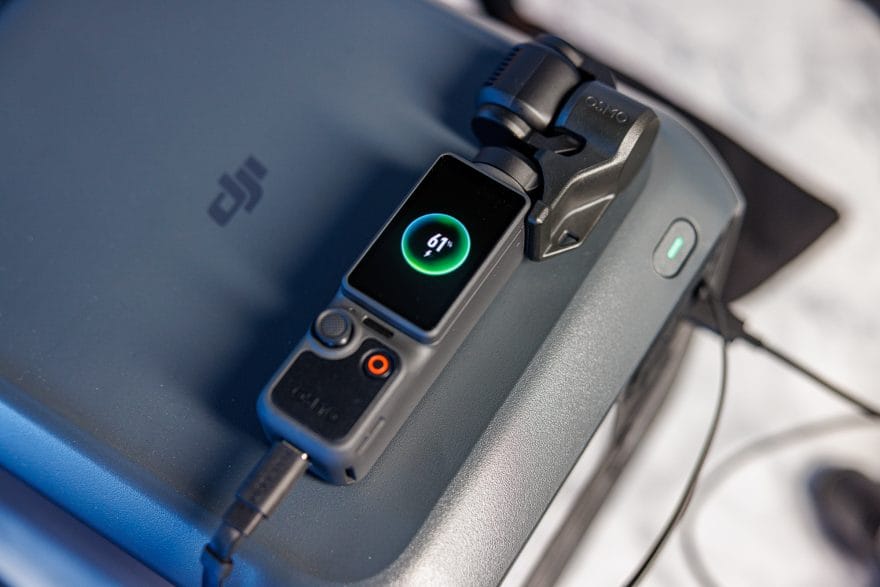
The Pocket 4 features a 1,545 mAh battery that DJI suggests lasts up to 240 minutes, or 4 hours, when filming at 1080p and 24 fps, which is a big improvement over the previous models. From my tests I would say those numbers are accurate.
You’ll get a little less time shooting in 4k and at faster frames. At 4K/30fps, you can expect to get a bit over 3 hours, and 4k/60fps will yield around 2 hours and 20 minutes. Those are estimates and it will depend on the features you use, but it’s enough time to capture a lot of footage and photos.
The battery handle is an option to add time for longer shooting days, but I would also suggest investing in a good, quality external battery to charge with on-the-go.
Charging takes just 18 minutes to reach 80%, and 32 minutes for 100%, if you’re using a 65W charger. Regular charging can be a bit slow, so I recommend buying a quality fast charger, or fast charging powerbank. DJI offers a charger separately for faster charging.
Capturing photos, videos, and zoom quality

The list of new and upgraded features is impressive. The Pocket 4 includes so many upgrades that it’s tough to talk about them all, but I really appreciate a few key options.
First off, you can take sharp, vibrant photos with the new SuperPhoto mode, capturing 37 MP with excellent details, colour, and sharpness. It’s a big improvement over the Pocket 3.
The 10-bit D-Log professional mode is a major improvement, so you can properly colour correcting high-contrast and colourful scenes. This is a big deal for professional cinematographers who want more flexibility shooting.
Generally speaking, the new 1‑Inch sensor also captures better details with richer colours. One of my biggest complaints I had with the Pocket 3 was correcting the colours, but the Pocket 4 footage comes out looking excellent without editing.
The new 4K low-light video mode for night scenes actually surprised me. Capturing footage in the city, I could see stars in the sky that I couldn’t really make out otherwise. City lights cause some issues, with an overbearing glow in some shots, and the footage can’t compete with a regular camera, but it’s a lot better than most phones and especially the older Osmo Pocket models.
Capturing at 4k delivers sharp, gorgeous footage at both 2x and even 4x digital zoom. Watch my video above for a few great examples where the initial footage is at 4x zoom, and it’s clearly the best looking shot.
Tracking, slow motion, and audio
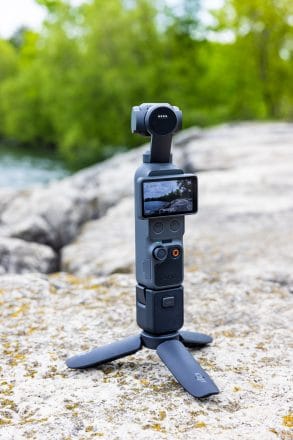
Other features include slow-shutter video mode for enhancing the look of motion in your footage, and ActiveTrack 7.0 with Registered Subject Priority lets you prioritize saved faces alongside improvements to autofocus to makes capturing footage much smarter.
But my favourite feature is definitely slow motion. Compared to shooting at 30fps, the Pocket 4 can capture 240fps, or 8x slower, and it’s smooth, bright, and buttery, even in dim lighting. You can capture some really interesting scenes with slow motion, and the camera also captures a separate audio track so you can use it in your content.
Alongside hyperlapse, timelapse, and motionlapse, it’s a proper suite of content capturing features for any scene.
Finally, DJI included film tones with the camera, and they offer quick, practical looks to compliment your footage. CC Film is cool and clean for natural tones, while NC Film replicates negative style film. Pastel is bright and rosy, Warm is rich and a bit oversaturated. Movie is naturally cinematic, with depth, while Retro is nostalgic and classic. You really have to play with them to get a feel for the look and styles, but the tones are a fun addition to play with, especially for anyone who doesn’t want to spend a long time editing colour.
Lastly, the with new spatial audio audio zoom captures very good sound without mic. Environment conditions will obviously impact the sound quality, but it’s a good backup solution if you’re recording without an external mic. OsmoAudio is also interesting and lets you connect up to two DJI mics for 4‑channel audio, saving both the mic audio and Pocket 4 audio.
Should you buy the Pocket 4?
I think the simple answer is yes. The DJI Osmo Pocket 4 is a serious upgrade from the Pocket 3, and if you’ve been considering buying a DJI Osmo Pocket for a while, this is a great option.
The base price is great, and the combos are reasonable, you get great battery life, with high quality footage that works in a wide range of circumstances, and there’s a robust ecosystem of accessories to use.
If you’re really looking for a deal and you don’t need the slow motion feature, I think the reduced price right now for the Pocket 3 makes it a good time to buy. But for anyone looking for a camera that will last them a while, and give them robust features, the Pocket 4 is ideal.
I’m also a big fan of DJI’s app, and that’s not something I can say about some of the competitors out there. When the app experience can be key, I’d recommend DJI first.
Finally, I will say that DJI will be releasing the Osmo Pocket 4P very soon. If you’re looking for the top pro features, and don’t mind paying a little more, the Pocket 4P announcement is on July 30, 2026. Check back for my review then, but I can still say that the Pocket 4 is great even next to the new pro camera. The difference is whether you want a few more pro features for a little more money.
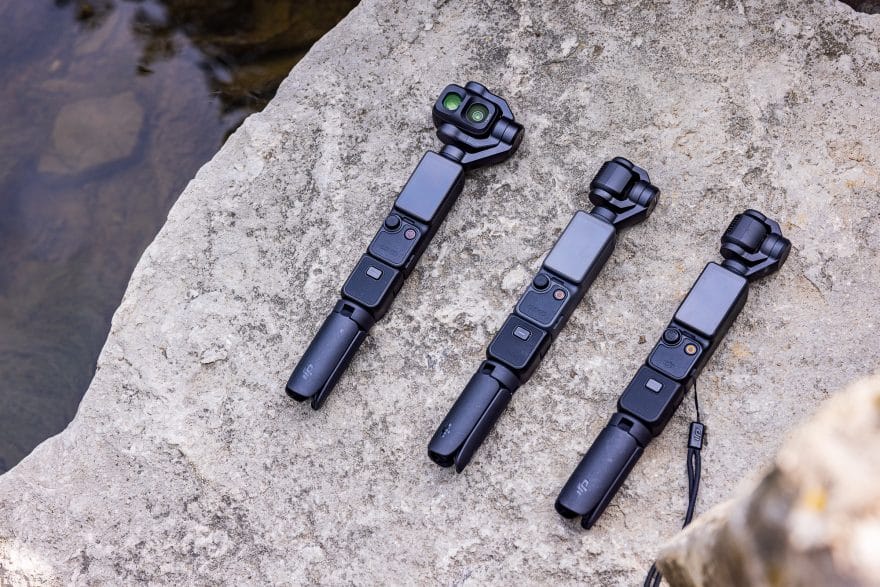
All photos by W. Andrew Powell, The GATE.
