
The ultimate Irish vacation is waiting on a road trip from Dublin to Belfast that’s rich with history, beautiful coastal views, emerald green vistas, and great food and drink.
One moment you’re raising a pint at the Guinness Storehouse, followed by a trip through history at Newgrange. Then you’ll walk Carlingford’s medieval streets, step behind the scenes at the Game of Thrones Studio Tour, relive the Titanic’s iconic story in Belfast, and finish with an epic drive to the legendary Giant’s Causeway.
This travel guide covers everything along the way, with things to do, driving direction, suggestions, and much more, with recommendations on how you can plan for either an 8 day, or up to 11 day road trip. Read on for my favourite moments and everything that I did on this amazing Irish adventure.
Ready to see more? Watch the full travel video covering every stop on this trip.
Quick links: How Many Nights | Dublin | Car Rental | Slane Distillery | Newgrange | Carlingford | Game of Thrones Studio | Royal Hillsborough | Belfast | Causeway Coastal Route | Map
An introduction to planning your Dublin to Belfast road trip
Ireland is an absolutely incredible country. It’s filled with deep history and culture, so much heart in everything from the music, to the stories you’ll hear. And whether you’re a little Irish, or just want to explore this beautiful country, a road trip is the best way to see and do everything.
This itinerary covers seven nights and eight days, from the time that you land in Dublin. However, if you have the time, you can expand the trip to cover 11 days for the best all-round experience, particularly in Northern Ireland.
Each section below features details on driving, suggested accommodations, and things to do at each stop. It’s a choose-your-own adventure though, so you can pick the things that most interest you, and plan accordingly.
For this trip, I recommend flying in and out of Dublin, since the Dublin airport has the best connectivity for direct flights around the world.
I recommend visiting between March and the end of October, which is generally the best weather and temperatures across the country. Just keep in mind that summer is the busiest season to visit and you may need to book hotels and activities well in advance. If you want a slightly quieter time in the country, I recommend visiting in March, April, May, or later in September, or early October. Just keep in mind that some activities may have a different schedule outside of summer months.
Driving in Ireland is similar to the rest of the United Kingdom, with the steering wheel on the right side of the car, and cars driving on the left side of the road. In the Republic of Ireland, including Dublin, speed limits and road signs are in kilometres, while speed limits and signs in Northern Ireland are in miles.
In the Republic of Ireland, the currency is Euros (EUR, €), while Northern Ireland uses the British Pound (GBP, £). However you can easily use credit cards in both regions. I do recommend having some currency on hand generally for random stores, shops, and tips that may not accept credit cards.
Electric plugs in Ireland use three pronged 230v/50hz plugs, so it’s important to bring an adapter for anything that you need to plug in, like phone chargers. Amazon has a large assortment of Irish power adapters, if you need to buy one.
For more tips on visiting Ireland and things you should know, check Tourism Ireland’s Tips.
How many nights to plan for your road trip
When you’re planning this trip, you have a few options to pick the perfect number of nights to properly explore this route.
Option 1: 7 nights, 8 days
For the shorter option, I recommend: 3 nights in Dublin, 1 night in Carlingford, 1 night in Royal Hillsborough, and 2 nights in Belfast. However, you can easily adapt that to give yourself more time in Belfast instead. Keep in mind that the last day you will check out of your last hotel and drive back to the airport in Dublin.
Option 2: 10 nights, 11 days
If you want more time on this trip, particularly to explore Northern Ireland’s Causeway Coastal Route, I recommend: 3 nights in Dublin, 1 night in Carlingford, 1 night in Royal Hillsborough, 3 nights in Belfast, and 2 nights along the Causeway Coastal Route.
Dublin
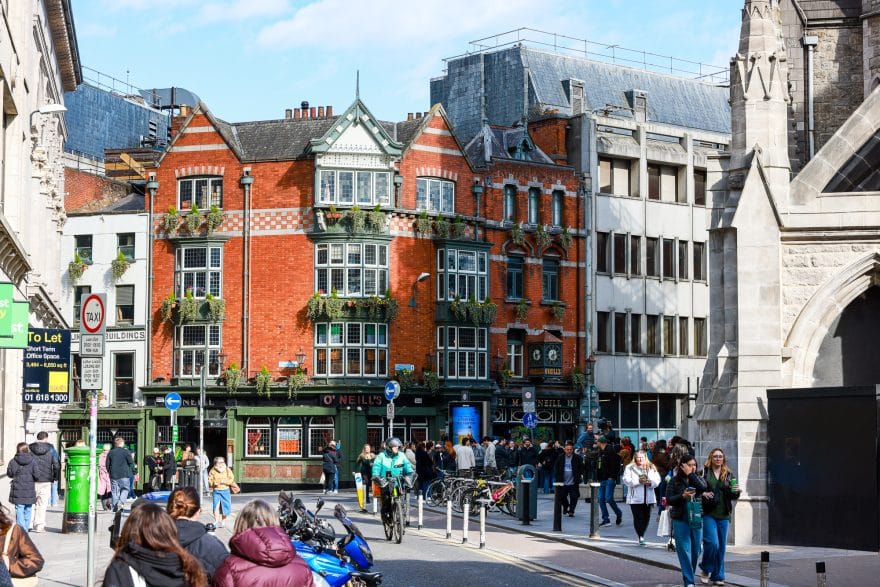
I flew into Dublin with Aer Lingus, and from Canada the flights generally arrive quite early in the morning. From the airport, you can rent a car to start your trip, but I recommend that you don’t need one in the city centre. A taxi from the airport to the city will cost around €25 to €35 or you can take Dublin Express or another bus service into the city for around €10.
Hotels: Dublin has dozens of excellent hotels, but a few of the top picks include The Grafton Hotel, The Fitzwilliam Hotel, Temple Bar Hotel Dublin, and the one I stayed at, the charming Buswells Hotel. If you stay at a hotel in Dublin city centre, you won’t need a car rental to explore the best of the city.
I recommend staying in Dublin for three nights, giving you time to adjust to the time zone (particularly if you arrive from North America), and time to explore some of the best in the city.
Activities: Dublin is an incredible city, with a lot of history, culture, character, and things to do. You definitely should check out a couple of bars, if you enjoy a pint and want to hear some live music. The Temple Bar Pub is a popular tourist attraction, but I would recommend trying places like Mulligan’s, The Old Storehouse, and The Stags Head.
There are quite a few bars and pubs that have live music, but if you want dinner and a show, the Irish House Party is a great experience with an Irish dancer and classic music.
Anyone who loves beer should also visit the Guinness Storehouse for a pint and a tour. One of the city’s top attractions, the experience doesn’t disappoint, and when you book your ticket you can book a tour, a tasting, and even the chance to learn how to pour a proper Guinness pint.
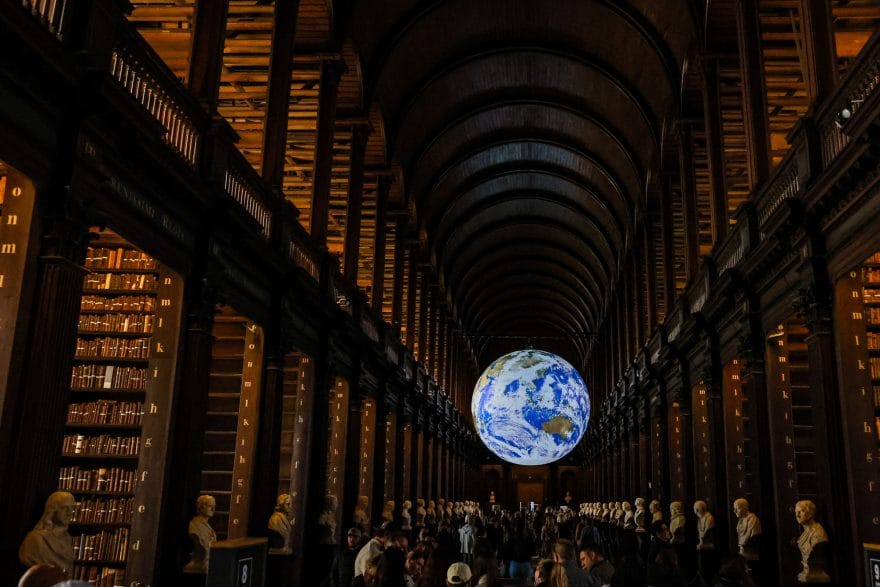
If you want to learn history and see the sights, consider a walking tour like Pat Liddy’s Walking Tours, or a student tour of Trinity College Dublin. On the Trinity campus you can also book a ticket to see the famed Old Library, the Long Room, and the Book of Kells, and then step inside the immersive Book of Kells Experience.
For the ultimate experience in the city, plan your trip to Dublin around St. Patrick’s Day and enjoy the parade, and all of the events, including Céilí Mór.
Art lovers will enjoy a visit to the National Gallery of Ireland and Hugh Lane Gallery, two incredible art galleries that feature Irish and international artists. Inside Hugh Lane Gallery, alongside their collection of impressionist art you can also see Francis Bacon’s preserved studio.
For meals, there are a number of excellent restaurants, but if you want to see something unique The Church Restaurant is an impressive space inside a former church, complete with a pipe organ, and they have live music every night after 6:30 PM.
Pick up your car rental
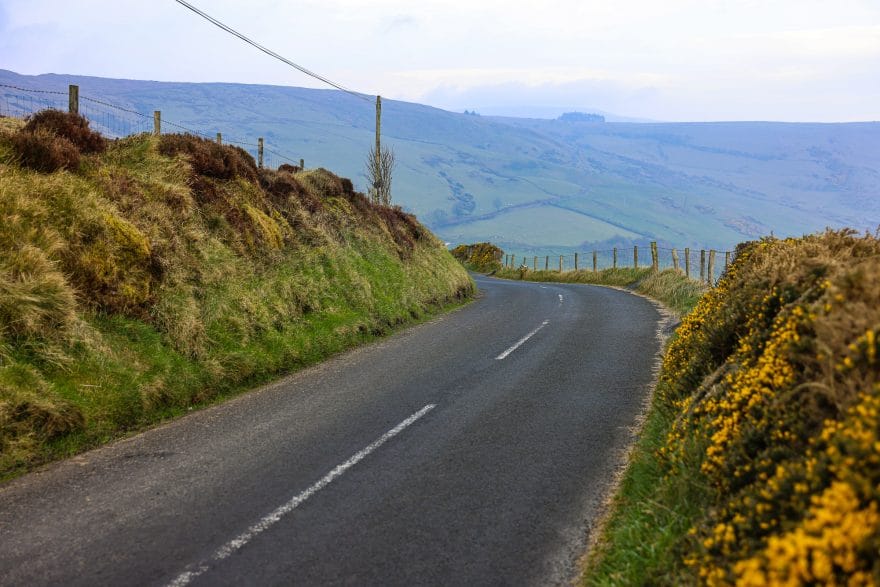
There are a number of car rental locations in Dublin, including Enterprise at 10A Russell St; Hertz at 294a N Circular Rd; Budget at 151 Drumcondra Rd Lower; and Avis at 39 Old Kilmainham, just to name a few.
When you book your rental, just make sure that you book the return location as the Dublin airport so you can drive directly to the airport at the end of the trip.
I suggest checking out of your hotel in the morning and taking a taxi to pick up your car rental between 10:00 AM and 11:00 AM. This gives you time for two stops on the drive to Carlingford.
Slane Castle & Distillery
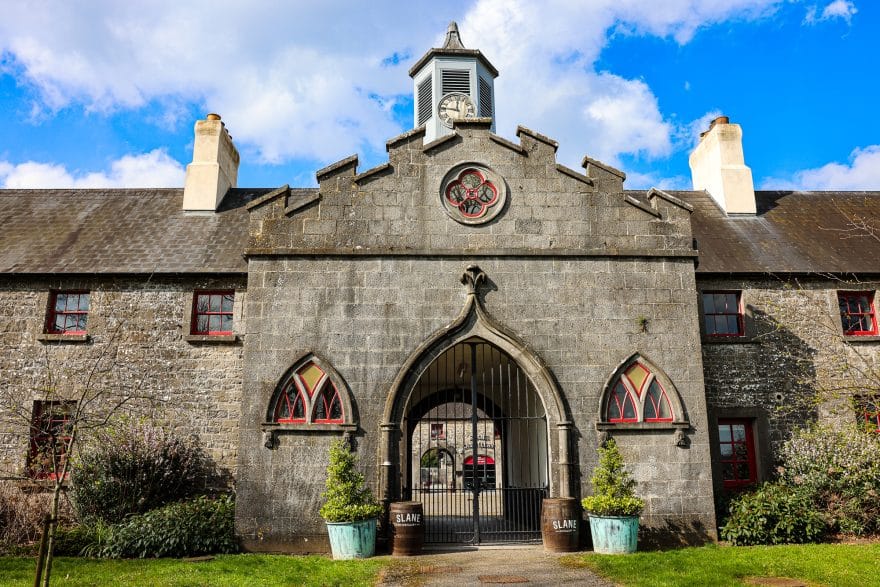
The first stop on the drive is Slane Irish Whiskey. A 50 minute drive from Dublin on the M2 and N2, it’s a nice stop for whiskey lovers in the small town of Slane, alongside the iconic Slane Castle. The site has been home to huge festivals and concerts over the years, and it’s a very unique distillery.
Housed inside the former stables of the castle, you can book a tour and tasting on select days throughout the year. Tours start at €40 per person, for a two hour tour, and you’ll see the state-of-the-art facilities, explore the beautiful building, and enjoy a tasting of Slane Irish Whiskey, including their Extra Sherry Wood release, and Batch Strength.
Afterwards, be sure to check their shop for exclusives that you can only buy here, including the Slane Batch Strength, as well as hats, t-shirts, and other fun things to bring home.
Brú na Bóinne and Newgrange
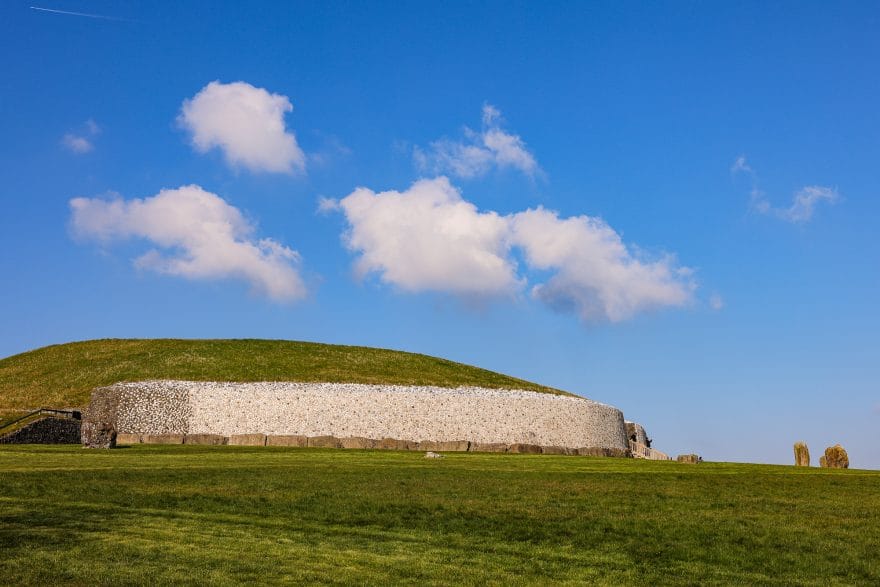
Your next stop is Newgrange and Brú na Bóinne Visitor Centre, just a 15 minute drive from Slane, and along the route to Carlingford. It’s a must-visit experience that opens a window back in time.
This historic tomb was built over 5,000 years ago, and you’ll take a tour to step inside the monument that’s considered one of the most important Neolithic sites in the world. It’s an unbelievable, truly unique experience.
The visitor centre offers history of the archaeological site, and interactive elements, with a cafe, restrooms, and a store. After learning about the history you’ll walk out to catch a shuttle bus to the monument. Visits are carefully controlled, so you’ll go into the monument in small groups where you’ll learn about the history and see the ancient carvings and stones up close and personal.
A note to anyone who has issues with enclosed spaces: there is a tight spot getting into the monument, but it’s a remarkable experience if you can get past that. Inside, there’s space to stand up for a few people at a time.
Because of the limited space in the monument, it’s important to book tickets in advance. Between April and November, tickets are available up to 30 days in advance online, and you book specific time slots for your arrival.
Carlingford
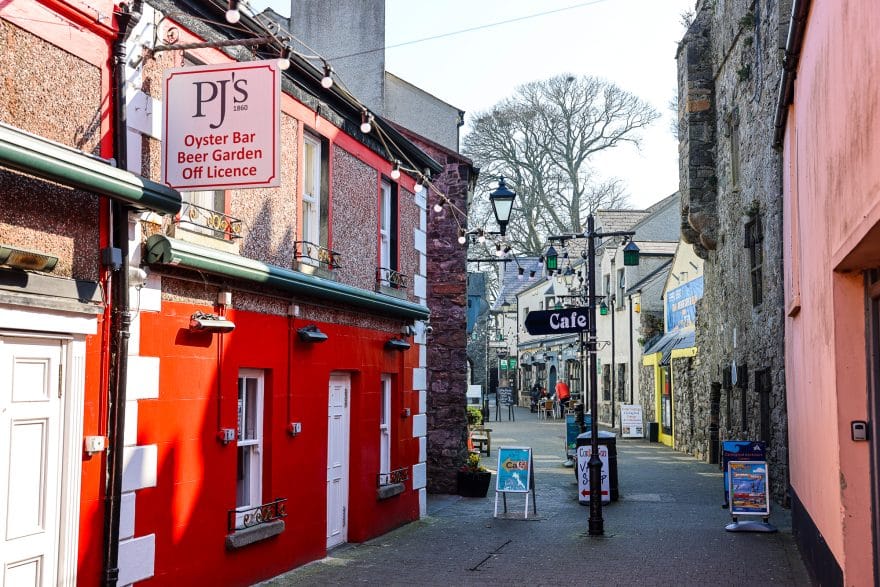
A 50 minute drive away on the M1 is the quaint, charming seaside town of Carlingford. With its narrow streets, and a few classic inns and B&Bs, it’s a great place to explore, enjoy restaurants and a pint, and enjoy Irish hospitality.
Accommodations: Ghan House is the best place to stay in the area, with comfortable rooms and a beautiful space, but there are a few options in town, including Four Seasons Hotel Carlingford, and McKevitts Village Hotel, as well as B&Bs.
Activities: Carlingford Castle is a top local attraction, and you can book tours between April and October. Built around 1190, the historic castle was a vital point of defence for the region before it was destroyed in 1689. You can book tours of the castle and the town through the Carlingford Heritage Centre, with a lot of history and interesting details about the medieval walled town.
For more fun you should consider booking activities with the Carlingford Adventure Centre, with everything from aerial adventures, canoeing, and stand-up paddling, to rock climbing and more. Families will have a blast with everything they offer, with options for all ages.
For dinner, I recommend stopping by PJ O’Hare’s for a traditional Irish meal, including Carlingford Lough oysters, fish and chips, mussels, beef and Guinness pie, and lots more. Their grilled and baked garlic parmesan oysters were one of my favourite things, but everything was delicious.
There are also hiking trails nearby, across the mountain, Slieve Foy, and the town has a number of stores and coffee shops.
Game of Thrones Studio Tour

After you enjoy breakfast in Carlingford, you’ll check out and drive 45 minutes into Northern Ireland, stopping at the Game of Thrones Studio Tour near Banbridge.
Games of Thrones fans are going to love this epic, interactive, and atmospheric adventure in the world of Westeros. Linen Mills Studios was one of the key filming locations for the HBO series, and now fans can step inside to see set pieces, costumes, and props, and relive a moment of TV history.
Plan to spend two to three hours, so you can see and take everything in, from walking through Castle Black, to Winterfell’s Hall, and King’s Landing. Tickets start at £25 and you can also buy special ticket packages that include extras. It’s a one-of-a-kind experience that you can only have in Northern Ireland. Watch my studio tour video to see what you can expect.
Royal Hillsborough
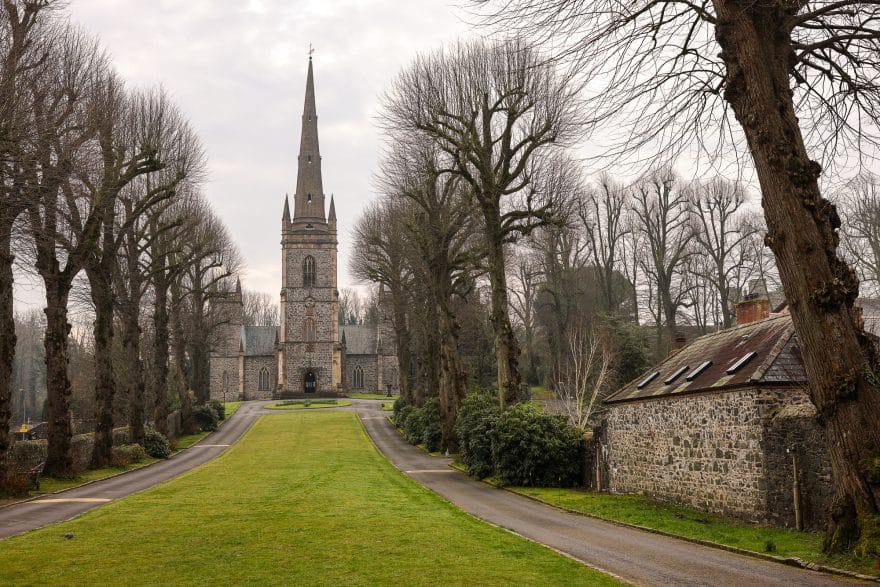
Drive 20 minutes from the studio tour to the charming town of Royal Hillsborough. In town you’ll enjoy a walkable dinner with the chance to explore local history, and an impressive castle.
Accommodations: Arthur’s of Hillsborough is a wonderful boutique hotel on the main street of town with 12 suites, above a fantastic coffee shop. The rooms are excellent, and Irish breakfast is included.
Activities: Hillsborough Castle and Gardens is a top attraction in the area, with gorgeous grounds covering over 100 acres. It’s a beautiful place to walk, and they often have exhibitions and special events throughout the year, as well as a cafe.
Hillsborough Forest Park is also charming, with a lake, and playground, and St. Malachy’s Parish Church is striking in the heart of the village.
For dinner, I recommend The Parson’s Nose, an upbeat and chic restaurant with a fabulous, modern menu. The food was delicious, and I really appreciated their selection of Irish gins, local beer, and wine. Otherwise, I recommend exploring the streets for bakeries, coffee shops, and pubs.
Belfast
Enjoy breakfast at Arthur’s of Hillsborough the next morning, pack up and check-out, and then drive 30 minutes to arrive in Belfast. I recommend departing by around 10:00 AM to give yourself time to explore the city. If you plan on extending your visit beyond seven nights, you can always leave the town a little later.
Accommodations: I recommend staying at room2 Belfast hometel, a comfortable and stylish hotel in the heart of the city, with a fantastic bar, and options for studios, lofts, and suites. The city has a lot of great options for hotels, but I really appreciated this central location.
Parking: Many of the Belfast hotels don’t offer parking on-site, so you may need to plan where to park your car. A short 6 minute walk from the room2 Belfast is the Tannery NCP car park, with reasonable overnight rates.
Activities: Belfast is one of the best cities in Ireland to explore, and it’s a top highlight of Northern Ireland. You could easily spend three days exploring the city, and I have a number of suggestions. For more ideas on what to do, read Discover Northern Ireland’s Belfast guide.
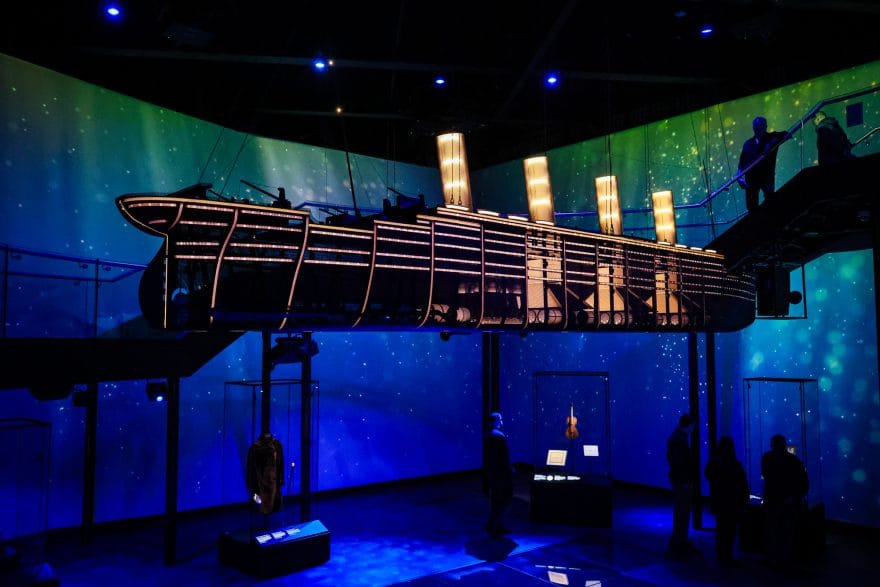
First and foremost, a visit to Belfast has to include a stop at Titanic Belfast. This large, interactive museum offers a look at not only how the Titanic was built, but how it impacted Belfast, the people on board and their stories, the sinking, and what happened after.
I recommend starting your visit to Belfast at the Titanic museum, and exploring for around two hours to see the stories, and even ride the Shipyard Ride that gives you a sense of what the shipyard was like in the early 1900s.

Next, I recommend the Black Cab tour of Belfast to not only see the city, but understand the history that shaped it, from the distant past, through the 1980s, and today. Tour guide Billy Scott took me around the city, showing me the sights, and telling me stories, from the Troubles and conflicts, to the civil rights movement. He’s funny, and an incredible guide, with a lot to share, and a major highlight is a stop at the Peace Wall, not to mention seeing so many of the city’s historic murals.
After that, you can check into the hotel to drop your bags, and then take a walk through town. The core of the city is very walkable, and there’s a lot to see. On Fridays and weekends I recommend a stop at St. George’s Market for shopping, snacks, and even souvenirs. Victoria Square offers upscale shopping, or you can walk around the core to see the city’s wide range of iconic sculptures and statues, like the Salmon of Knowledge, or Beacon of Hope.
Day or night you should also explore the Cathedral Quarter’s cobbled streets for shopping and perhaps a drink during the day–like the excellent Friend At Hand liquor store serving Irish whiskeys–or for the best of the city’s night life.
For dinner, I recommend starting with a pint of Guinness at the Crown Liquor Saloon, an absolutely classic Irish bar with a unique lavish baroque style that you won’t see anywhere else. Then head to mrDeanes for dinner, with an excellent seafood, lamb, and curry-focused menu that’s absolutely delicious.
For post-dinner entertainment, check out live music at one of Belfast’s amazing traditional music spots, from Kelly’s Cellars, and Fibber Magee, to The John Hewitt, and The Garrick.
Causeway Coastal Route
For the grand finale of your trip through Ireland, there is nothing quite like Northern Ireland’s Causeway Coastal Route. I recommend having an early breakfast at your hotel and then starting the drive along this route from Belfast, passing coastal villages, fields, and hills that showcase the beauty of this region.
Extend your trip: This driving route will take you through classic, narrow country roads, and if you want to extend your trip, I recommend either two nights in Belfast and three nights in the area around the coastal drive, or three nights in Belfast and two nights along the coast. However you could easily spend a week just exploring this drive. There are dozens of places to stay along the route, including after the Giant’s Causeway at Bushmills or Portrush. Browse the map of nearby accommodations.
Driving Directions: Whether you spend a day in the area, or a few days, I recommend these Google Map directions that will take you from the Tannery NCP car park to the Giant’s Causeway Visitor Centre, or review the map at the bottom of the article. This route takes a little under 3 hours. With stops, the whole route is around 9 hours, and that includes 5 hours for exploring, meals, and breaks. At the end, if you’re returning to Belfast, the A26 is a 75 minute drive back.
If you leave Belfast by around 10:00 AM, this route will have you back in the city by around 7:00 PM, but you can really adapt the trip to match your needs.
Stops and Activities: Along the route you can stop to see Carrickfergus Castle, just outside of the city, and enjoy a little walk on the beach at Drains Bay. If you want an early adventure, stop to see the Gobbins Cliff Path, but there are more adventures ahead, too.
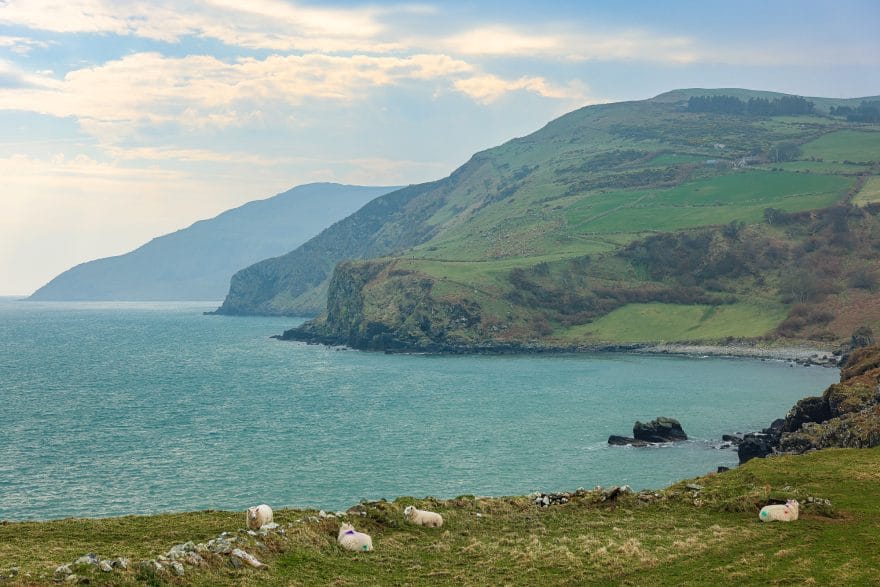
Torr Head is a remarkable place to stop for incredible views. You’ll park your car at the base and climb to the top of the hill for fabulous views along the coast. Throughout this drive though can can also find a number of scenic spots to pull over and snap photos of the rolling green hills, sheep, and the rugged coastal views. The photo above is from one of these vantage points.
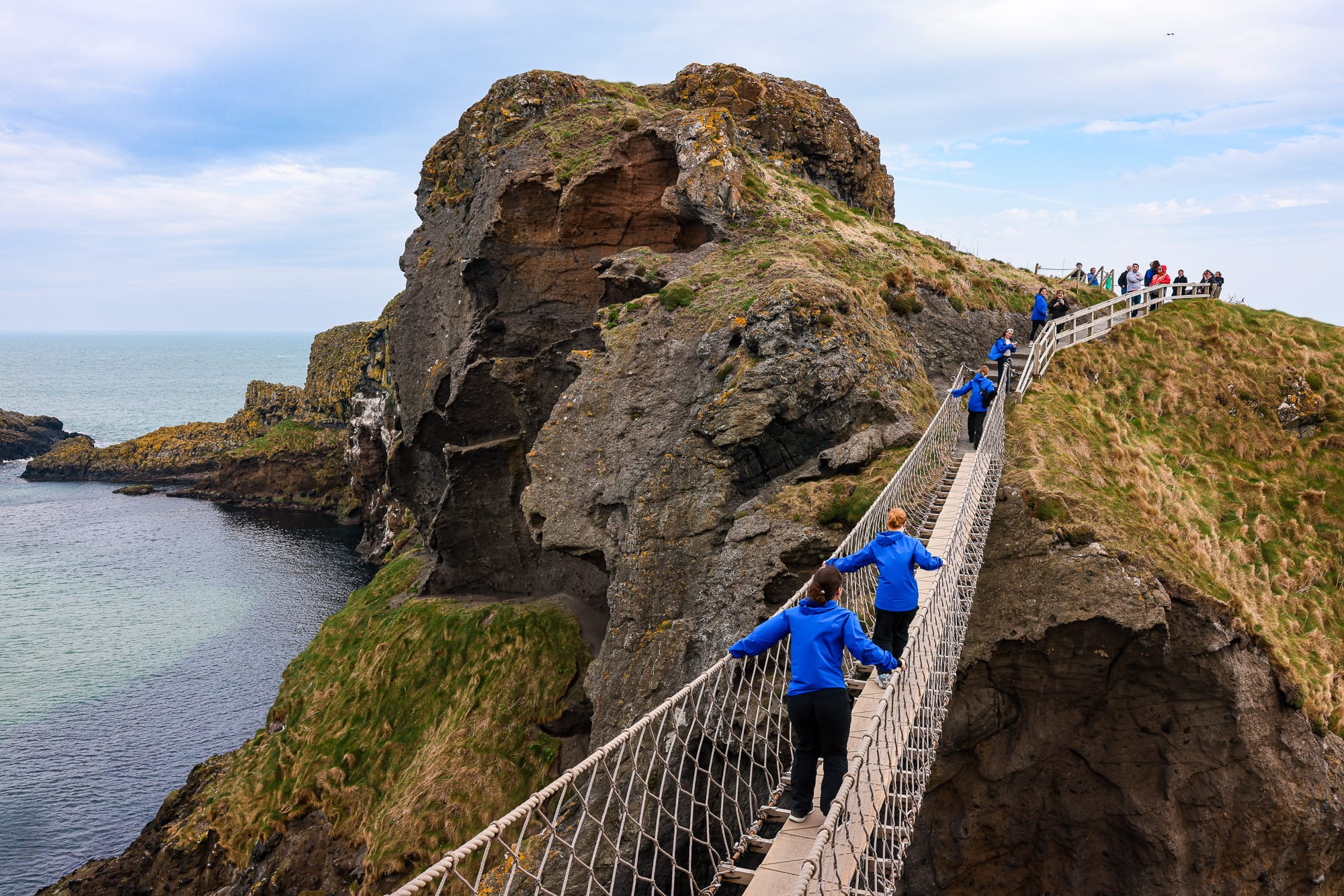
One of the best places to stop along the route is Carrick-a-Rede, a stunning coastal hike where you can walk over a rope bridge that crosses 20-metres looking down on rocks and the ocean below. I recommend booking your tickets in advance, and you’ll want to spend around 90 minutes to two hours to walk in and back out. The iconic location offers a wonderful hike, and the building by the parking lots has snacks and restrooms.
A five minute drive away you can also stop at Carrick-A-Rede Restaurant for fantastic fish and chips, and a pint, or perhaps a dram of Bushmills Irish Whiskey.
You can spend a lot of time exploring this whole region, including the nearby Ballintoy Harbour, or travel on to experience the Giant’s Causeway.
Arriving at the Giant’s Causeway Visitor’s Centre, you can park in the lot, but it can be full depending on the time of day and the season. There are a few overflow lots nearby as well, so you may have to park and walk to the visitor centre.
The centre offers a fantastic store, with local products, a great cafe/restaurant, restrooms, and for those who require it, there is a shuttle bus running from the back of the building down to the Giant’s Causeway. That said, the bus can be extremely busy, so it can require a long wait at peak times.
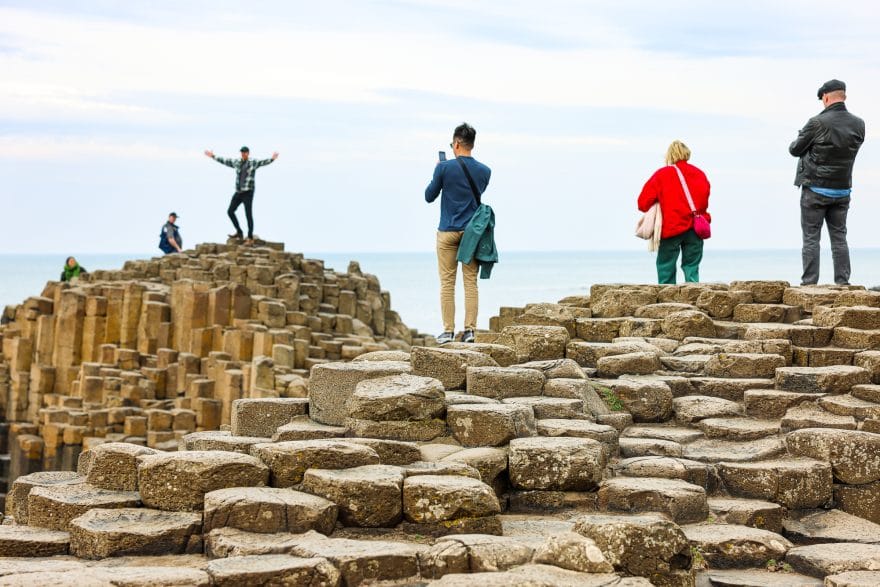
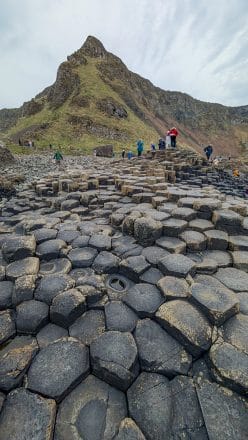
Walking to the Giant’s Causeway takes about 15 minutes, and it’s downhill on the way in, with incredible views of the ocean. You can also hike further into the iconic destination, to see the Shepherd’s Steps, and the stunning Giant’s Organ Pipes. Parts of the Causeway form a hill that you can walk over, while other sections are flat. It’s wise to be careful on any of the rocks, but it’s safe if you watch your step. Like all coastal walks, just avoid black, glossy rocks that are wet.
If you give yourself at least 30 to 45 minutes, that’s a good amount of time to explore here, but you can definitely stay longer. With enough time to explore the visitor centre, you can expect to spend 90 minutes to two hours at the Giant’s Causeway, or longer if you walk to the Giant’s Organ Pipes.
Returning to Dublin
At the end of your adventure, the last step is to drive back to Belfast, filled with the memories you’ve made, the meals that you’ve enjoyed, and perhaps the souvenirs that are in your bags.
If you’re returning to Dublin airport from Bushmills and the Causeway Coastal Route, the drive is around 3 hours, while the drive from Belfast is a little under 2 hours. On the map below I’ve mapped from the Giant’s Causeway to Belfast, and then back to Dublin Airport.
Road trip map
To help you plan the trip, and see all of the key points of interest, browse through the map for highlights from all the stops.
All photos: W. Andrew Powell/The GATE.
